Time travel

img_4404

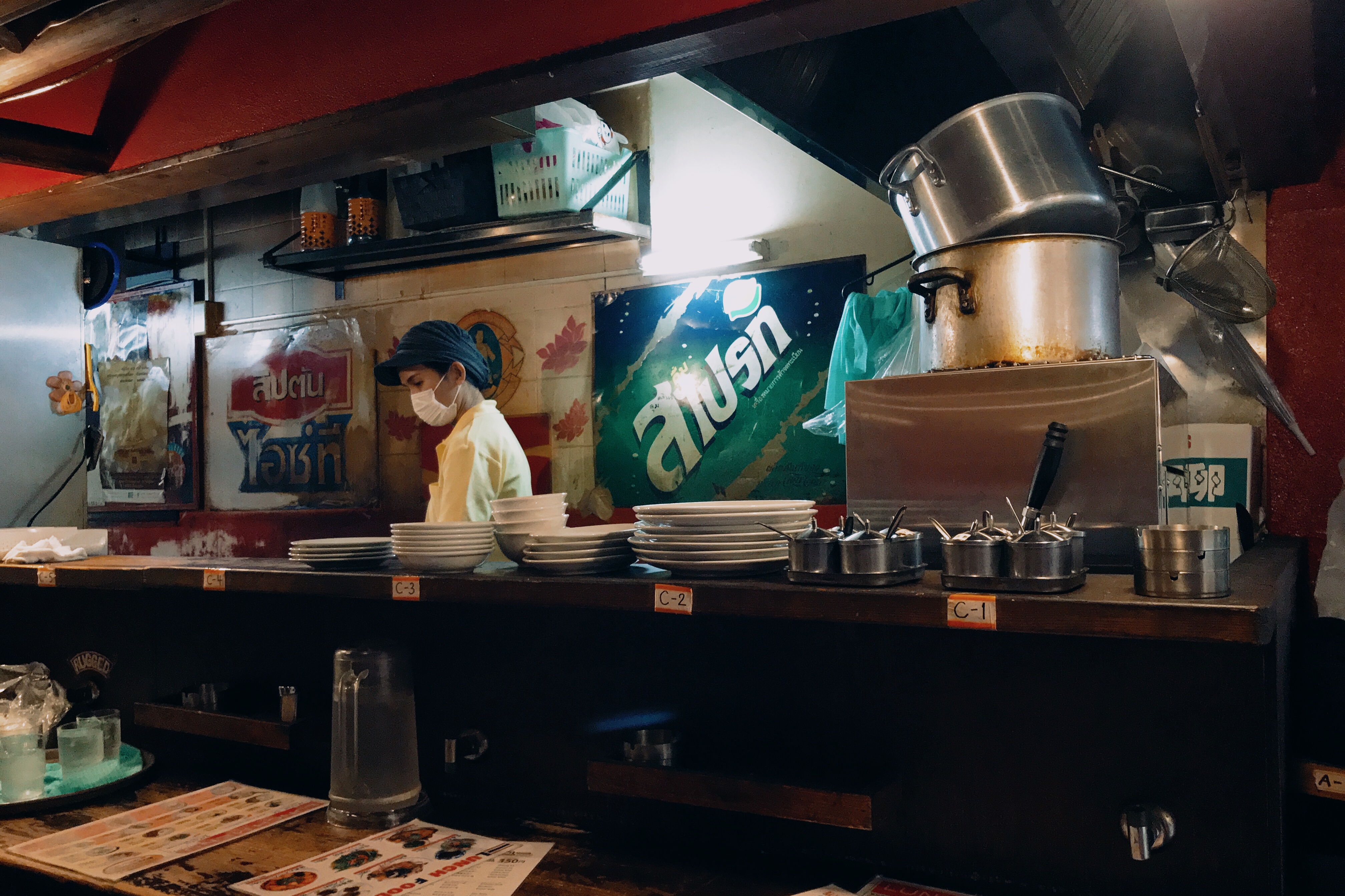
Slipping through the door of a local neighborhood Thai restaurant in Tokyo, I found myself transported through the sights, sounds and smells of the place to the streets and khlongs of Bangkok, back to younger, adventurous days of cheap guest houses, dusty bus stations and idyllic beaches. For a few moments I lost myself in several years of past travels. I was a time traveller.

Travel in any form is a wonderful tonic for the soul. With summer approaching, I felt, however, that I needed some actual travel and ultimately decided to do it in Hawaii. When researching a destination, guide books and websites are good for the nuts and bolts stuff, obviously, but literature helps provide a sense of a place, its culture and history. So, after booking tickets to Oahu, I bought a copy of James A. Michener’s Hawaii.

I hadn’t read any of Michener’s best-sellers before. Hawaii, published in 1959, has a verbose literary style that is dated and, at a thousand pages, could use a good editor, but Michener spins an engrossing epic tale, the kind you happily get lost in. The long chapters’ episodic narratives are linked by the genealogical threads of its many characters and tell the history of the pacific islands, from the violent forces of nature that formed them over millenia, through the arrival of the first human inhabitants by canoe from Bora Bora, to the 19th Century, with the introduction of Christianity and the country’s annexation to America, and the next century, with its world war and the post-war events that culminated in Hawaii becoming the fiftieth state in the union.

The book didn’t just give me some small understanding of the historical currents that shaped Hawaii, it also reminded me of the adventure stories I enjoyed reading as a teen, when I travelled vicariously through time and space: to such places as feudal Japan and 19th Century Hong Kong with James Clavell’s Shogun and Tai-Pan; along the Mississippi River with Mark Twain’s Adventures of Huckleberry Finn; to post-war north Africa with Paul Bowles‘ The Sheltering Sky.

Removing the rose-tinted glasses, it’s clear that travel isn’t what it used to be; today it’s an eight trillion dollar industry, where travelers are herded from place to place, sights and activities are ticked off, and shopping is prime. Still, there’s nothing quite like the thrill of arriving in a new land for the first time.

Books like Hawaii aren’t fashionable these days. Mass tourism, global connectivity, streaming video services and interactive games have deemed them all but obsolete. But their fictions can still ignite the imagination and the books noted above and others like them turn readers into time travellers.

Slant Rhymes

In poetry, slant rhymes are coupled words that don’t exactly rhyme but match rhythmically through assonance or consonance.

Slant Rhymes is also the title of a collaborative photography project and book by Alex Webb and Rebecca Norris Webb. In Slant Rhymes the couple pair images — one from each photographer — to create visual or thematic harmony or tension, a visual assonance or consonance, a dialogue of sorts between the photographers and their work.


To a certain extent what I do is play with the world, but it’s disciplined play.
— Alex Webb

Listen to your photographs. They are often wiser than you are.
— Rebecca Norris Webb


This visual and thematic pairing occurs in many photobooks, any time there is more than a single image on a two-page spread. It isn’t necessarily collaborative; the images are usually created by the same photographer and the pairing is probably considered in terms of the book’s overall sequencing. Regardless, it’s one of the elements that, when done successfully, greatly enriches a photobook, increasing the drama or poetry on each page.

This pairing of images, it’s something I also enjoy doing.

Process

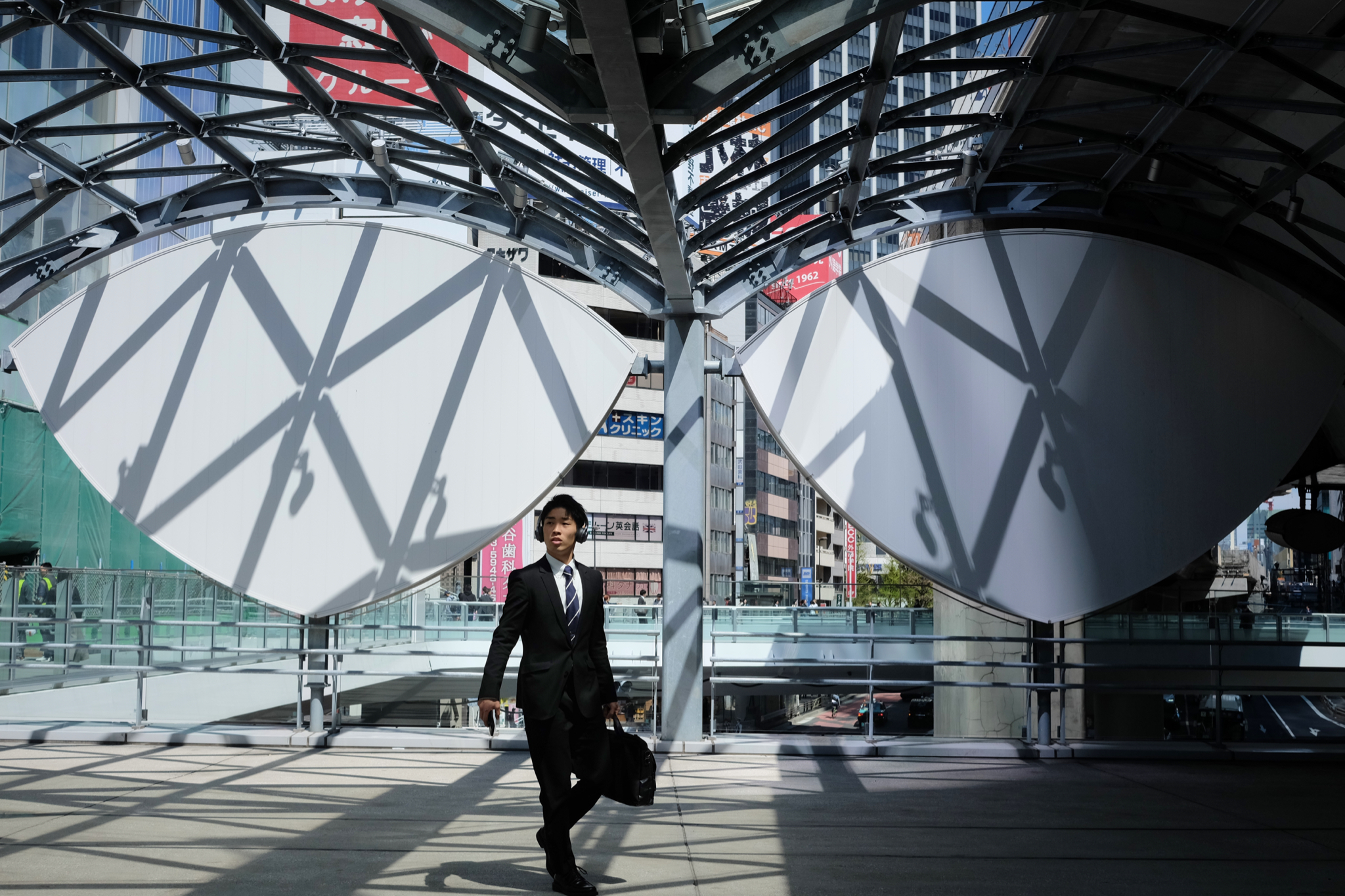
DSCF0896

This was such a Tokyo scene: the dramatically sunlit high-tech architecture, the sharply dressed businessman with his headphones and briefcase. I had to take a photo.

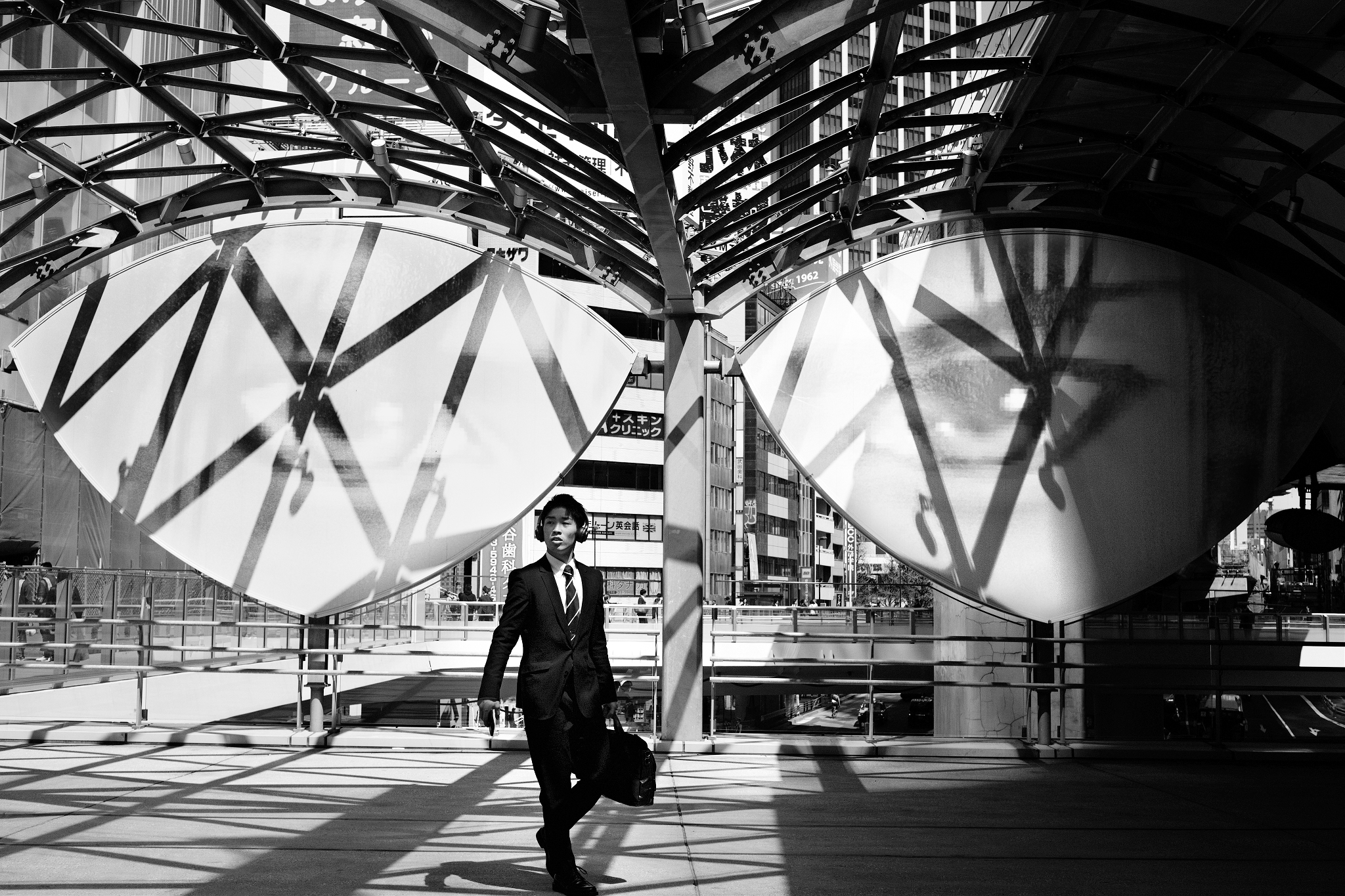
Initially I did very little processing on it: some exposure and color adjustments and some slight cropping: the photo above. I returned to it some days later and, looking at all the shapes and shadows, thought the image was too busy; it needed to be simplified. I decided to do a monochrome conversion. This looked a lot better to me; stripped of color the scene had greater focus and drama.

The white screens. On Tokyo‘s streets it’s rare to find such blank space as on those screens. They would typically be plastered in — or digitally screen — advertising. These thoughts led to me consider creating a double-exposure image using advertising imagery. The twin screens‘ resemblance to a pair of glasses started to suggest eyes — and I felt that, while obvious, this was a strong concept. I looked around the city streets for appropriate imagery to shoot. In the end I added some manga-inspired eyes from images decorating the front of a pachinko parlor. I experimented with the idea of combining color eye imagery on the main photo, but it is quite busy visually with its interplay of architectural forms and shadows, even in black and white, so I converted the eyes to monochrome and kept the overlay blend very subtle. I’m happy with the final double-exposure image. I think the modified screens add an evocative futuristic and enigmatic atmosphere to the scene, opening it up to a wider range of interpretations. It should make a nice print.

DSCF0896 Double

Urban voids

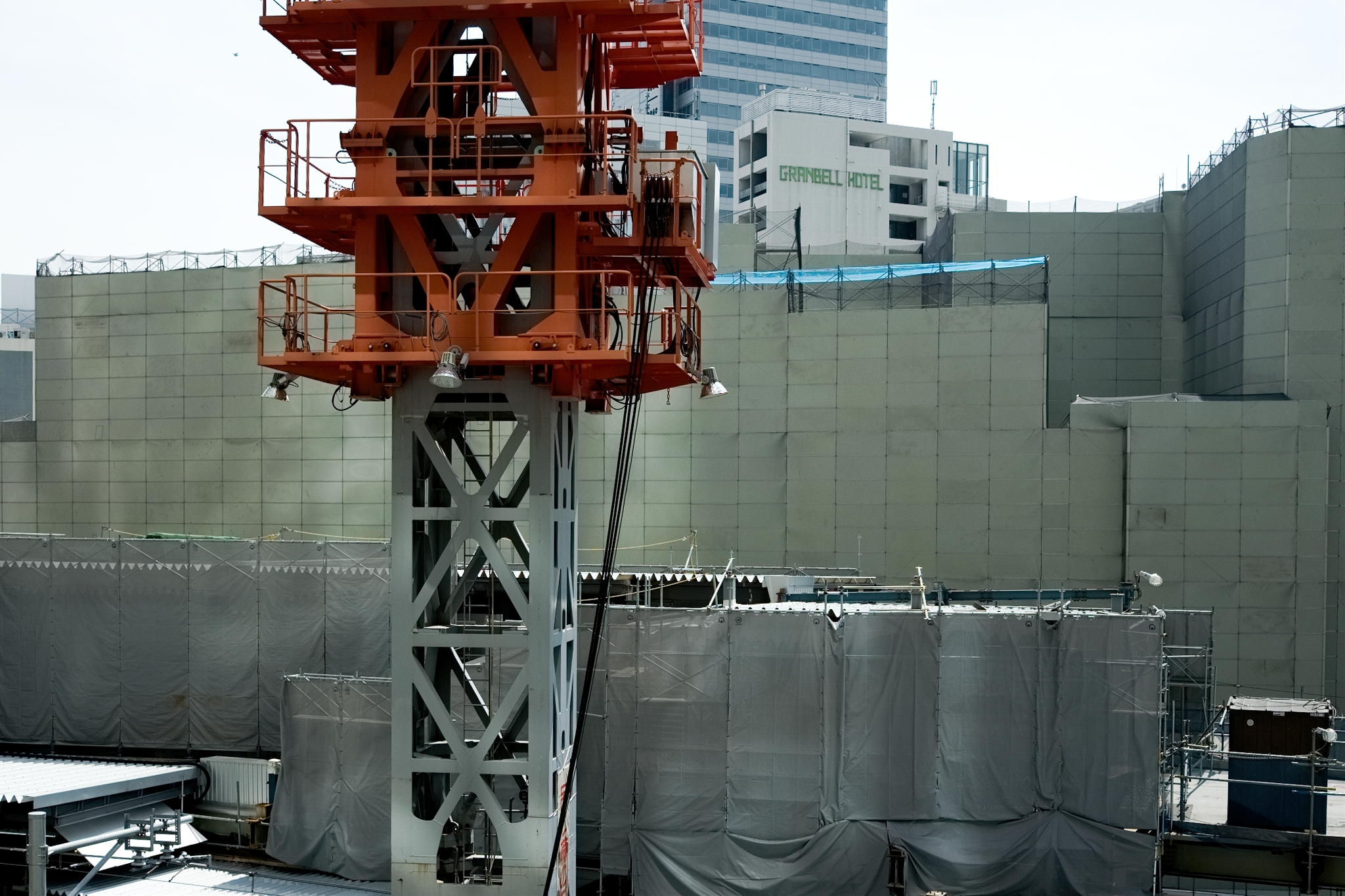
DSCF0954

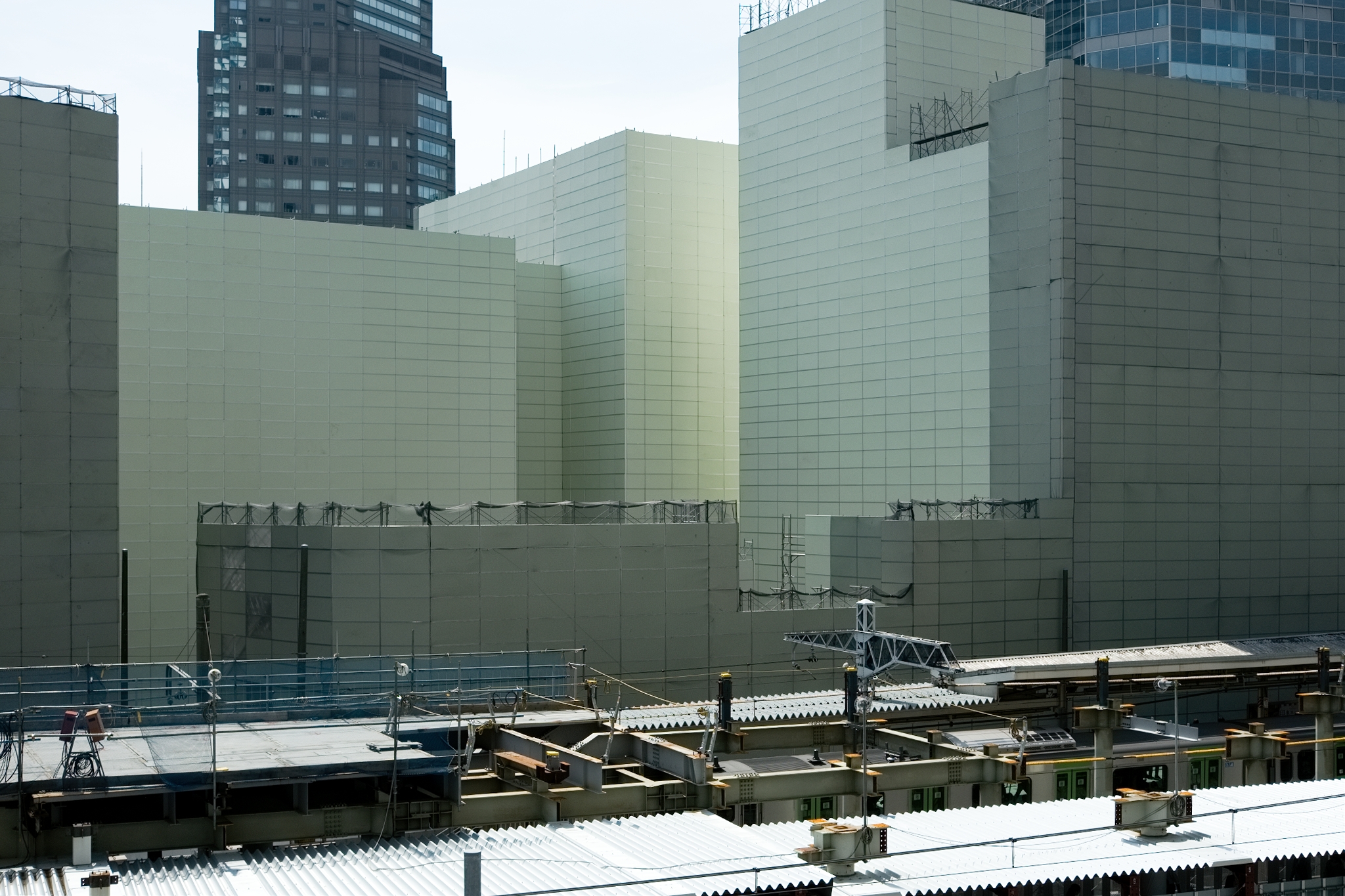
The construction going on in Tokyo seems to be morphing into art these days. Like some Christo inspired wrapping project, Shibuya’s south side currently has more negative space than buildings as the neighborhoods lining the railway tracks are torn down to make way for some newer and no doubt taller towers. For now the area has the look of a partially rendered graphic environment.

DSCF0955

One

IMG-8189.JPG

A few facts:
Edo, a small fishing village, grew to become the center of power in Japan under the Tokugawa Shogunate in the early 1600s.
Edo was renamed Tokyo after the Emperor Meiji was relocated to the city in 1869.
Today, the greater Tokyo metropolitan area is the richest on earth; it’s also the most crowded.
Tokyo city houses more than eight million people, Tokyo prefecture more than 13 million, greater Tokyo more than 38 million – or close to a third of Japan’s population.
Metropolitan Tokyo covers some 845 square miles, greater Tokyo sprawls across 5240 square miles.
On average, around 16,000 people are crowded into each of these square miles.
Despite this, nearly half of the households in metropolitan Tokyo comprise just one person; in the central city regions more people live alone than not, and by 2030 it’s estimated that the number of single-person households will surpass 18 million.
Regardless of the demographic, social and economic reasons, these seem to me to be tragic numbers.

IMG-7710.JPG