Oasis

DSCF0842

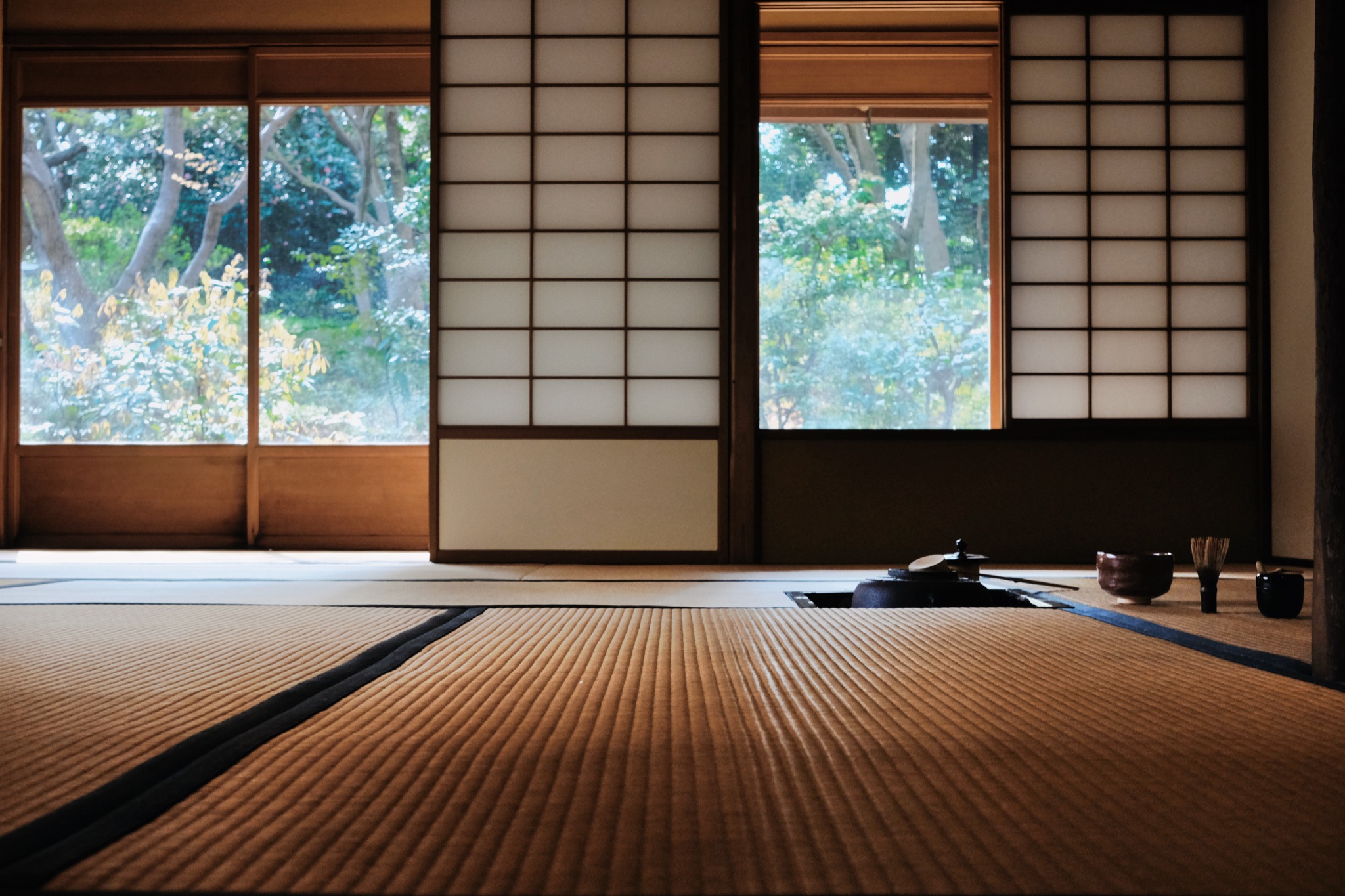
Shirokanedai can boast that it once housed feudal lords and royalty. Today it is an unremarkable upscale residential suburb of anonymous apartment towers and other forgettable buildings. But in the midst of this lie 20 hectares of forest, otherwise known as the Institute for Nature Study of the National Museum of Science. Smaller neighboring grounds contain the Tokyo Metropolitan Teien Art Museum, a 1930s Art Deco gem—originally buit as the residence of Prince Yasuhiko—created by Japanese and French designers and artists, and surrounded by lawns and picturesque European and Japanese gardens, the latter featuring a postcard-perfect traditional teahouse overlooking a pond.

Adding to its cosmopolitan feel, this urban oasis also has a modern French restaurant on the grounds and a sleek cafe in the museum annex, both offering tranquil views through their expansive glass walls. The teahouse offers a more traditional experience, hosting a limited number of classical tea ceremonies throughout the year.

The museum is currently exhibiting a series of Surrealist-inspired works in TOSHIKO OKANOUE, Photo Collage : The Miracle of Silence.

DSCF0848

Shadows

IMG_3762

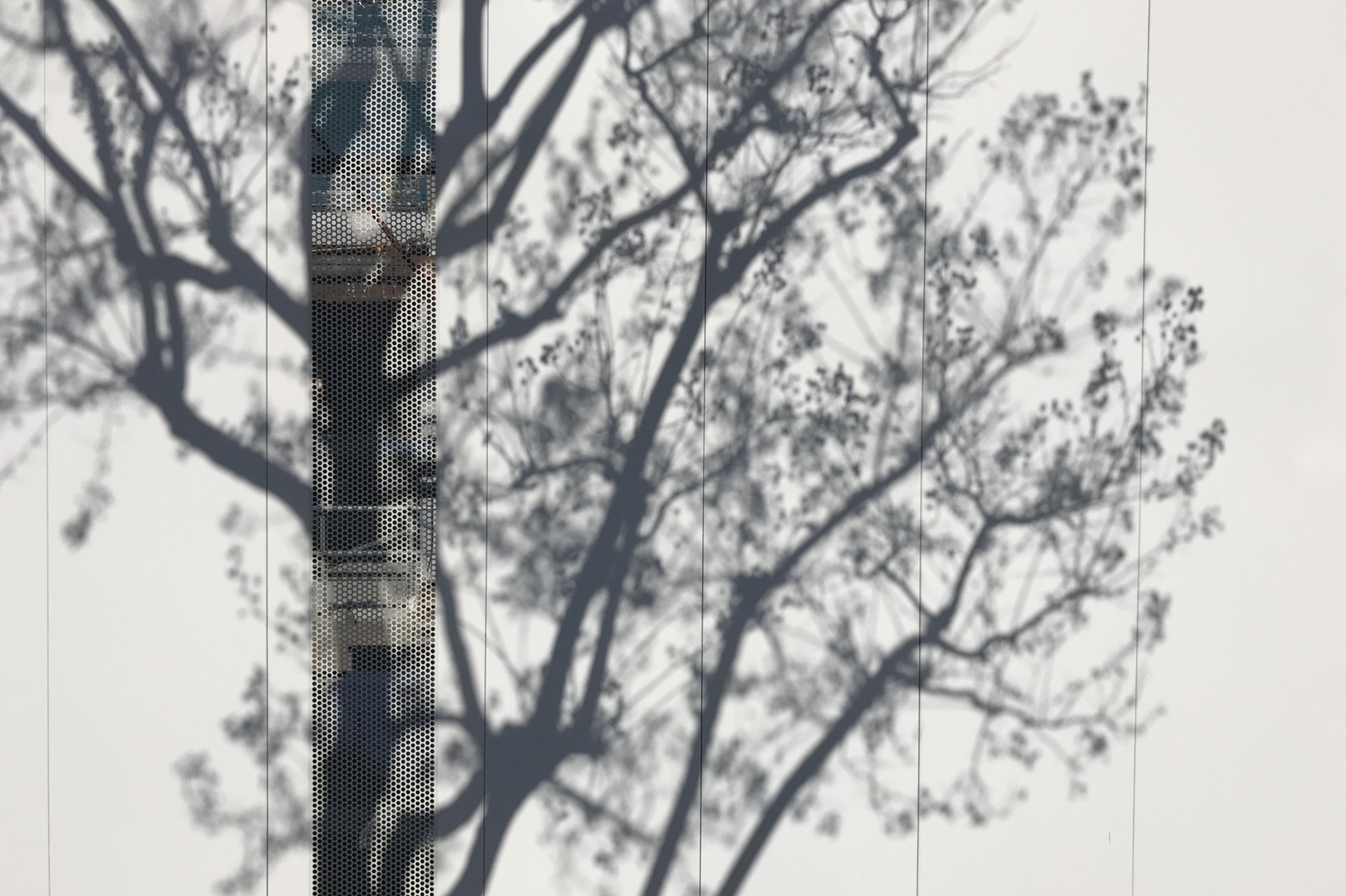
We find beauty not in the thing itself but in the patterns of shadows, the light and the darkness, that one thing against another creates.
Were it not for shadows, there would be no beauty.
— Junichiro Tanizaki

In Praise of Shadows — originally published in 1933 — is Tanizaki’s essay on the impact of modern life and western technologies such as electricity on Japan’s classical aesthetics and way of life. His essay is both a meditation on the subtlety and simplicity of elements of the traditional culture he praises and a lament for the passing of that way of life.

Tanizaki’s musings are full of lyricism and romance, but the reality is that the world of shadows that he admired was, even then, ceding to the convenience and utility offered by modernization. Now more than seven decades later, that world is all but forgotten.

As much as I love the convenience of modern technologies, as a photographer I can appreciate the antimodernist aesthetics of Tanizaki’s lost world and the beauty of shadows. In photography, as in other visual arts, shadows help to sculpt the light. They can frame subjects in striking ways. They can create depth or construct a composition for the lens. They can create drama or mystery or embellish an image with lyrical patterns and textures. Tanizaki got it right: Were it not for shadows, there would be no beauty.

Sakura

DSCF0820

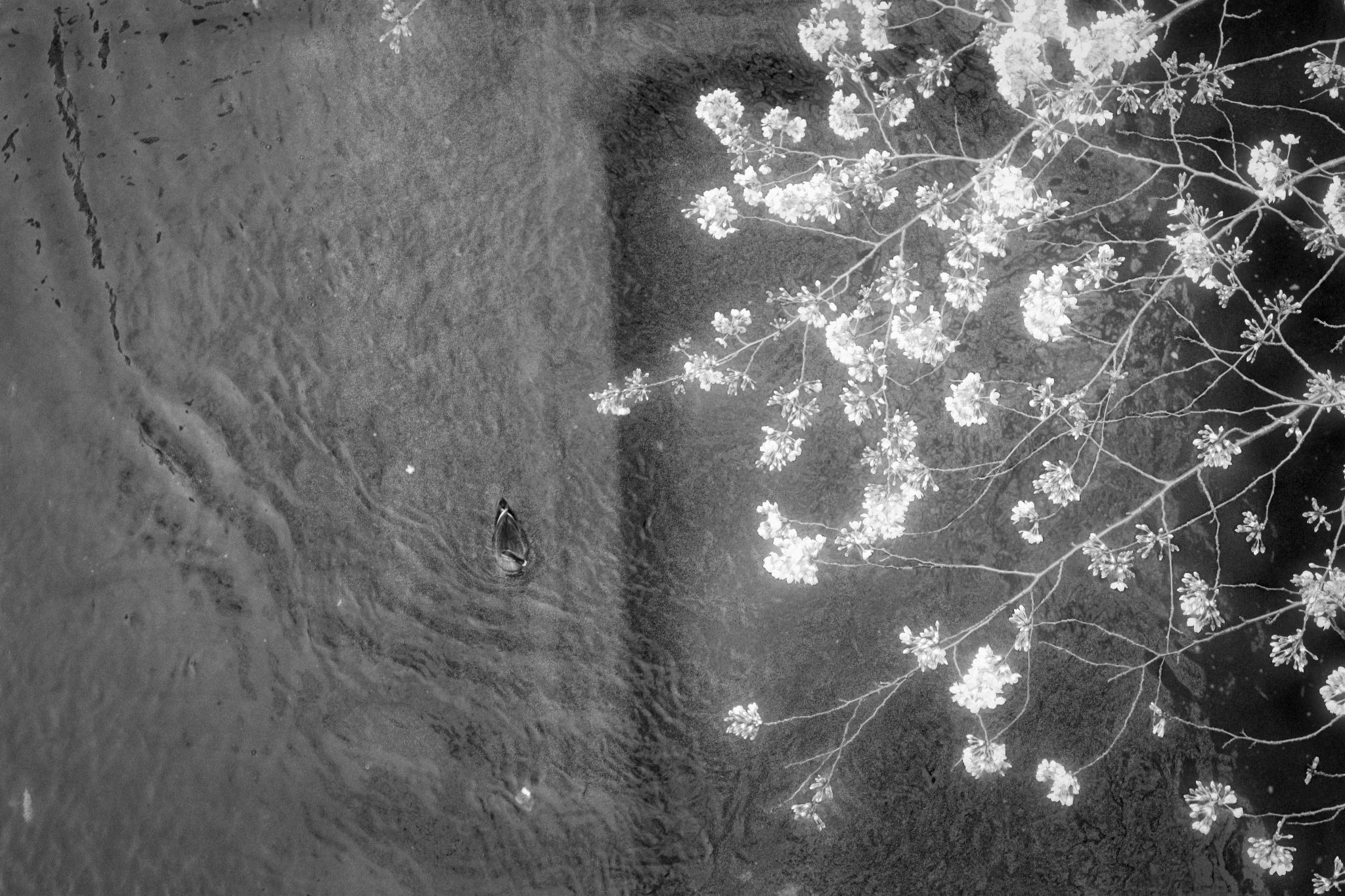
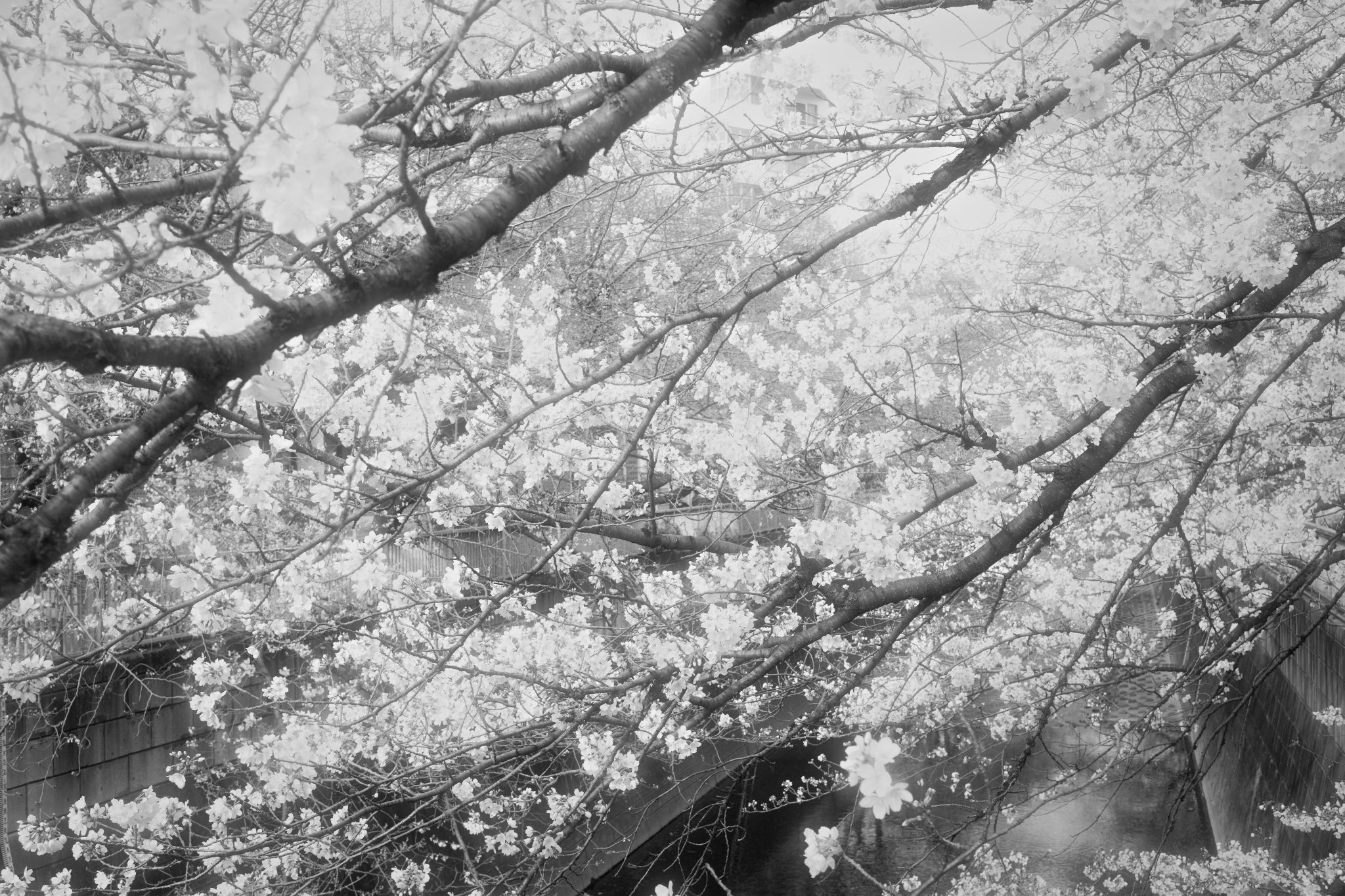
It’s that time of year again. The sakura trees are blooming and blossom-viewing fever has gripped the populace as certain parks and waterways and avenues are invaded for hanami. It’s easy to be cynical, but the delicate beauty of the somei-yoshino trees in full bloom and the ephemerality of their blossoms is a major work of poetry — created by nature and repeated verse after verse as the blossom season spreads across the country — and in Japan especially the spectacle has long been an inspiration for the poets.

Sakura, sakura
they fall in the dreams
of sleeping beauty
—Yosa Buson

What a strange thing!
to be alive
beneath cherry blossoms.
—Kobayashi Issa

Thanks for all
Expressing my gratitude to blossoms
at the parting.
—Matsuo Basho

On this topic: a fascinating deep dive by Naoko Abe into Japan’s cherry trees and the culture surrounding the ubiquitous somei-yoshino — or you can dip into a short photo essay of mine from a few years ago.

DSCF0809

Tokyo fashion

XBMP8377

Tokyo has for decades now been considered a driver of global fashion trends. Designers and shoppers alike are inspired by its street culture and styles. Considering the city’s various cultures and subcultures and the increasing globalization of youth culture these days, when it comes to fashion, practically anything goes.

But Tokyo has a unique fashion history and Google’s Arts and Culture site has an interesting bit of cultural anthropology presenting fashion trends in a fairly detailed timeline from 1980 to 2017, looking at both imported western trends and home-grown looks and how these have evolved through the decades.

One

IMG-8189.JPG

A few facts:
Edo, a small fishing village, grew to become the center of power in Japan under the Tokugawa Shogunate in the early 1600s.
Edo was renamed Tokyo after the Emperor Meiji was relocated to the city in 1869.
Today, the greater Tokyo metropolitan area is the richest on earth; it’s also the most crowded.
Tokyo city houses more than eight million people, Tokyo prefecture more than 13 million, greater Tokyo more than 38 million – or close to a third of Japan’s population.
Metropolitan Tokyo covers some 845 square miles, greater Tokyo sprawls across 5240 square miles.
On average, around 16,000 people are crowded into each of these square miles.
Despite this, nearly half of the households in metropolitan Tokyo comprise just one person; in the central city regions more people live alone than not, and by 2030 it’s estimated that the number of single-person households will surpass 18 million.
Regardless of the demographic, social and economic reasons, these seem to me to be tragic numbers.

IMG-7710.JPG

A Tokyo Romance

IMG_1678

The visual density of Tokyo was overwhelming. In the first few weeks I just walked around in a daze, a lone foreigner bobbing along in neatly dressed crowds of dark-haired people, taking everything in with my eyes, before I learned how to speak properly or read. I just walked and walked, often losing my way in the maze of streets in Shinjuku or Shibuya. Much of the advertising was in the same intense hues as the azure skies of early autumn. I realized now that the colors in old Japanese woodcuts were not stylized at all, but an accurate depiction of Japanese light. Plastic chrysanthemums in burnt orange and gold were strung along the narrow shopping streets to mark the season. The visual barrage of neon lights, crimson lanterns, and movie posters was matched by the cacophony of mechanical noise: from Japanese pop tunes, advertising jingles, record stores, cabarets, theaters, and PA systems in train stations, and blaring forth from TV sets left on all day and night in coffee shops and restaurants.

Ian Buruma’s observation about his first time in Tokyo in 1975 was one of many that resonated with me when I read A Tokyo Romance. It could just as easily have been my own description of the city two decades later when I first wandered around Tokyo’s streets alone in a kind of hallucinatory daze, uncomprehending yet stimulated by the seemingly endless stream of sights, sounds and movement around me. Buruma’s book unlocked a nostalgia in me for those sensations, ones that cannot be relived; I’ve become all too familiar with the city—and it is not the same city that I, or Buruma, first encountered. It’s still a beguiling place, but with its prevalent foreign-language signage, tourist information booths and money exchanges; its proliferation of international tourists and workers; its imported and home-grown global brand stores and ubiquitous Starbucks and McDonalds outlets, it has in this more globally connected era at least a veneer of familiarity, even for the first time visitor.

But there was something theatrical, even hallucinatory about the cityscape itself, where nothing was understated; representations of products, places, entertainment, restaurants, fashion, and so on were everywhere screaming for attention.
Chinese characters, which I had studied so painstakingly at Leyden University, loomed high in plastic or neon over freeways or outside the main railway stations, on banners hanging down from tall office buildings, on painted signs outside movie theaters and night clubs known as ”cabarets,” promising all manner of diversions that would have been hidden from sight in many Western cities. In Tokyo, it seemed, very little was out of sight. 

Deconstructed

DSCF0680

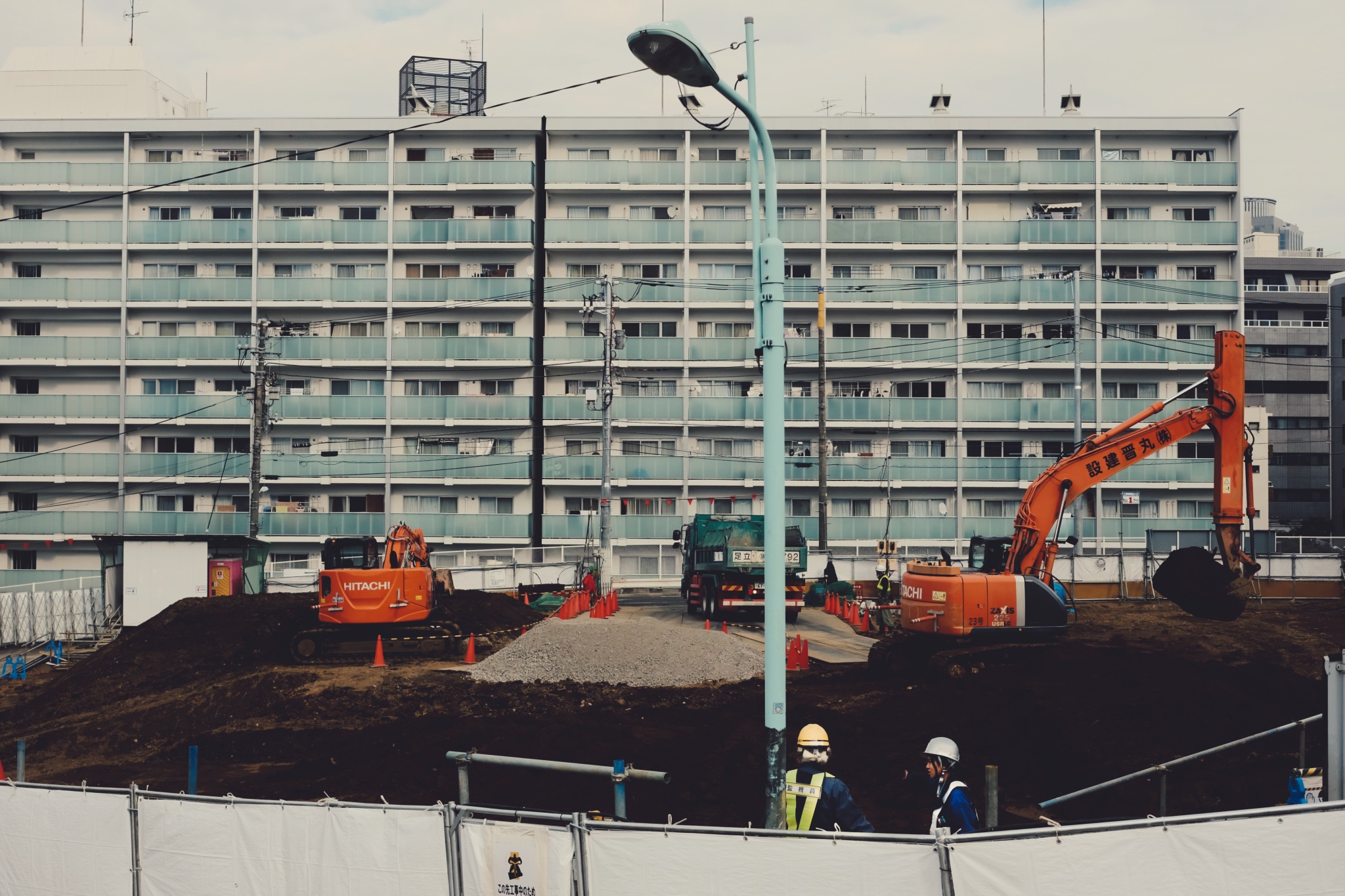
Everywhere, cranes pierce the skyline, shroud-covered buildings appear or disappear as if in a time-lapse, new utilitarian concrete and glass cubes replace old timber and tile back-street dwellings, blank fenced-off voids disrupt the visual rhythm of city blocks. In Shibuya, entire neighborhoods have been razed and are being rebuilt. Wherever I look it seems the city is being pulled apart and put back together anew. Tokyo has never been a sentimental city — redevelopment is nothing new to a city defined by its dynamism — but this current chapter of construction leading up to the Tokyo 2020 Olympics feels like the adrenalin-fueled, last gasp of a gambler throwing in all his chips on his lucky number.

Risshun

DSCF0665

While I can appreciate the romantic notions of winter, I barely tolerate its harsh reality. And so with the initial stirrings of spring, things start to look a whole lot better.

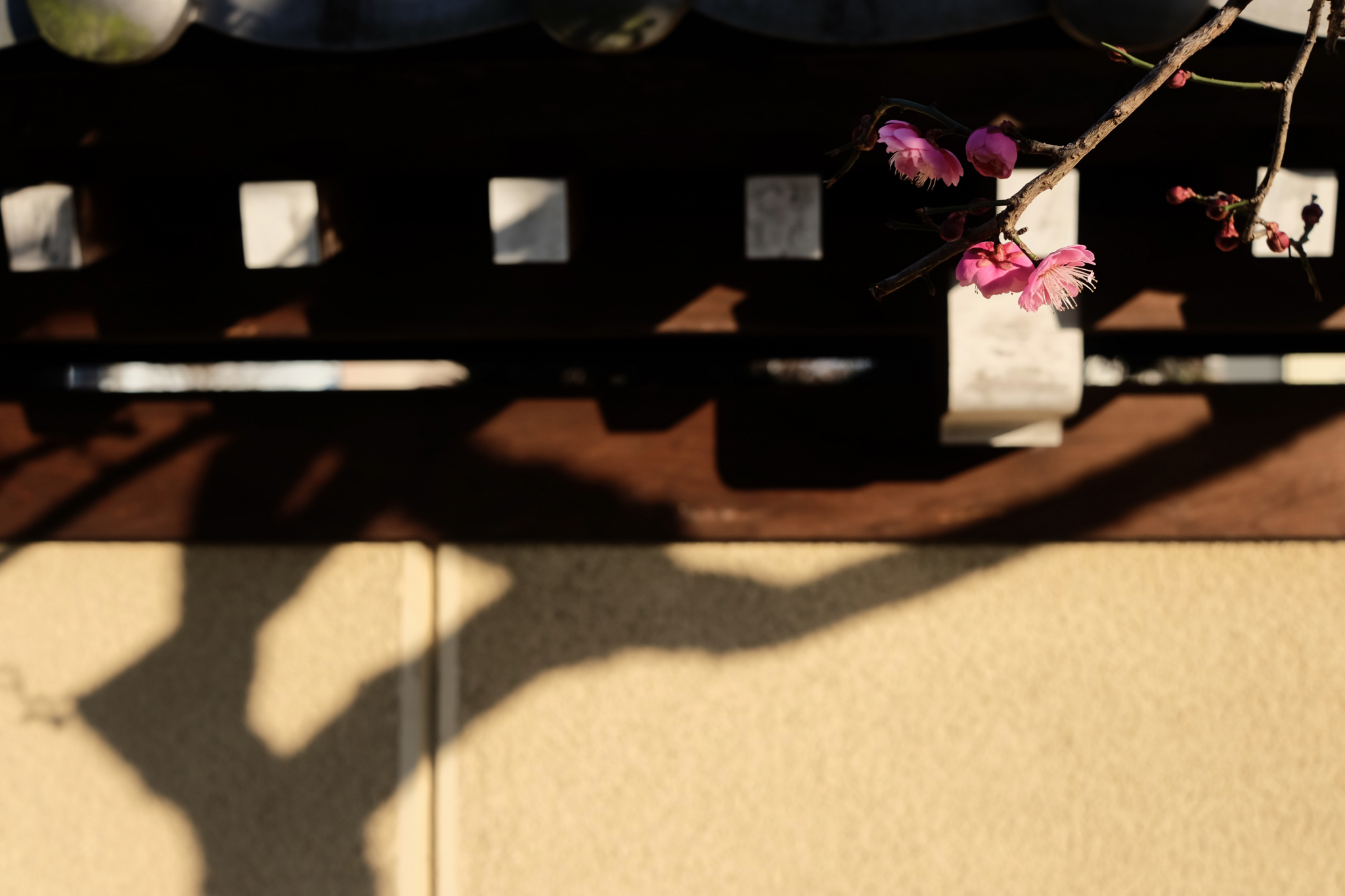
Risshun (立春)—according to Japan’s traditional calendar, the one that famously comprises 72 micro-seasons that poetically label natural transitions throughout the year—is the marker that announces the start of spring in early February. Right on cue, the sun has upped its intensity a notch and temperatures have risen slightly, while the plum trees have already started to blossom and the days are noticeably a little longer. Although it’s too early to pack away winter coats, it feels good to know there are some increasingly pleasant days ahead. These photos of jizō statues and ume blossoms at a local temple were taken during risshun.

DSCF0669

Taxi, taxi

img_3712.jpg

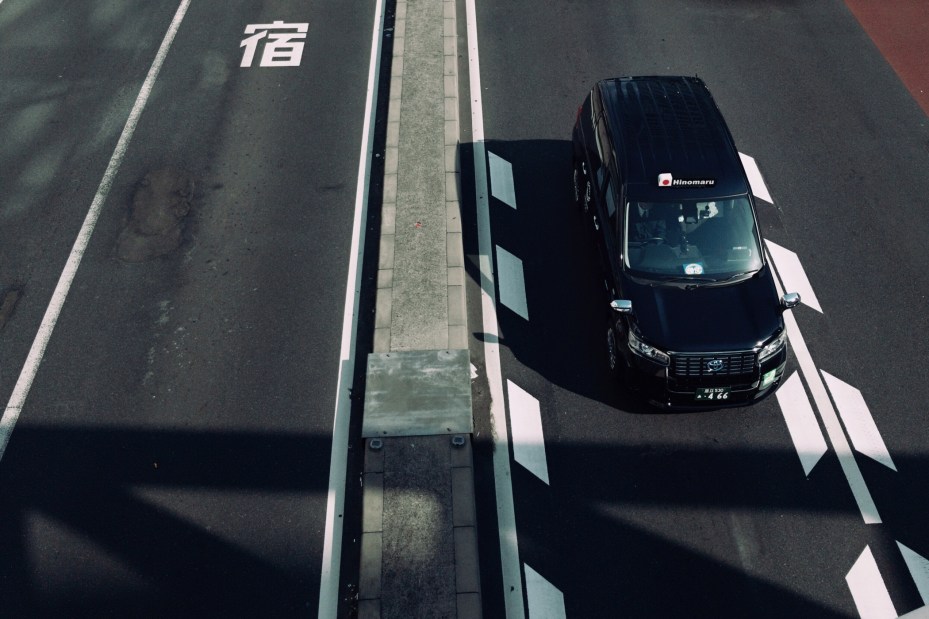
Japan’s taxis are an iconic part of the visual landscape of its cities. Nissan Cedrics and Toyota Crowns like the one above have shuttled passengers to their destinations since the 1990s. They were subsequently joined by Toyota’s Prius and some other makes and models, but Crowns still make up the bulk of Japan’s cabs, their boxy bodies gleaming red, yellow, aqua, green, grey, blue or black on the city streets.

A couple of years ago a successor to these classic cabs was introduced. The Toyota JPN Taxi is a squat, high-roofed, hybrid fueled hatchback that looks like a sleek, compact and thoroughly modern reincarnation of London’s traditional black cab. With its distinctive silhouette it’s set to become a future transportation icon, but I’m going to miss those colorful sedans.

Pillow shots

The best artists are auteurs, their work easily recognizable. And so, budding image makers are often advised to develop an individual style. I’m not convinced true style is something that can be manufactured; I believe it comes with practice and experimentation and time.

To this end, it’s rewarding to study the works of visual artists who have mastered their craft and have a distinctive style, whether it’s Salgado, Leiter or Addario; Caravaggio, Hopper or Banksy; Tarantino, Kubrick or Ozu.

For instance, Yasujiro Ozu’s unique intimate films show a remarkably coherent and disciplined visual and narrative style. Recurring themes, elliptical story structures, formally framed shots, limited focal lengths, minimal camera movement, particular editing transitions and pacing, deliberate compositions and use of specific colors—red is a favorite, and what are known as the “pillow shots” that punctuate his narratives: contemplative frames or sequences of objects, empty rooms, views through windows, architecture, natural elements, and so on that are placed throughout the narratives to convey subtext or emphasise emotions or themes within the films.

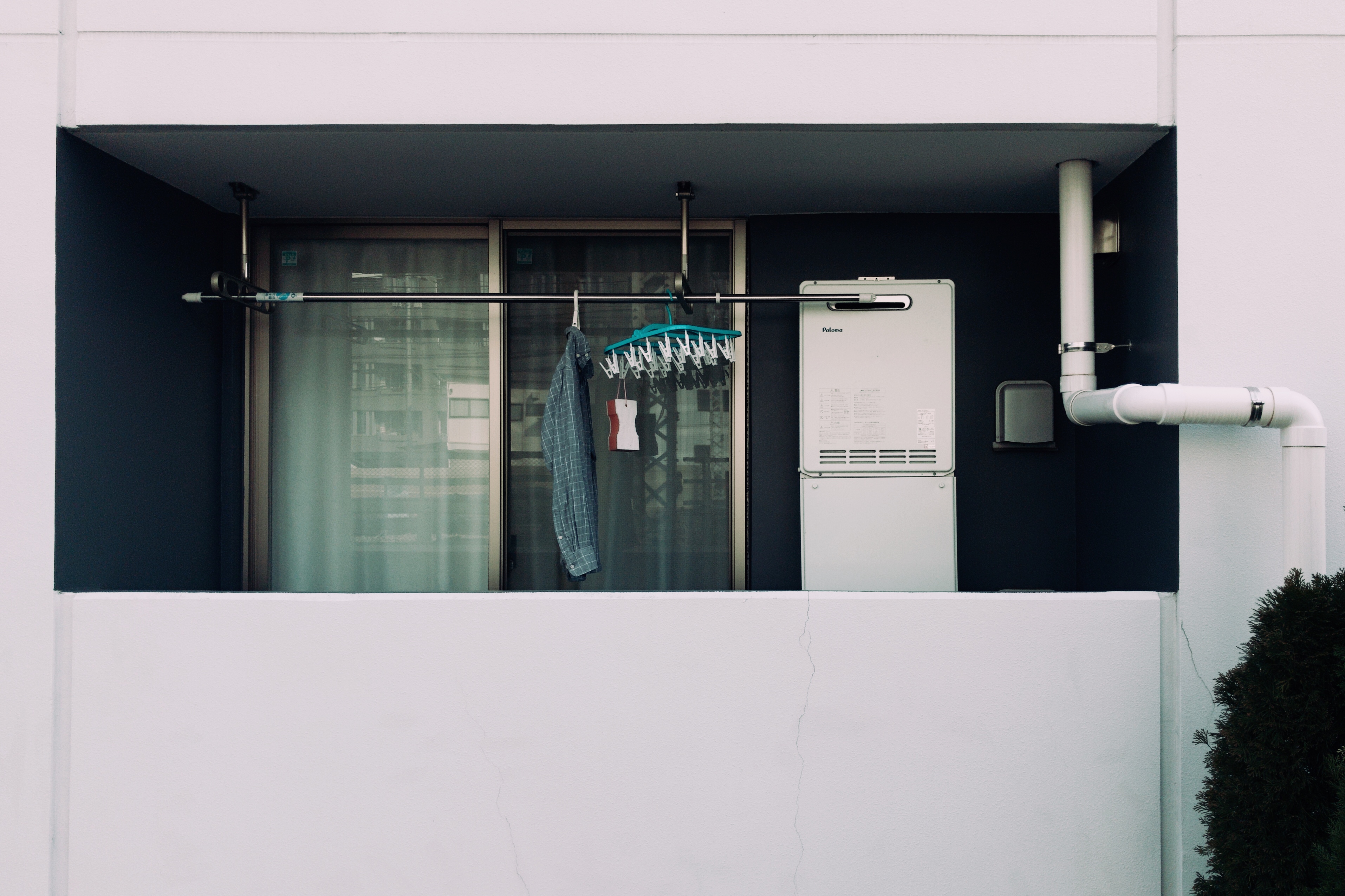
In photography, such meditative still-life shots can add similar texture and depth to photo essays and books. With all this in mind, I went out to take some photos. Of course, without a narrative for context, the photos can’t serve as pillow shots, but as a practice, the task becomes an interesting exercise in creating from another point of view, in this case an effort to see through the eyes of Ozu.