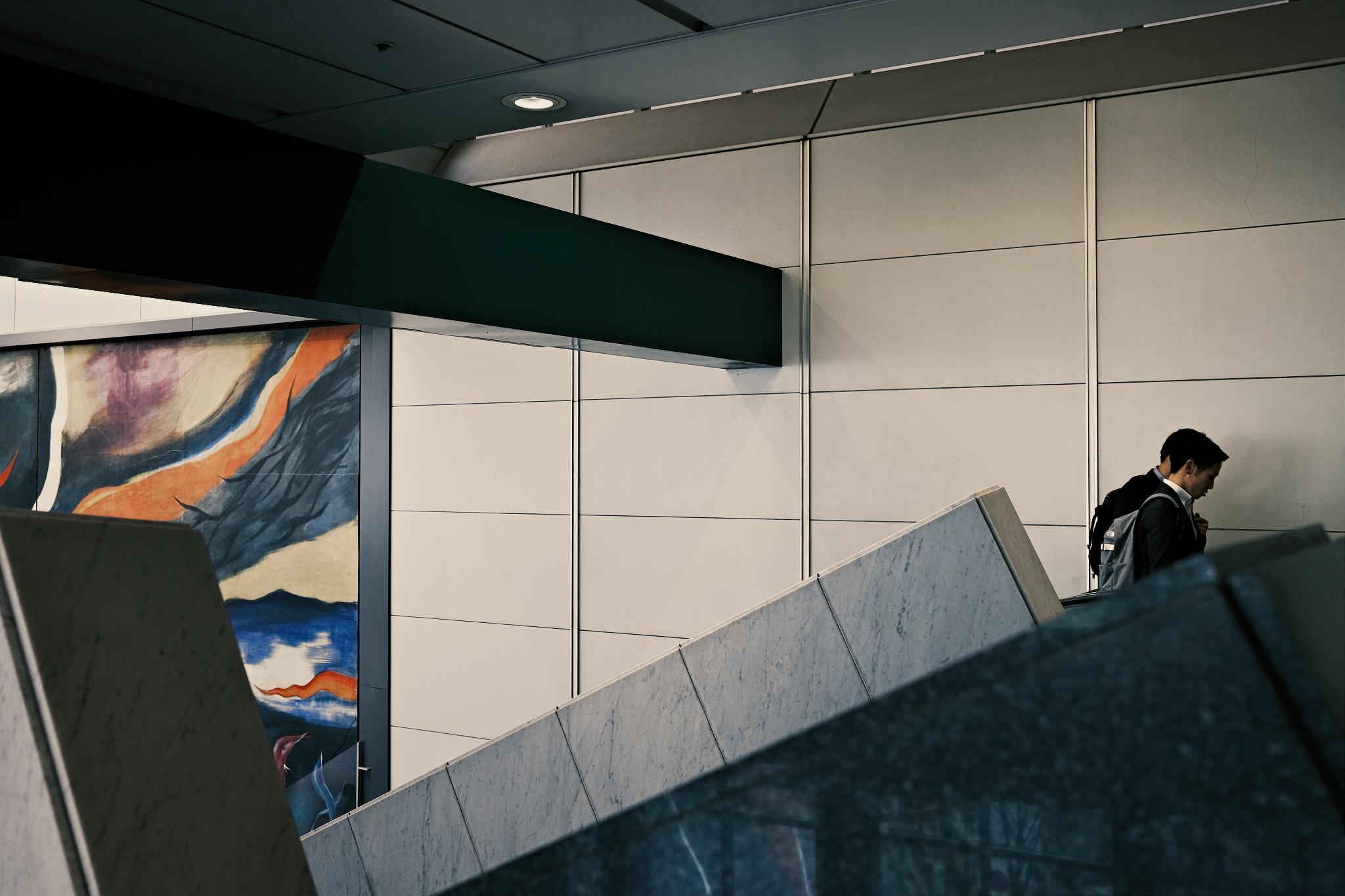
Confinement

TOKYO-202004-00053

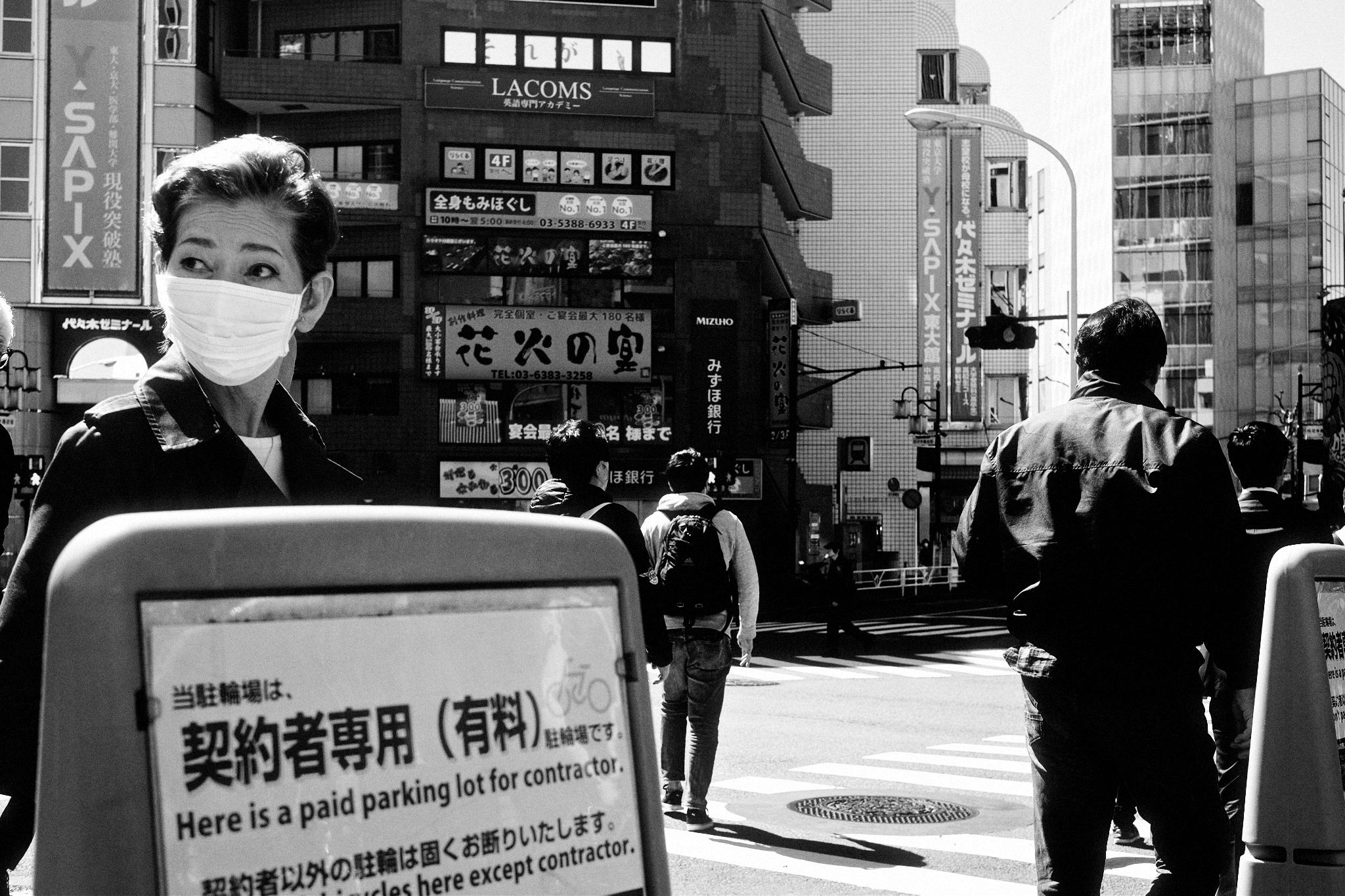
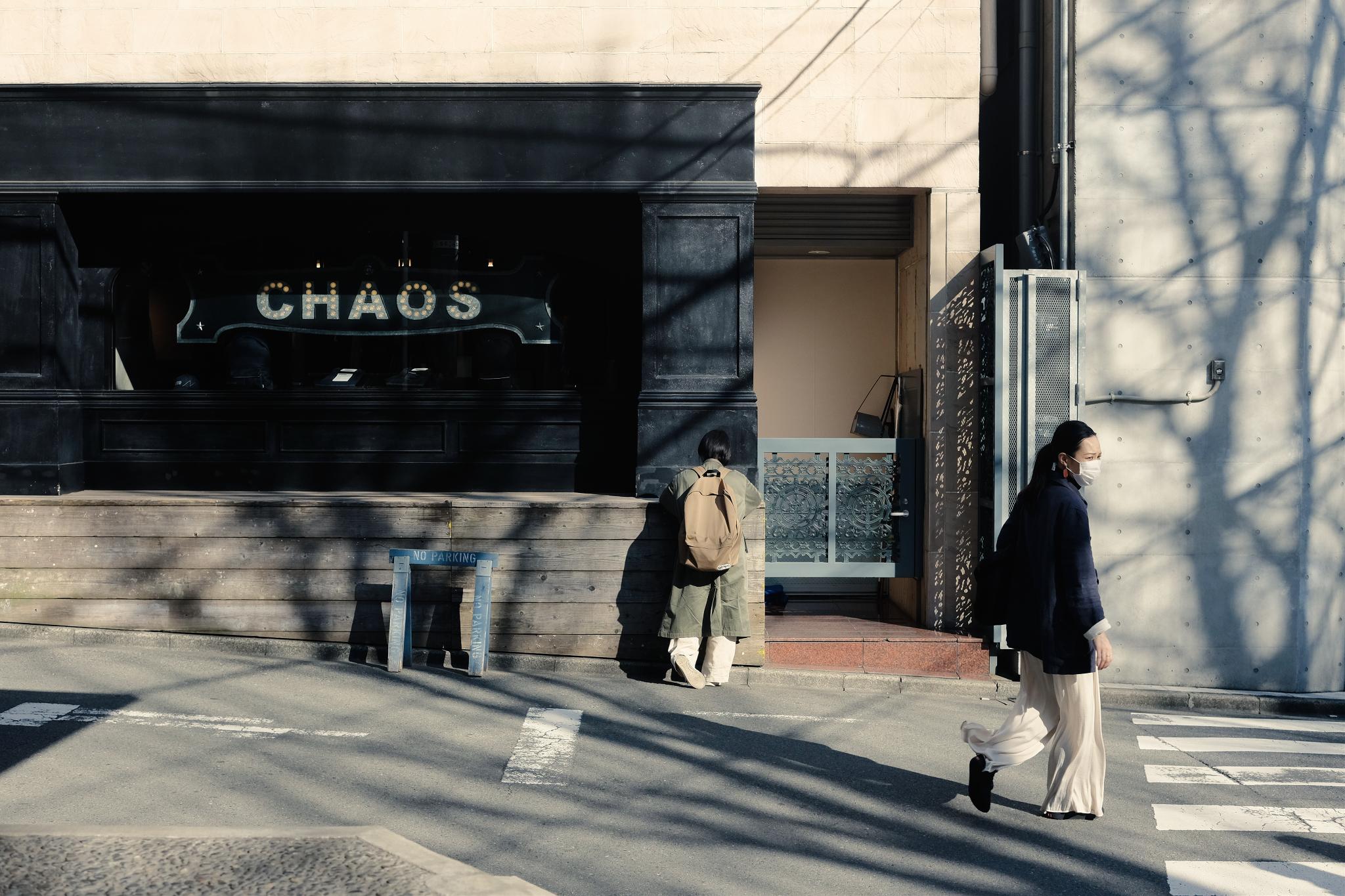
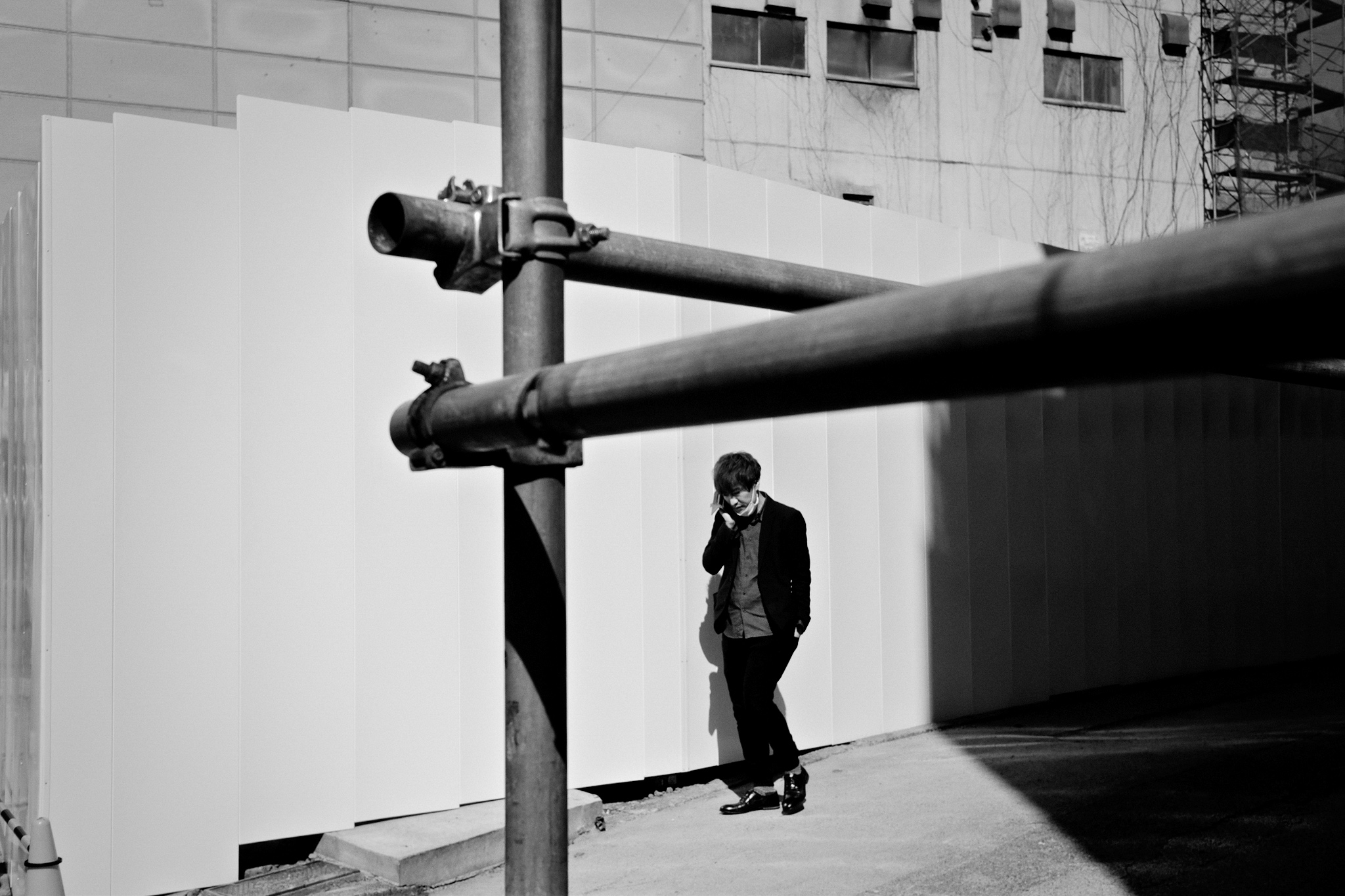
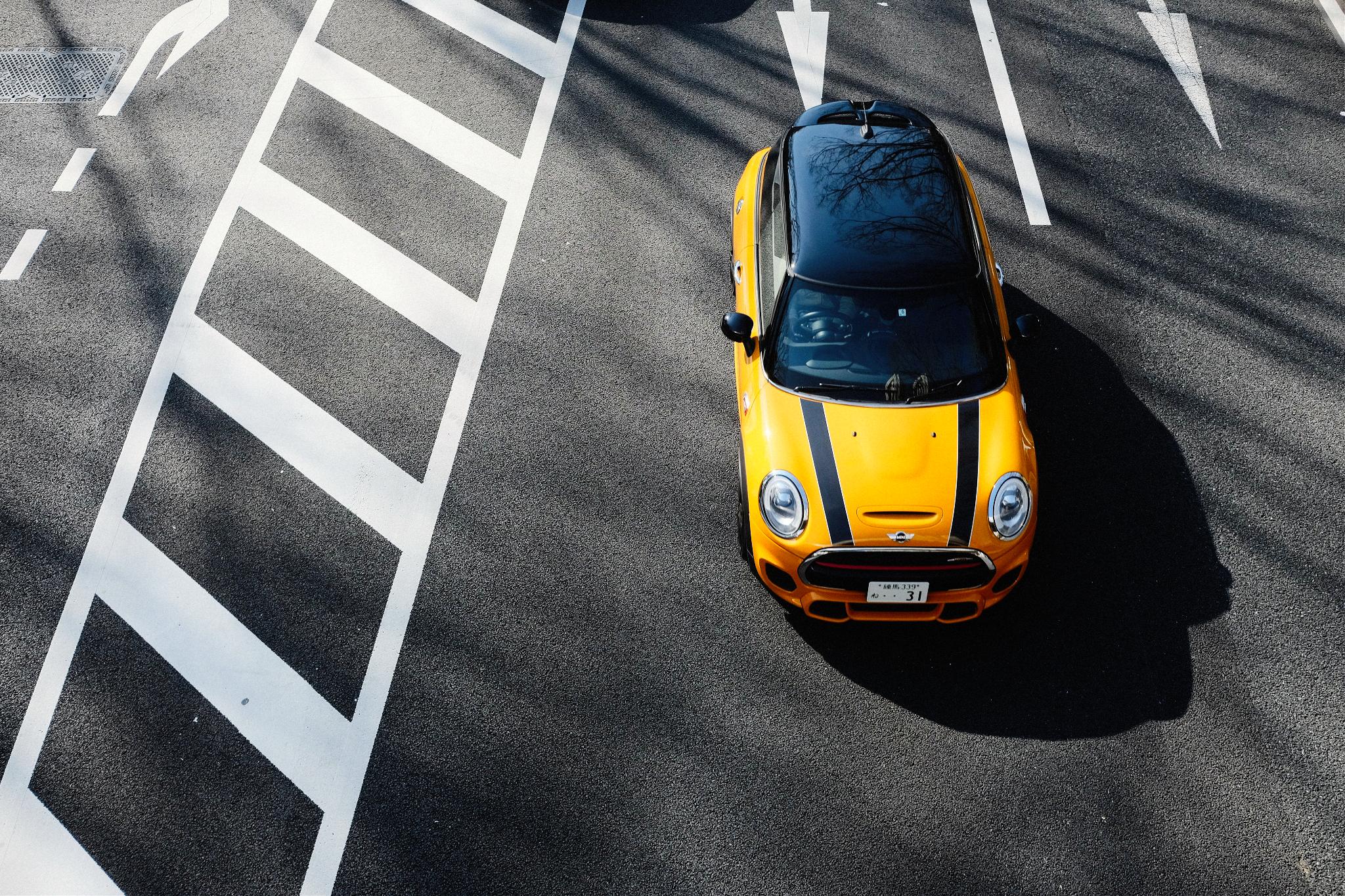
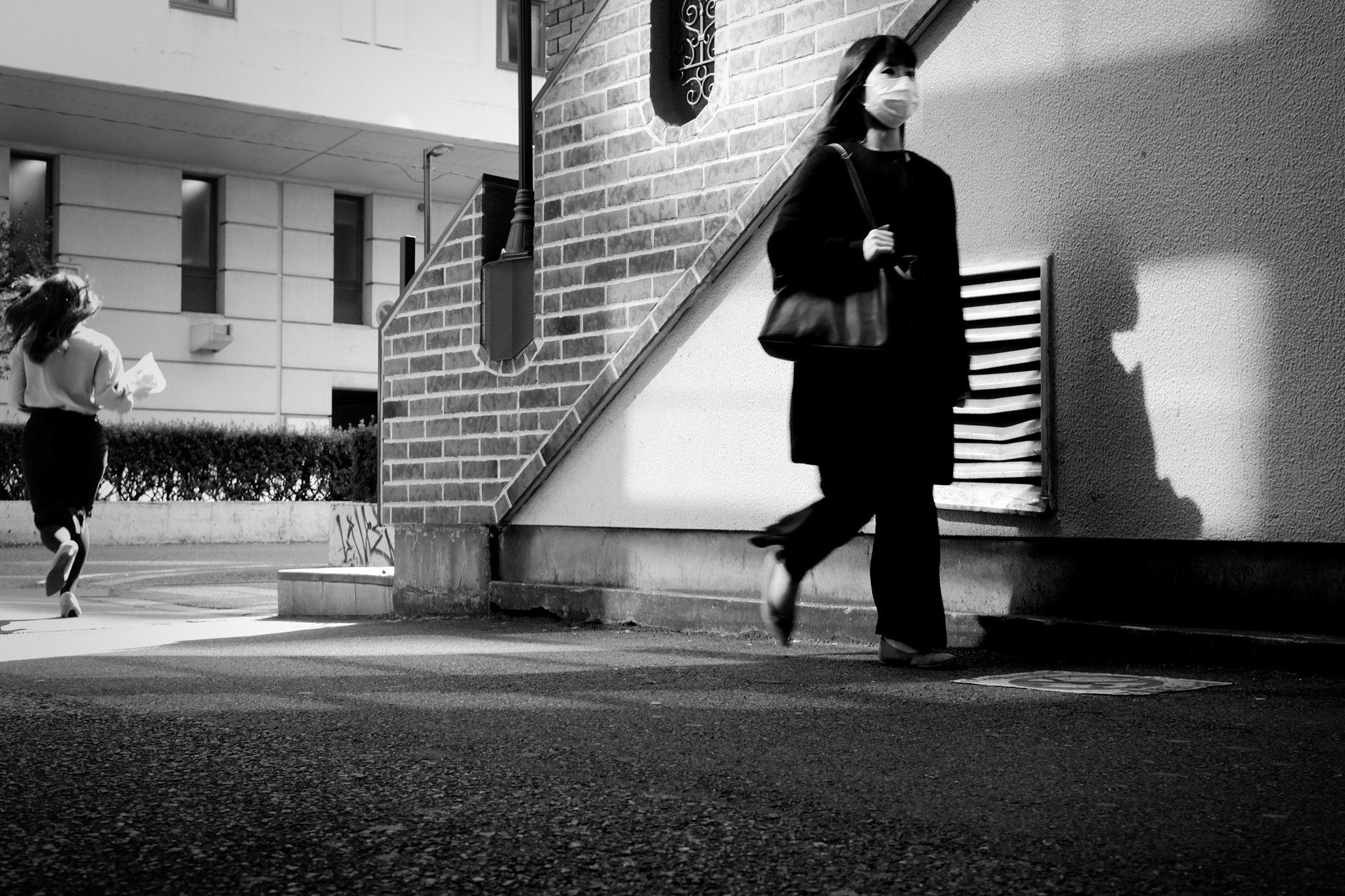
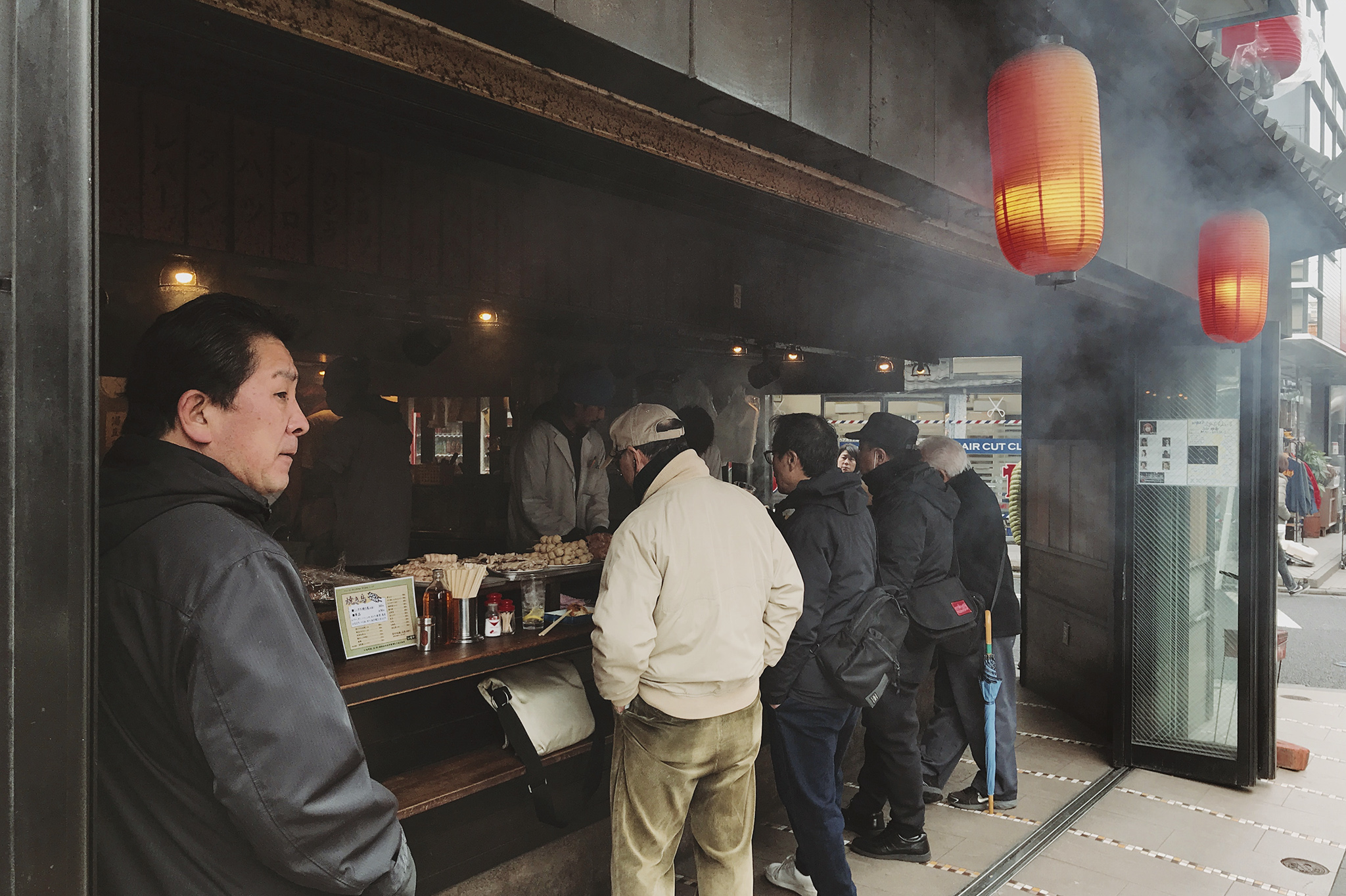
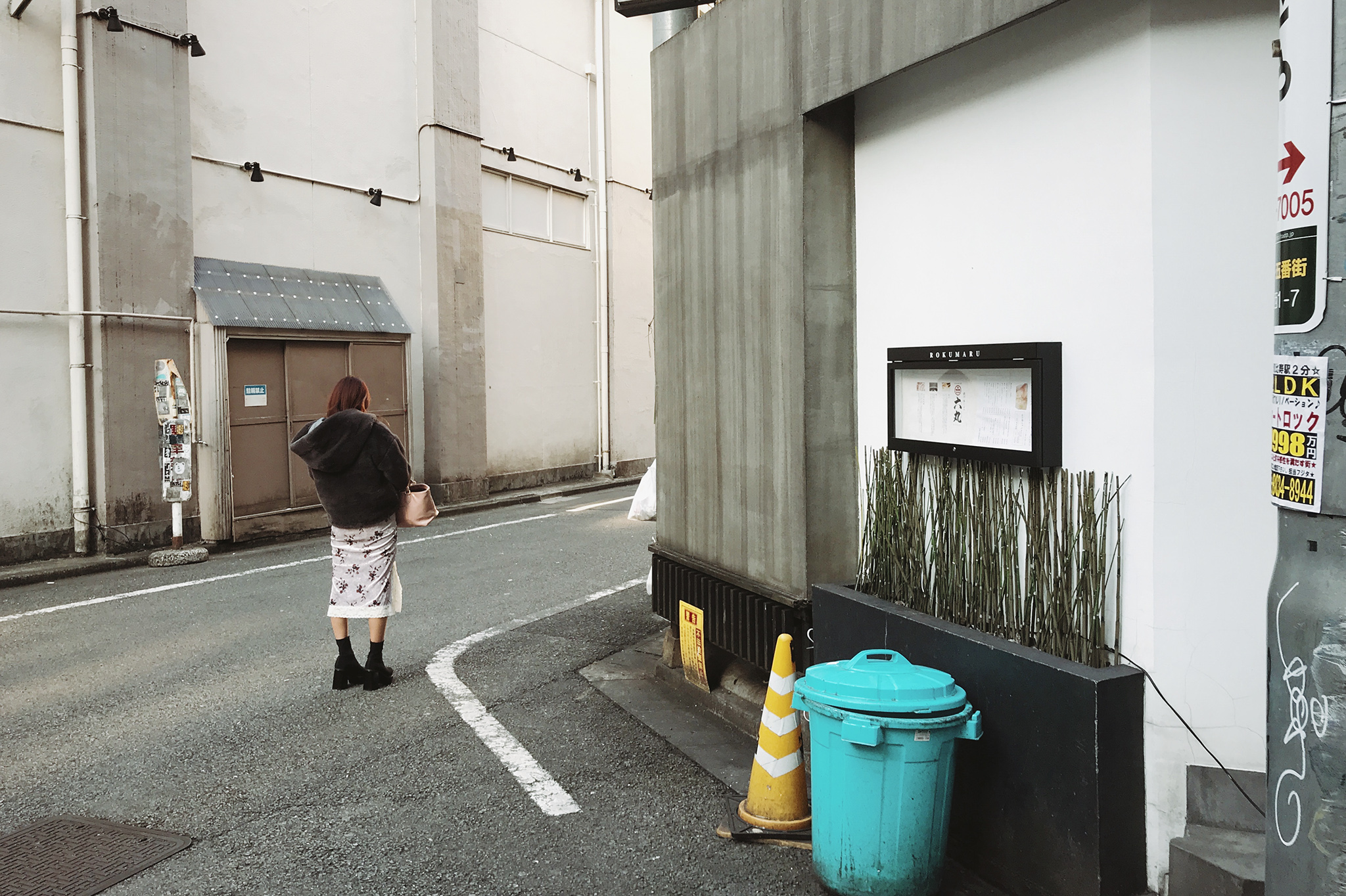
The cool thing about photography on the streets is that it’s a jazz improvisation. The photographer sets out on a visual exploration of a chosen environment, has some ideas – perhaps about how to use the light or perspective and framing choices – but doesn’t know where this exploration will lead. The photographs that are made are the result of an interplay between the photographer, the camera, the surrounding elements and some serendipity. When all the right notes are hit and it all comes together, the experience and the resulting photos are magical.

This is how I like to approach photographing on the streets and other public spaces, reacting to and working with the changing scenes that unfold before me, aiming for a little magic.

But there’s another approach: to focus on a single scene, treat it as a studio of sorts, explore its visual possibilities through space and time. A few years ago, the photographer and writer Teju Cole, on his Instagram feed, published a series of frames of a bus stop (somewhere in Europe if I remember rightly). Each day he added a photo taken from a new angle or distance, showing a facade of the structure or else a small detail. Banal as the subject was, the images as a series worked as a kind of mediation on that particular structure and on seeing in general.

These photos were taken during three visits to Tokyo’s Shibuya station, in a section of the concourse connecting the Shibuya Mark City complex. The colorful mural visible in some of the photos is Taro Okamoto’s 1969 masterpiece Myth of Tomorrow.

This focused, more studied approach – perhaps a necessity in these times of confinement – can also yield interesting results in a single session and a more confined space, say a kitchen.

Impermanence

TOKYO-202003-00240

TOKYO-202003-00235

Transience and impermanence are hallmarks of life, from the changing elements of the seasons to the changing seasons of our own lives. Nothing lasts forever; it all fades away. This is the pathos of life, the mono no aware.

物の哀れ

Mono-no aware: the ephemeral nature of beauty – the quietly elated, bittersweet feeling of having been witness to the dazzling circus of life – knowing that none of it can last. It’s basically about being both saddened and appreciative of transience – and also about the relationship between life and death. In Japan, there are four very distinct seasons, and you really become aware of life and mortality and transience. You become aware of how significant those moments are.
— David Buchler / Fiona Macdonald

The most celebrated example of a natural phenomenon rich in mono no aware is the spectacle of cherry blossoms.
— The Book of Life

TOKYO-202003-00248

Pandemic

TOKYO-202003-00031

Reading the latest developments in this unfolding drama, it seems like we’re living in some kind of prequel to Twelve Monkeys.

Deadly pandemics have wreaked havoc and taken lives in the past: the Black Death killed some 50 million people in the 14th Century; the 1918 Spanish flu possibly many more; more recently, HIV/AIDS has taken around 30 million lives. This new COVID-19 outbreak has thankfully not been anywhere near as deadly, and with optimism we can expect that with 21st Century medical technology a cure will be found before too long.

But the certanities of a few months ago have deserted us, and here we are, worrying about family and friends, and trying to live our lives as best we can in a continually shifting landscape of closed borders and mandatory quarantines. Here in Tokyo, while schools and museums have been shuttered, things don’t look all that different on the surface, but the inordinate prevalence of face masks and hand sanitizers, relatively empty train stations and carriages, dearth of tourists and mostly deserted stores belie our new reality. It’s like some kind of virtual simulation of its true self. We don’t know how bad it will get before it gets better. We don’t know when it will get better. But as they say, the darkest hour is just before the dawn. It will get better.

TOKYO-202003-00116

TOKYO-202003-00119

TOKYO-202003-00122

Soul food

TOKYO-202003-00019

The urge to create. Music. Monuments. Machines. Mathematical equations and scientific theories. Poetry and literature. Art. Photography. The compulsion to give our existence meaning and to creatively express our experiences and impressions is deeply ingrained in us, evidenced as far back as 20,000 years ago in those celebrated late Palaeolithic era cave paintings created at Lascaux in south-western France.

As we hurtle toward a cold and barren cosmos, we must accept that there is no grand design. Particles are not endowed with purpose. There is no final answer hovering in the depths of space awaiting discovery. Instead, certain special collections of particles can think and feel and reflect, and within these subjective worlds they can create purpose. And so, in our quest to fathom the human condition, the only direction to look is inward. That is the noble direction to look. It is a direction that forgoes ready-made answers and turns to the highly personal journey of constructing our own meaning. It is a direction that leads to the very heart of creative expression and the source of our most resonant narratives. Science is a powerful, exquisite tool for grasping an external reality. But within that rubric, within that understanding, everything else is the human species contemplating itself, grasping what it needs to carry on, and telling a story that reverberates into the darkness, a story carved of sound and etched into silence, a story that, at its best, stirs the soul.
— Brian Greene

Human creativity is a wonderful thing. Ballast amid the chaos. I’ve chosen photography to reflect on my world, but I used to paint and draw and there was a time I used words to contemplate my feelings, experiences and impressions. Not long ago I came upon an old notebook — a diary of sorts — that was full of poems penned by a much younger me. I’ve begun to collate the analog writings into digital book form for archival purposes and in the process have rediscovered thoughts, emotions and impressions of people and places I’d long ago encountered and in time all but forgot. For instance this poem, a portrait of a woman I knew in Sydney in 1998.

And her quiet space
her wistful face
a sadness draped
over
inner grace.
Her stillness
moves
throughout the room.
Her strength
a wall
against the gloom.
Her warmth
fragrant
summer blooms.
From a quiet place
such a tender face
upon which
melancholy
leaves a subtle trace.

On the street

TOKYO-202002-00138-V2

The photograph should be more interesting or more beautiful than what was photographed.
— Garry Winogrand

TOKYO-202002-00161-V2

I have always loved the amateur side of photography, automatic photographs, accidental photographs with uncentered compositions, heads cut off, whatever.
— William Klein

TOKYO-202002-00074

To me, photography is an art of observation. It’s about finding something interesting in an ordinary place…I’ve found it has little to do with the things you see and everything to do with the way you see them.
— Elliott Erwitt

TOKYO-202002-00146-V2

I fell in love with the process of taking pictures, with wandering around finding things. To me it feels like a kind of performance. The picture is a document of that performance.
— Alec Soth

Blue skies

While I continue to explore the possibilities of digital polaroid photography, in a happy coincidence I read about Belgian photographer Anton Kusters‘ 2020 Deutsche Börse Photography Foundation Prize nomination. Kusters’ installation The Blue Skies Project references the Holocaust, in particular Nazi concentration camps, and was created with the help of contemporary reference books, Google Earth — and a Polaroid camera.

His use of self-processing polaroid photographs — 1078 of them to be exact — adds to the creative adaptations of the unique analog medium. More importantly, it adds a deeper dimension to his pensive, conceptual work, as the photos are apt to degrade and fade over time — much like memories of the Holocaust.

It’s a commentary on how we deal with memory. If we lock it away, it might be protected but never seen. And if we show it, it might fade and evolve into something else entirely.

I first came across Kusters’ work almost a decade ago when I saw his compelling Yakuza project. His approach to photography has since evolved from using a camera to document what interested him to expressing ideas through — as he puts it — photographic processes. The work resulting from this new approach is no less compelling and I think quite worthy of a Deutsche Börse prize.

Polaroid effects

Polaroids, the original instant, shareable photography; high-tech yet lo-fi; perfect for spontaneous snapshots yet a valuable tool for professional photographers and also loved by visual artists for its creative possibilities; disposable and collectible, a fun and serious platform.

Edwin Land’s first self-developing camera appeared back in 1947 and one of the first artists to see the potential for this type of photography was the legendary photographer Ansel Adams, who soon became a consultant for the company, helping to refine the product. In the decades that followed, Polaroid cameras were used by many established artists, among them Andy Warhol, Wim Wenders, William Eggleston, Linda McCartney, Robert Mapplethorpe, Dennis Hopper and David Hockney.

Instagram, when it appeared in 2010, helped to establish the smartphone as the Polaroid camera of the digital age. With its stream of exclusively square photos, it was instant, sharable, high-tech, lo-fi, comprising shots of pet cats and cups of coffee as well as striking images with artistic merit, a platform both fun and serious.

Instagram has changed greatly in the decade since it first appeared in Apple’s App Store: there are more pet cats and artistic images than ever before, yet the original simplicity – and the fun, I think – has been lost. But there are apps, though not too many these days, that reinterpret polaroid photography for a digital medium and provide that simplicity and fun.

One of these is the InstaLab app. An alternate Android version of the app is still known by its original name, Polaroid FX, the Polaroid name licensed from the people who bought it from the company after its bankruptcy early this century. But subsequent owners have ressurected the company – both the Polaroid name and its dedication to instant analog photography – and it seems that to maintain the brand’s integrity, licencing rights are no longer being sold or renewed.

Regardless of the name, InstaLab offers a pared-down photography experience. The photos it produces have a Polaroid aesthetic and – at least in the free tier of the app – options are limited: you open the app, frame and shoot. You can then choose to change the frame, add an effect, color filter or some text, make some basic exposure or saturation adjustments, and save a low-resolution image, ready for sharing. Once saved no further editing is possible. I’d be happier with even fewer editing options but the experience very much reminds me of the early days of Instagram. The app’s appeal to me is that its limitations and low fidelity aesthetic take the preciousness out of creating photographs but also offer challenges and opportunities to create more than snapshots. This type of photography may even get me back to using Instagram.

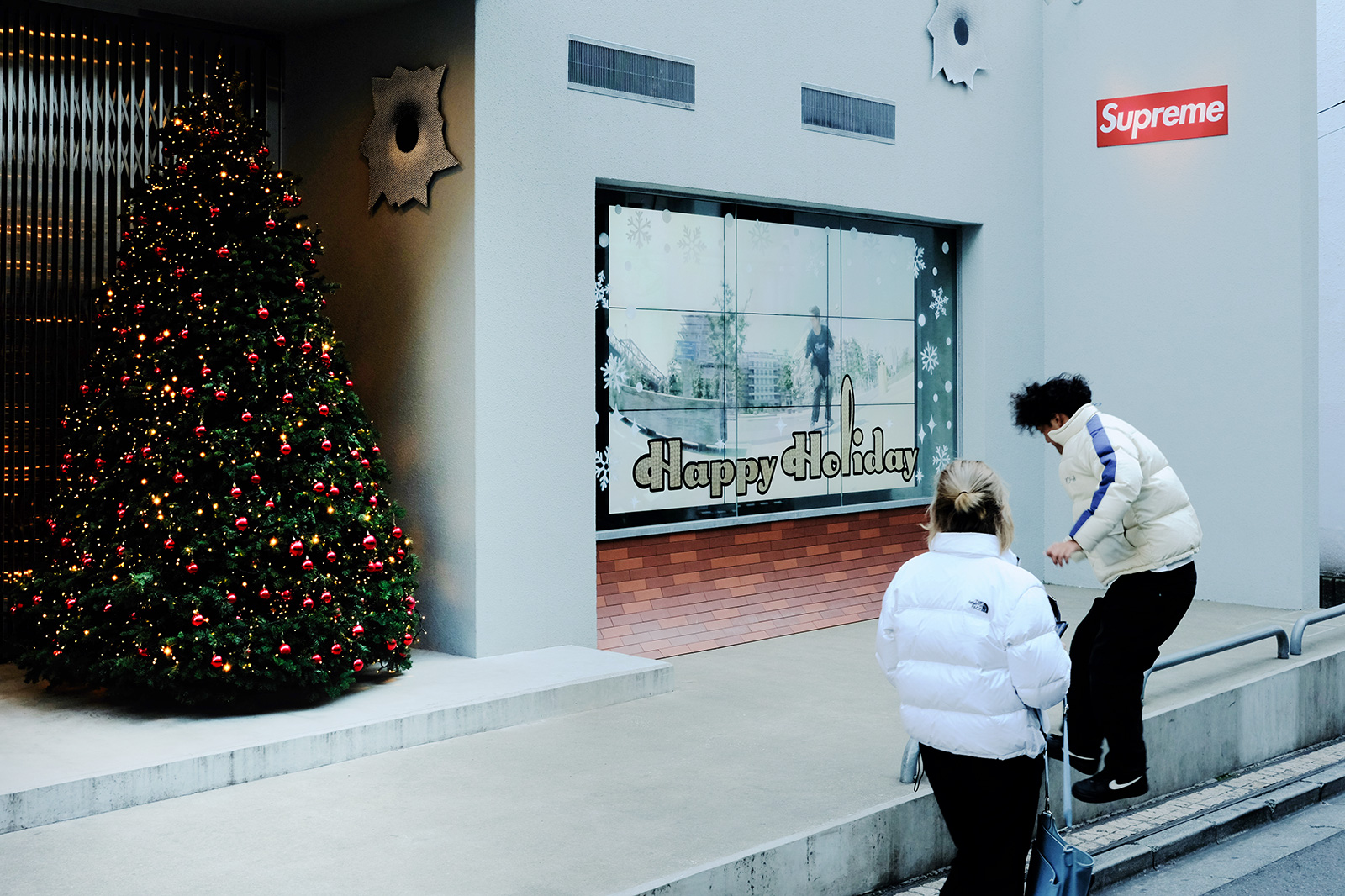
Happy Holiday

TOKYO-201912-0038-R-V1-1

Overnight, the Halloween pumpkins and orange signs morphed into Christmas trees, tinsel, colored baubles and glittering lights. Appearing far sooner than necessary, these too will vanish throughout the city, abruptly, on the day after Christmas, replaced by more sober, traditional decorations made of bamboo, pine and straw, to see in the new year.

The new year waits on the horizon, full of promise and surprises. For now, it remains an unwritten book, something to look forward to. It can wait. December is a time to wrap up, and to decompress, reflect, rest, and play. An eventful 2019 draws to a close; so too the first year of my post-Instagram snapshots. This blog has been for the last twelve months a virtual outlet for personal musings, without the pressure, annoyances or restrictions of Instagram and its ilk. My own place to decompress, reflect, rest and play.

And as I wrap up for the year, I look forward to publishing more snapshots in the new year. Until then, happy holidays.

What am I doing?

DSCF0982

An unseasonally wintery day, wet and icy, bleak. A perfect day to escape to the warmth and stimulation of a gallery. I visited the TOP museum to look at photos by an artist I hadn’t heard of: Eiko Yamazawa.

Osaka-born Yamazawa was a creative pioneer who had a long, somewhat unusual life for a Japanese woman of her time. Born in 1899, she studied painting before traveling alone to America in her 20s, where she took up photography. Back in Japan in the 1930s she established a successful commercial photography practice specializing in portraiture.

She returned to America after the war and, influenced by mid-century modernism and abstract art, she herself started experimenting with photography as abstract art. From colorful work with echoes of Miró and Matisse to quirky still life studies and minimalist monochrome abstractions that bring to mind the suprematist art of Kazimir Malevich, Yamazawa’s photography morphed into art, her photographs’ content became color and form.

In 1960 she shut down her commercial practice to focus on her art. She traveled and studied in the US and Europe and, at an age when most people would be easing up, she continued to hone her vision through the 1970s and 80s with her ongoing What I am doing series of photographs. She worked and exhibited well into old age and died in 1995 aged 96.

It seems that artists make wonderful photographs when adopting the camera as a tool of expression. Cartier-Bresson, David Hockney, Man Ray and Andy Warhol, to name a few, have explored the boundaries of the medium. Yamazawa’s work is no less interesting ― or inspiring.

DSCF0984