Exhibitions in Color

A new exhibition in Tokyo of Saul Leiter’s work has 400 or so images on display, including rarely seen and never previously publicly seen photographs. Visitors are also allowed to take photographs in the galleries — unusual, but a welcome gesture.

Saul Leiter Origins in Color starts with Leiter’s early monochrome work from the 1940s through the 1960s. What struck me here was how some of his early street shots weren’t that good, the young artist still finding his visual voice. An adjoining room displays a collection of monochrome portraits of ‘icons’: painters, musicians and photographers Leiter knew. Here, Leiter’s growing visual vocabulary is evident in his framing and use of light. The focus moves on to his fashion photography and features magazine spreads from publications like Harpers Bazaar and Elle that show many examples of Leiter’s now masterful creative visual language. Next up are painterly color photos grouped with original paintings by the artist. I’ve always thought Leiter a far better photographer than painter, but it was his painter’s sensibility that informed the quality of his photographs. Around the corner, mounted film transparencies are laid out on light tables and a recreated approximation of Leiter’s living area features a continuous slide show of some of his more well-known images. One can perhaps imagine Leiter sitting back in his New York apartment, with friends maybe, viewing his photos. Behind this gallery is the show’s theatrical highlight, echoes of the living room projections, as visitors enter a large darkened space, flanked by multiple larger than life projections of hundreds of Leiter’s images, their scale and the frequency with which they change threatening to overwhelm the viewer but nevertheless impressive, showing Leiter’s photographic genius in magnified detail. Finally, one exits through the inevitable — Leiter themed — gift shop.

Saul Leiter Origins in Color — At Shibuya Hikarie, Tokyo, until Aug 23

TOKYO-PH-202307-00035
Matisse 01

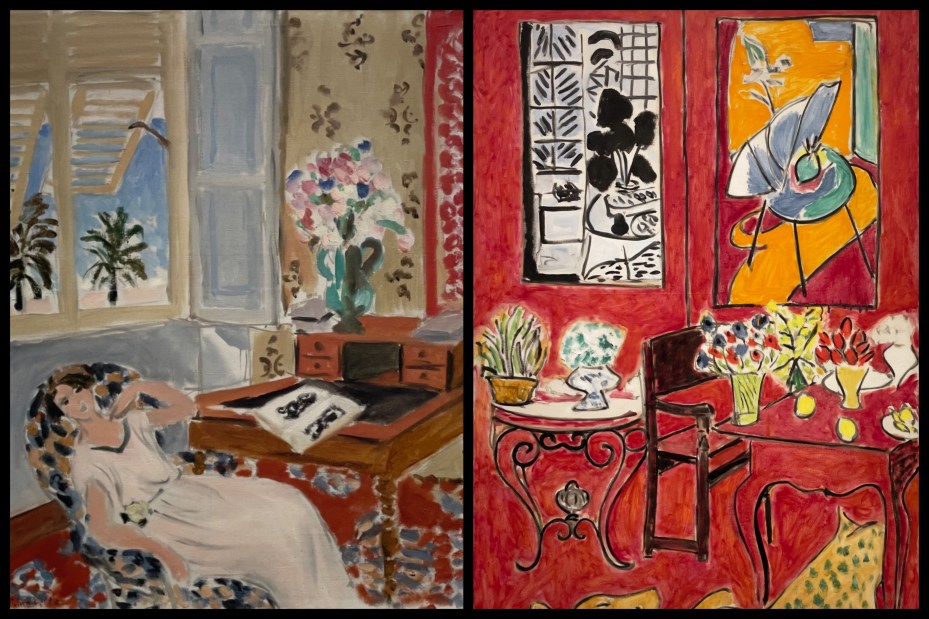
Meanwhile, across town, works from another master colorist are on display at the Tokyo Metropolitan Art Museum. Some 150 works from France’s Centre Pompidou comprise the retrospective exhibition Henri Matisse: The Path to Color. Photography is allowed in some areas.

Matisse was one of the great artists of his generation, his experimentation and innovative works helping to create and define 20th Century modernism. This exhibition is presented chronologically over three levels, from Matisse’s earliest oil paintings in the late 1800s to his iconic Jazz series of gouache paper cut-outs, abstract book cover designs, and the simple line drawings and stained glass art he created for the Chapel of the Rosary in Vence in the late 1940s. Progressing through a series of chapters of Matisse’s creative life, visitors can see his own progression from early pictorial works through the influences of Impressionism, Pointillism and Cubism on his technique and gradual abandonment of natural perspective and representation, as well as his increasingly adventurous use of color and development of Fauvism, to the pure abstraction and color blocks of his later works. Finally, here too, as part of the modern museum experience, visitors enter a comprehensively stocked and crowded gift shop before exiting to Ueno Park to digest the visual feast they were presented with.

Henri Matisse: The Path to Color — at the Tokyo Metropolitan Art Museum, Ueno, until Aug 20
Daido ongoing

DSCF6701-2016

Daido Moriyama, 森山 大道, is the ultimate street photographer. He’s been walking the streets of Tokyo with one compact camera or another in his hand for going on sixty years, snapping fragments of the city and its inhabitants from his singular perspective, both capturing and helping to shape the city’s distinctive character.

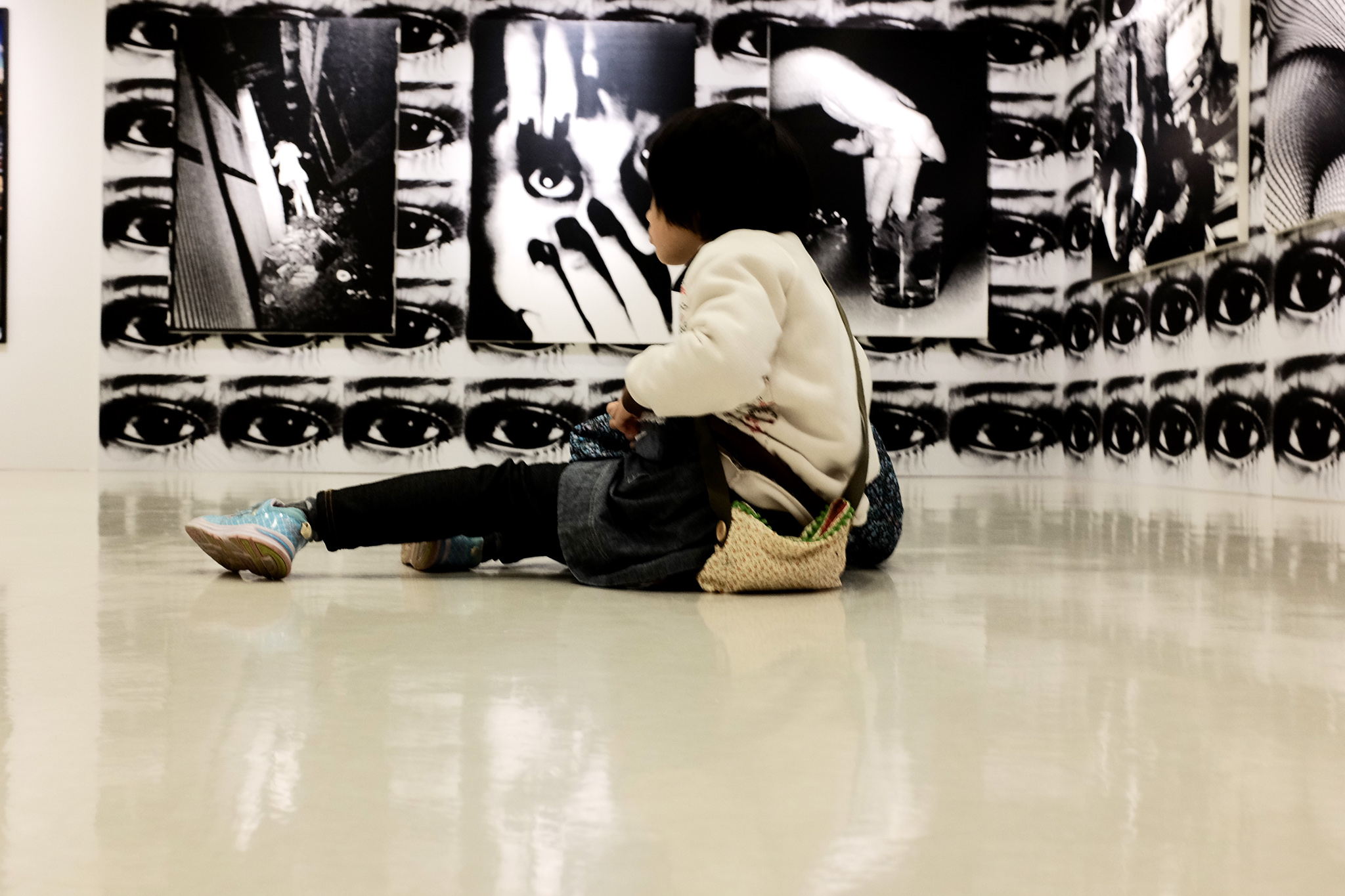
A nicely curated exhibiton of Moriyama’s mostly recent work is currently showing at the TOP Museum in Ebisu. The images in Moriyama Daido’s Tokyo: ongoing are spread over three rooms. Greeting the visitor in the first space is a large gelatin silver print of the photographer’s iconic Stray Dog, Misawa, placed by a Warhol-esque silk-screened mosaic of cloned lips, half monochrome, half in color, covering one wall like pop art wallpaper. Opposite is a series of striking oversized inky black, high contrast silk-screened portraits, grainy, some resembling pointilist artworks. The larger adjoining central space contains the bulk of the works and also groups images into tiled mosaics, three photos high, monochrome on one side of the room, color on the other. Close up images of hair, legs and signs are mixed in with frames of alleys, pedestrian crossings and other streetscapes. Here and there is the occasional portrait or reflected self-portrait. The effect of juxtaposing so many images is to give a sense of the city’s at times overwhelming kinetic energy, especially in the color photos, many of them quite lurid. A pair of square glass-topped tables frame monochrome collages, formed by layering and overlapping prints at seemingly random angles, hiding and revealing elements of each. Given the visual complexity on show in this space, there’s plenty to take in, so a small third space serves as a kind of decompression chamber. It’s cloistered, hidden by heavy curtains, and features a few black and white frames from Moriyama’s abstract mesh tights series, each incandescent with the backlighting of the digital screen it is displayed on. The atmosphere here is intimate, contemplative, personal, and despite the eroticism of the photos, is more church confessional than peep show.

A good exhibition is always invigorating. In photography, as in all creative pursuits, it’s sometimes hard to maintain momentum. Moriyama himself bid farewell to photography in 1972 with his book shashin yo sayonara. His hiatus was fortunately short lived and he has since applied himself to his art: Moriyama has one hundred and fifty or so books to his name, has been exhibited dozens of times around the world and has received a handful of prestigious photography awards — and he’s still out on the streets with his camera almost every day. The 81 year old photographer is an inspiration.

Note: photography is not allowed in this exhibition; the photo above was taken in 2016 at another Moriyama exhibition in Tokyo.

What am I doing?

DSCF0982

An unseasonally wintery day, wet and icy, bleak. A perfect day to escape to the warmth and stimulation of a gallery. I visited the TOP museum to look at photos by an artist I hadn’t heard of: Eiko Yamazawa.

Osaka-born Yamazawa was a creative pioneer who had a long, somewhat unusual life for a Japanese woman of her time. Born in 1899, she studied painting before traveling alone to America in her 20s, where she took up photography. Back in Japan in the 1930s she established a successful commercial photography practice specializing in portraiture.

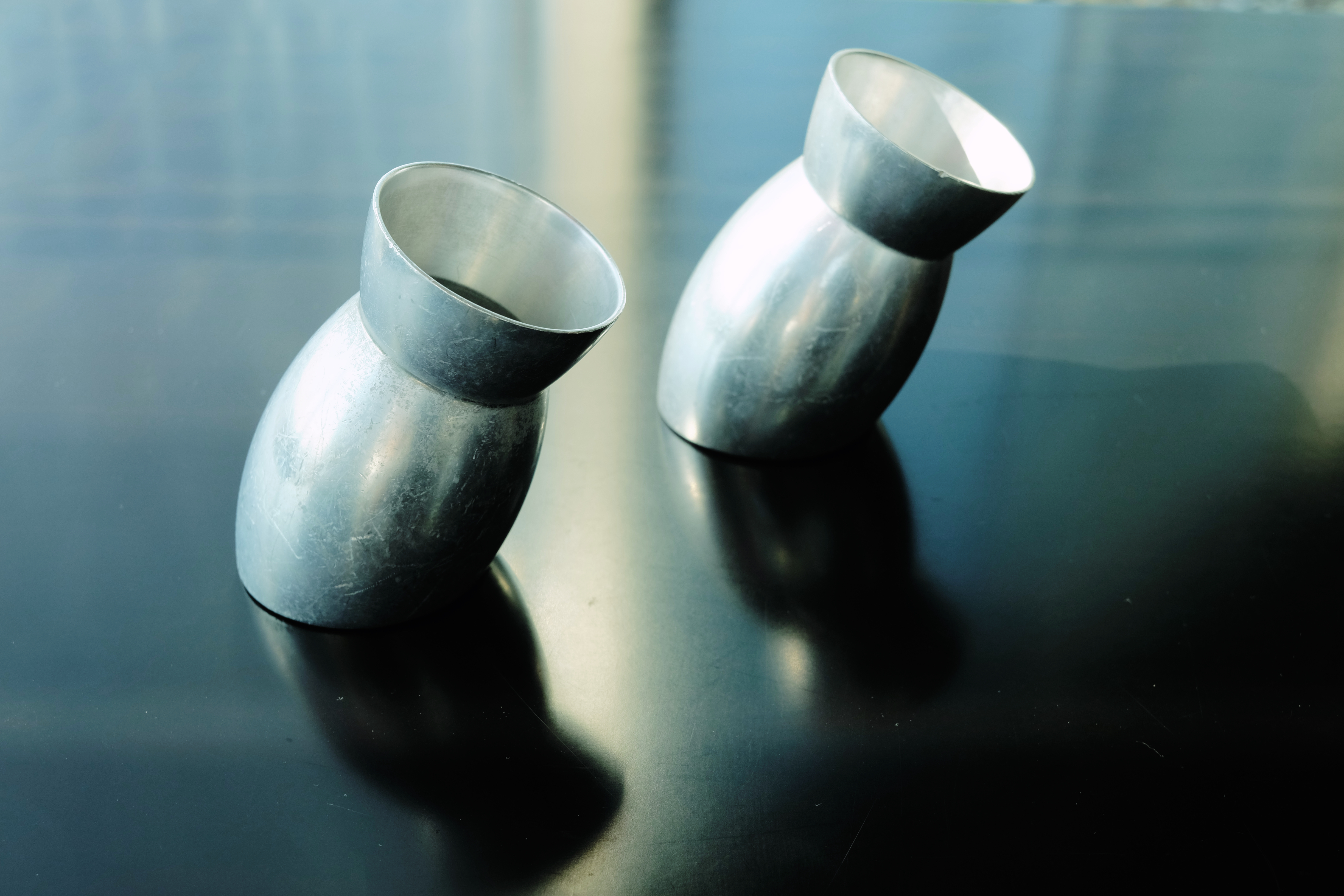
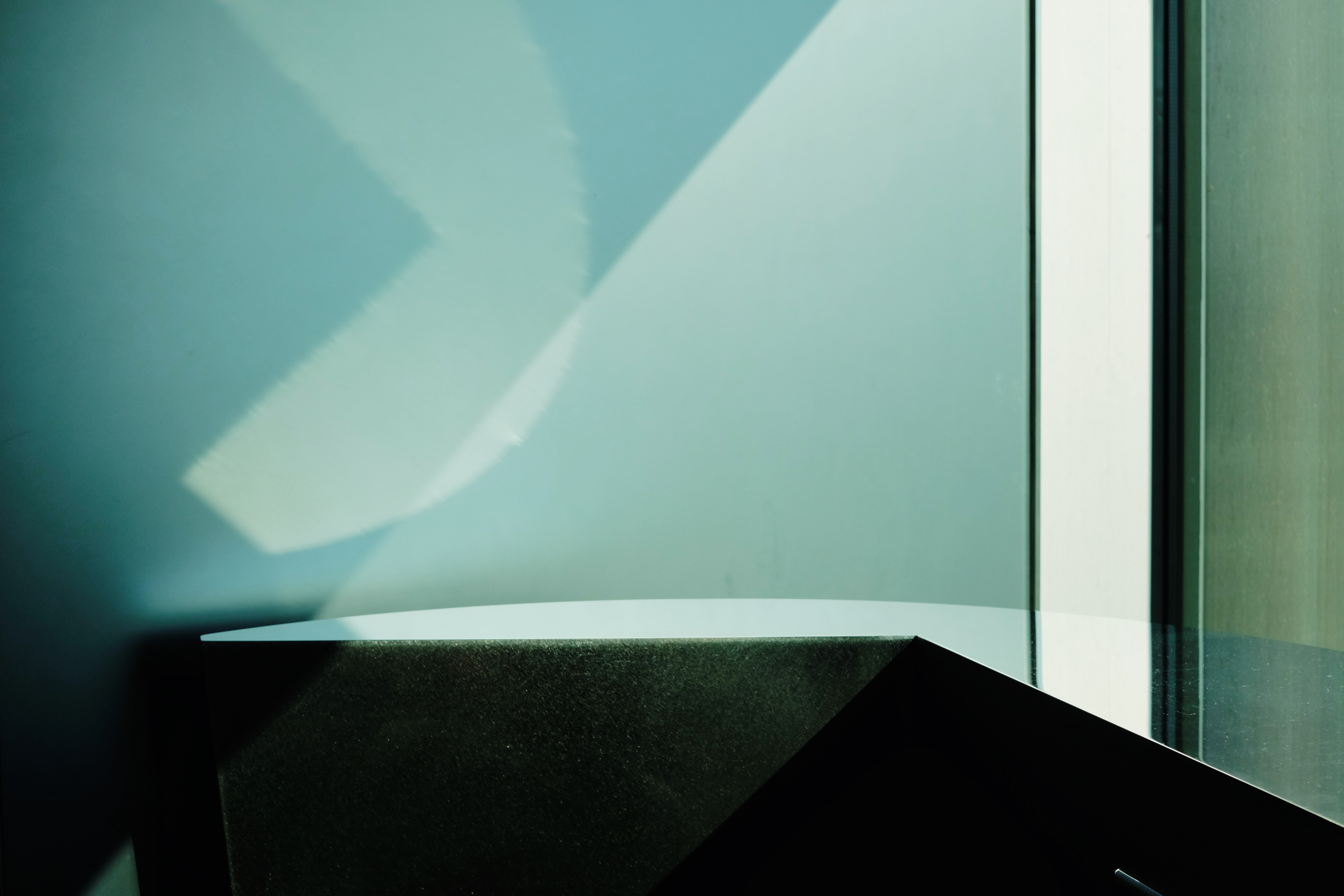
She returned to America after the war and, influenced by mid-century modernism and abstract art, she herself started experimenting with photography as abstract art. From colorful work with echoes of Miró and Matisse to quirky still life studies and minimalist monochrome abstractions that bring to mind the suprematist art of Kazimir Malevich, Yamazawa’s photography morphed into art, her photographs’ content became color and form.

In 1960 she shut down her commercial practice to focus on her art. She traveled and studied in the US and Europe and, at an age when most people would be easing up, she continued to hone her vision through the 1970s and 80s with her ongoing What I am doing series of photographs. She worked and exhibited well into old age and died in 1995 aged 96.

It seems that artists make wonderful photographs when adopting the camera as a tool of expression. Cartier-Bresson, David Hockney, Man Ray and Andy Warhol, to name a few, have explored the boundaries of the medium. Yamazawa’s work is no less interesting ― or inspiring.

DSCF0984

Exhibitionism

IMG-5AA1A876

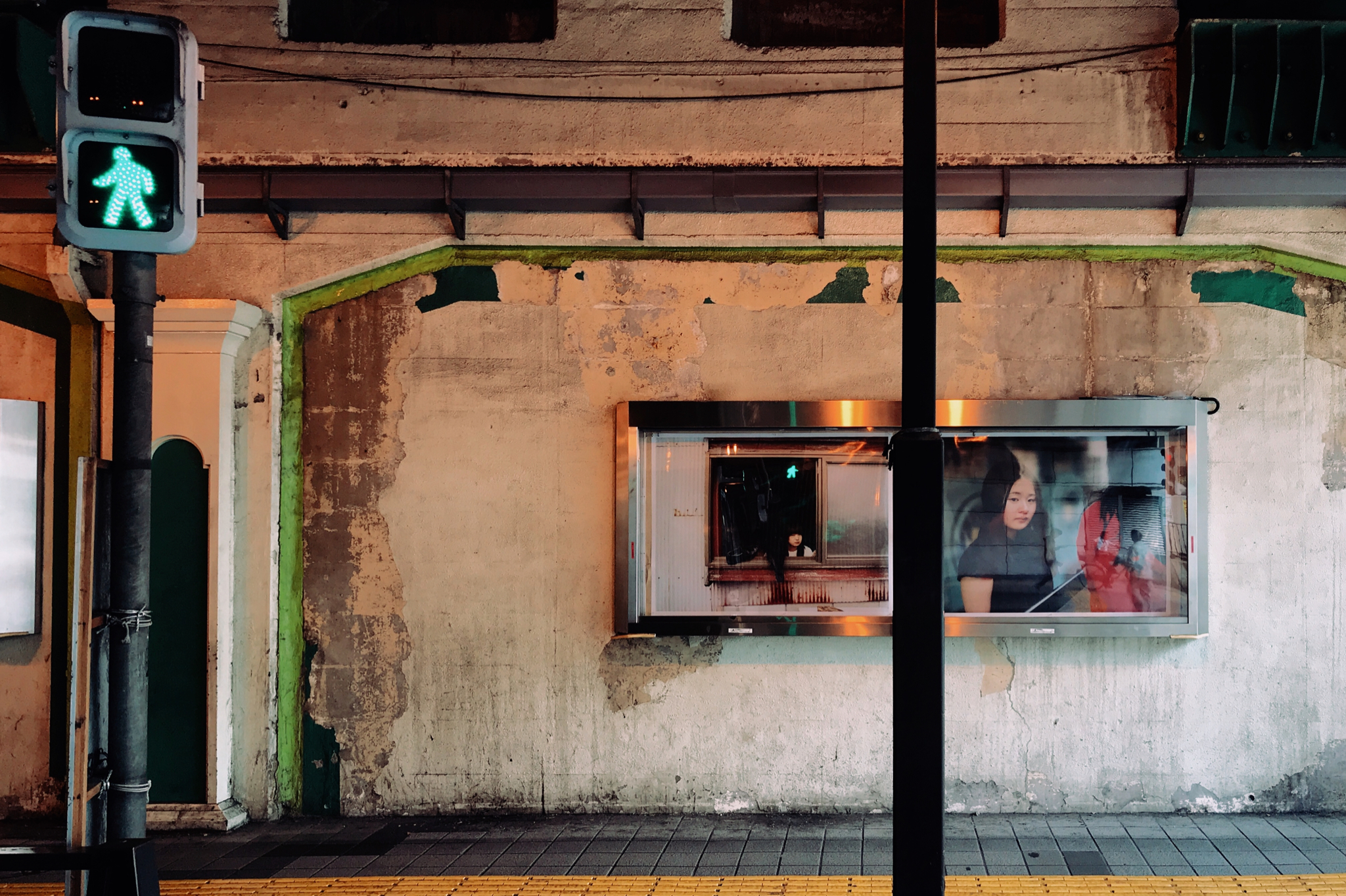
Series of shadow boxes line the walls of a rail underpass by Nakano Station. They often display community information, images of neigborhood festivals, or colorful drawings rendered by local elementary school students. For the time being they’ve become a contemporary art gallery.

Tokyo photographer—and self-described non-fiction writer—Inbe Kawori (インベ カヲリ) has commandeered one wall of the underpass to exhibit a selection of his works.

The edgy urban photographs, gritty environmental portraits of women, sometimes surreal, often eroticized, with faint echoes of Daido and Araki, printed to fill the display cases, are perfectly placed here on the streets of Nakano, with its jumble of old and new restaurants, stores and homes, its congested commercial center, quiet residential areas and lively entertainment district.

I’ve had passing thoughts about this kind of art exhibition, but I’m really impressed with the actuality of it. Here’s to more street art.