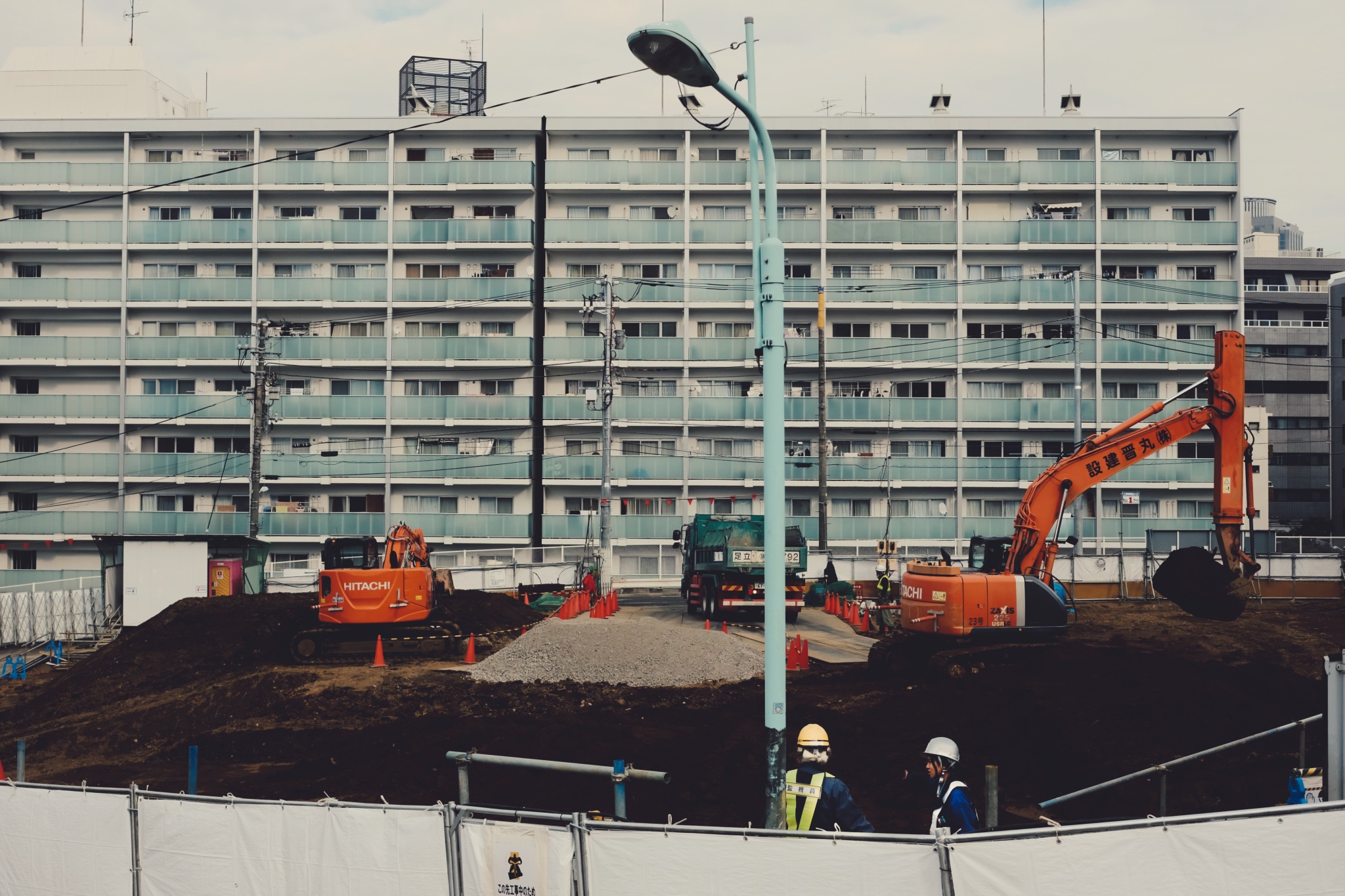
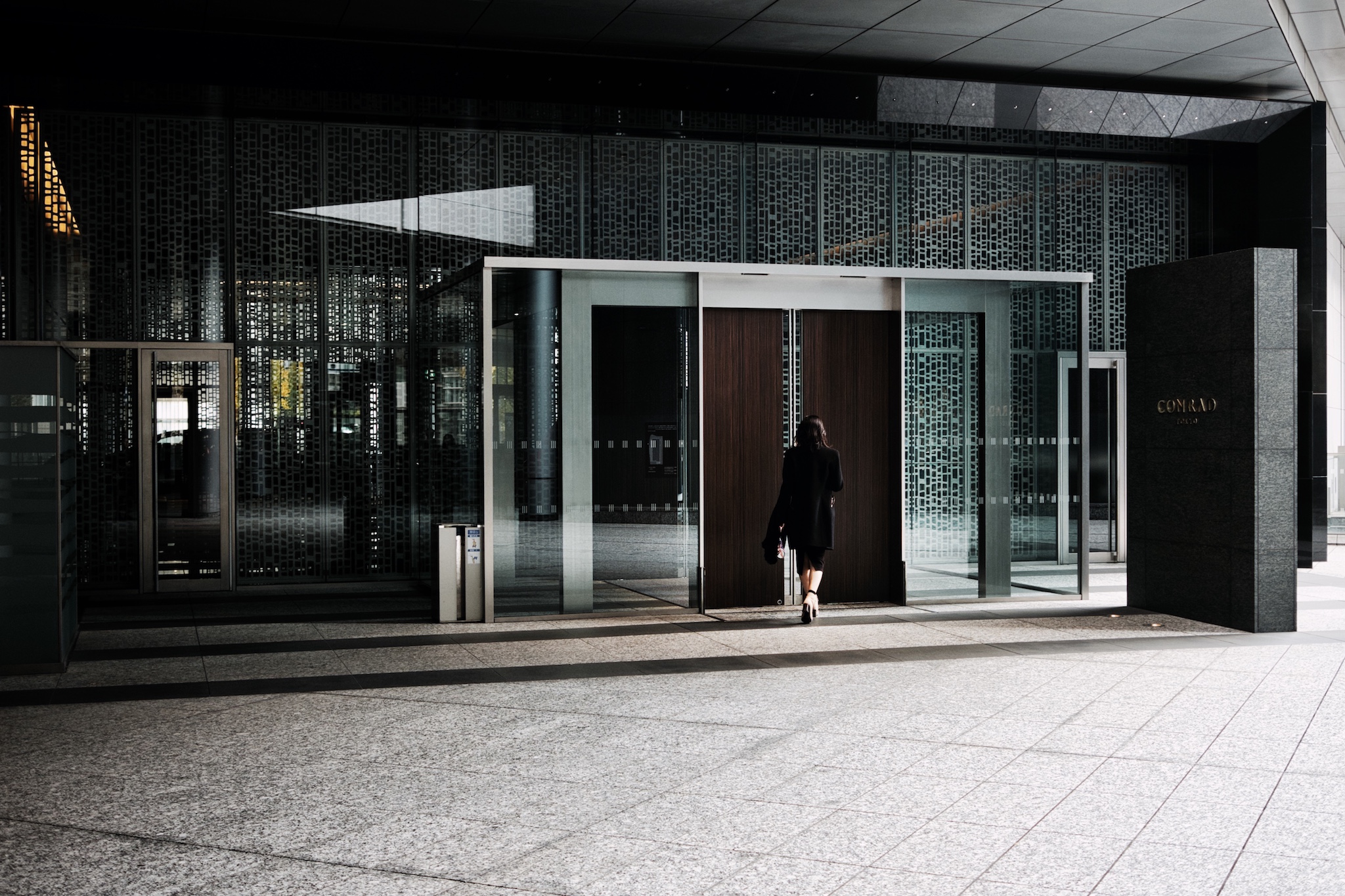
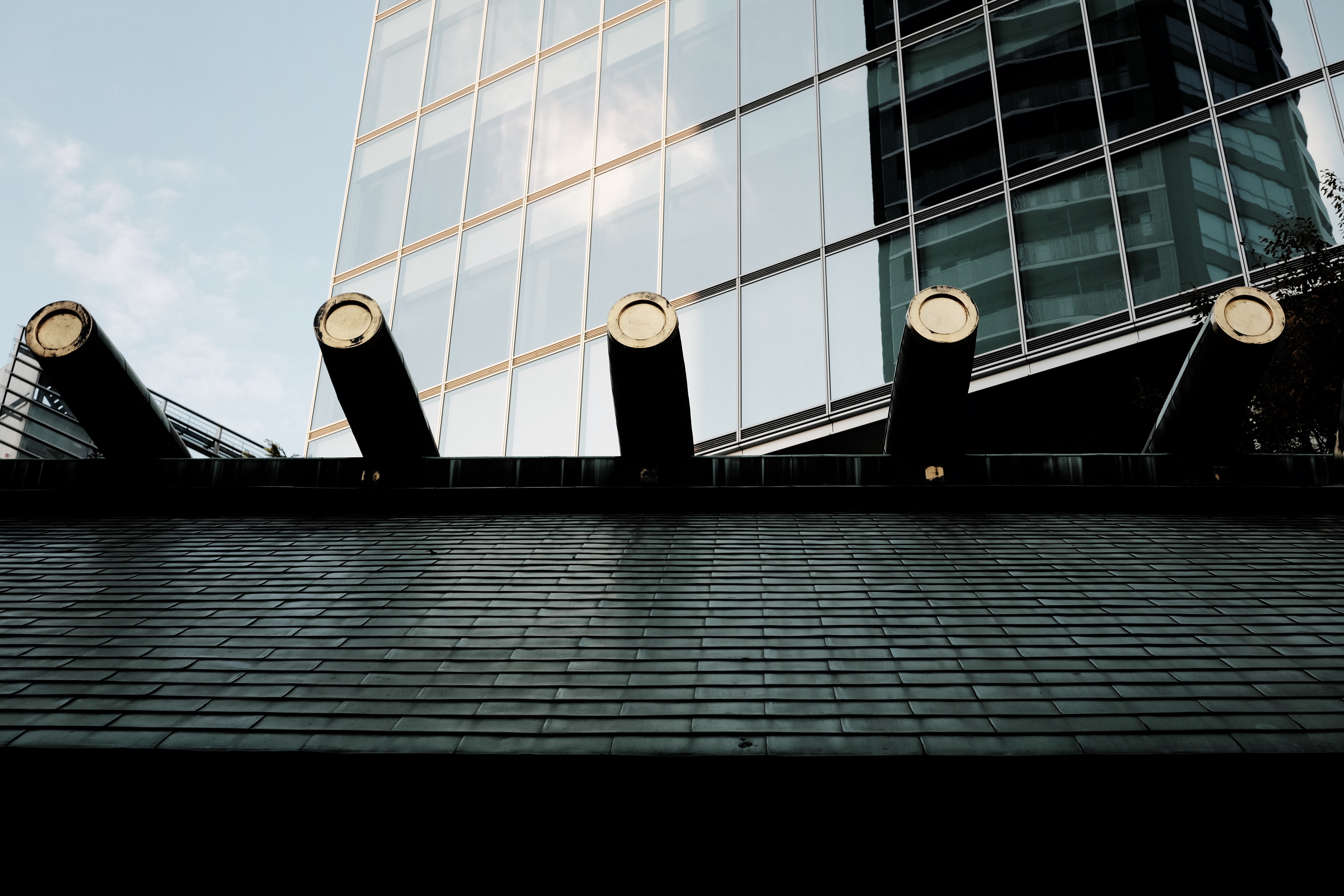
Everywhere, cranes pierce the skyline, shroud-covered buildings appear or disappear as if in a time-lapse, new utilitarian concrete and glass cubes replace old timber and tile back-street dwellings, blank fenced-off voids disrupt the visual rhythm of city blocks. In Shibuya, entire neighborhoods have been razed and are being rebuilt. Wherever I look it seems the city is being pulled apart and put back together anew. Tokyo has never been a sentimental city — redevelopment is nothing new to a city defined by its dynamism — but this current chapter of construction leading up to the Tokyo 2020 Olympics feels like the adrenalin-fueled, last gasp of a gambler throwing in all his chips on his lucky number.
Risshun
While I can appreciate the romantic notions of winter, I barely tolerate its harsh reality. And so with the initial stirrings of spring, things start to look a whole lot better.
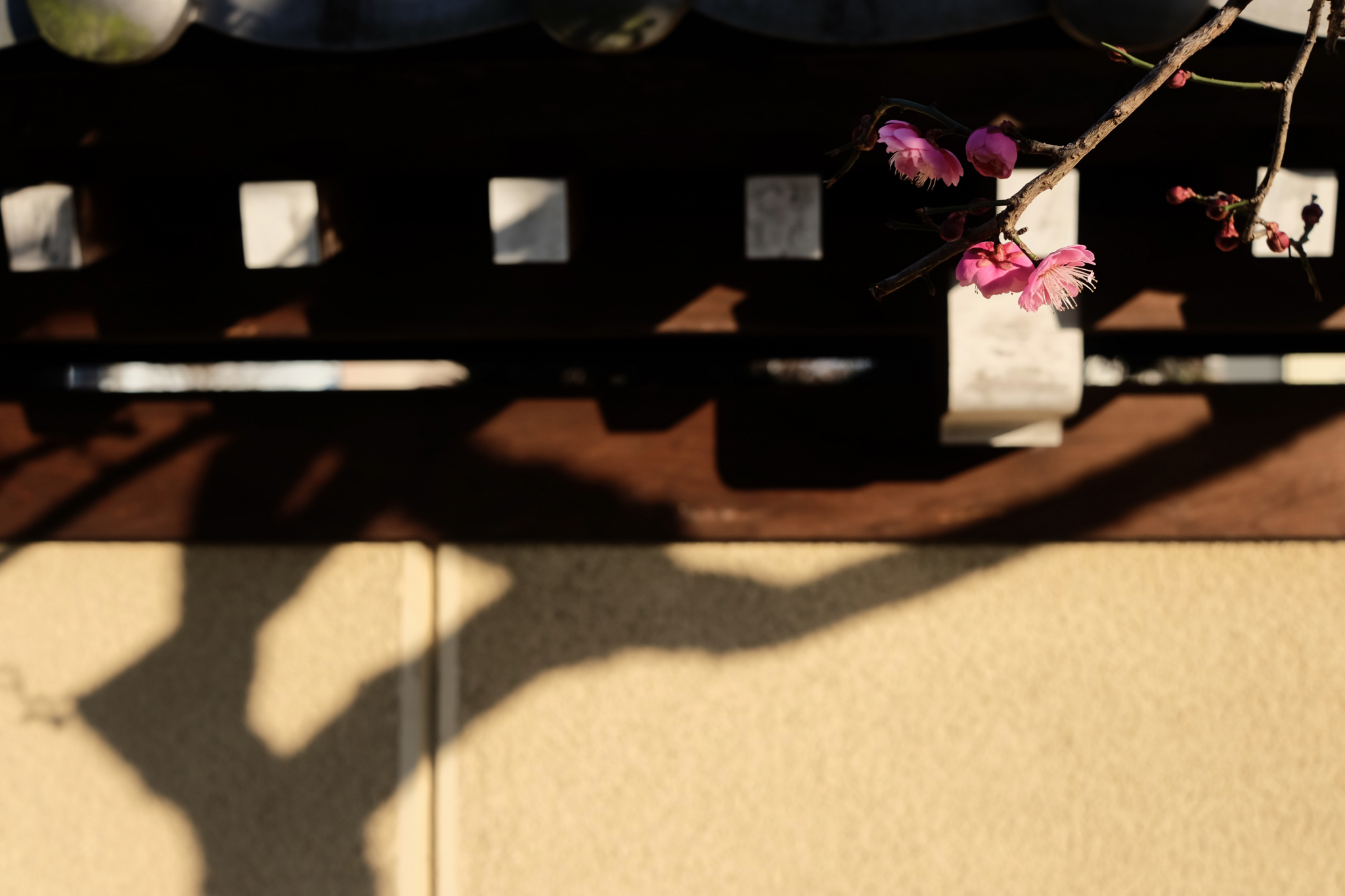
Risshun (立春)—according to Japan’s traditional calendar, the one that famously comprises 72 micro-seasons that poetically label natural transitions throughout the year—is the marker that announces the start of spring in early February. Right on cue, the sun has upped its intensity a notch and temperatures have risen slightly, while the plum trees have already started to blossom and the days are noticeably a little longer. Although it’s too early to pack away winter coats, it feels good to know there are some increasingly pleasant days ahead. These photos of jizō statues and ume blossoms at a local temple were taken during risshun.
Taxi, taxi

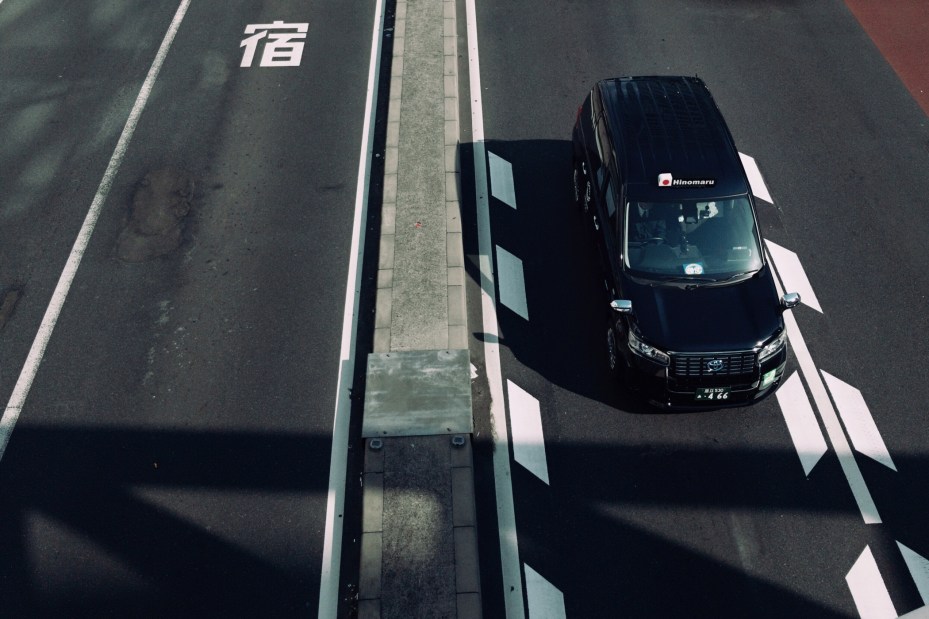
Japan’s taxis are an iconic part of the visual landscape of its cities. Nissan Cedrics and Toyota Crowns like the one above have shuttled passengers to their destinations since the 1990s. They were subsequently joined by Toyota’s Prius and some other makes and models, but Crowns still make up the bulk of Japan’s cabs, their boxy bodies gleaming red, yellow, aqua, green, grey, blue or black on the city streets.
A couple of years ago a successor to these classic cabs was introduced. The Toyota JPN Taxi is a squat, high-roofed, hybrid fueled hatchback that looks like a sleek, compact and thoroughly modern reincarnation of London’s traditional black cab. With its distinctive silhouette it’s set to become a future transportation icon, but I’m going to miss those colorful sedans.

Pillow shots
The best artists are auteurs, their work easily recognizable. And so, budding image makers are often advised to develop an individual style. I’m not convinced true style is something that can be manufactured; I believe it comes with practice and experimentation and time.
To this end, it’s rewarding to study the works of visual artists who have mastered their craft and have a distinctive style, whether it’s Salgado, Leiter or Addario; Caravaggio, Hopper or Banksy; Tarantino, Kubrick or Ozu.
For instance, Yasujiro Ozu’s unique intimate films show a remarkably coherent and disciplined visual and narrative style. Recurring themes, elliptical story structures, formally framed shots, limited focal lengths, minimal camera movement, particular editing transitions and pacing, deliberate compositions and use of specific colors—red is a favorite, and what are known as the “pillow shots” that punctuate his narratives: contemplative frames or sequences of objects, empty rooms, views through windows, architecture, natural elements, and so on that are placed throughout the narratives to convey subtext or emphasise emotions or themes within the films.
In photography, such meditative still-life shots can add similar texture and depth to photo essays and books. With all this in mind, I went out to take some photos. Of course, without a narrative for context, the photos can’t serve as pillow shots, but as a practice, the task becomes an interesting exercise in creating from another point of view, in this case an effort to see through the eyes of Ozu.

Presets
I’ve seen this view of Shinjuku countless times, but the afternoon light on this occasion gave the scene nice depth, so I snapped a single frame with my iPhone.
I enjoy editing photos on my phone: I like the simplicity, the immediacy, and the tactility of the process. When editing I rarely use presets unless I’m doing monochrome conversions. They often lack subtlety and look artificial. There are exceptions. RNI Films is one. Their adjustment presets resemble analog films from Agfa, Fujifilm, Ilford, Kodak, Polaroid and Rollei. I couldn’t say how accurate these film emulations are; in fact, I don’t think fidelity to analog rendering is important, but I like their subtlety and how an image can be further tweaked by various editing sliders, including one to reduce a preset’s strength and one to add grain.
The above image was enhanced with an RNI Films Agfa Vista 100 negative film preset. The images below show Fuji Astia 100F, Ilford Delta 100, Fuji Instax, and Kodachrome 50’s presets. All images have had additional minor adjustments made in the RNI Films app.
Out to lunch
Late last year I began looking for a compact camera that I can carry around with me when out and about: dining at a restaurant, wandering in and out of shops, or running errands. Times when a bigger camera can be an annoyance.
I appreciate the ease with which I can use my iPhone for spontaneous photography: its size, connectivity and choice of built-in processing apps are wonderful, but no phone yet beats a large camera sensor in image quality. So I researched and searched for a small camera with an APS-C sensor. As a fan of Fujifilm cameras, I had my heart set on an X80 with a 24 MP sensor, but that camera never materialized. (I think it—or an X100 mini—should). I then thought about a used X70, but the local prices are now similar to what it cost two years ago when new. A Ricoh GR II was also a consideration. As were the GR III and Fujifilm XF10, but I felt both were disappointing when announced.
In the end, I picked up a cheap, used copy of Fujifilm’s old X-M1 in excellent condition. With an XF27mm pancake lens it’s not much bigger than an X70 and has a narrower focal length, which I prefer for an all-purpose lens, and it features a similar X-Trans CMOS sensor that is capable of delivering beautiful images. It lacks a viewfinder but has a useful articulating screen. It comes in handy when I’m out and about and unexpectedly see a photo I want to take, such as these two, captured recently while I was out to lunch. It’s a wonderful little instrument and I think I’m going to enjoy using it a lot.
Coming of age
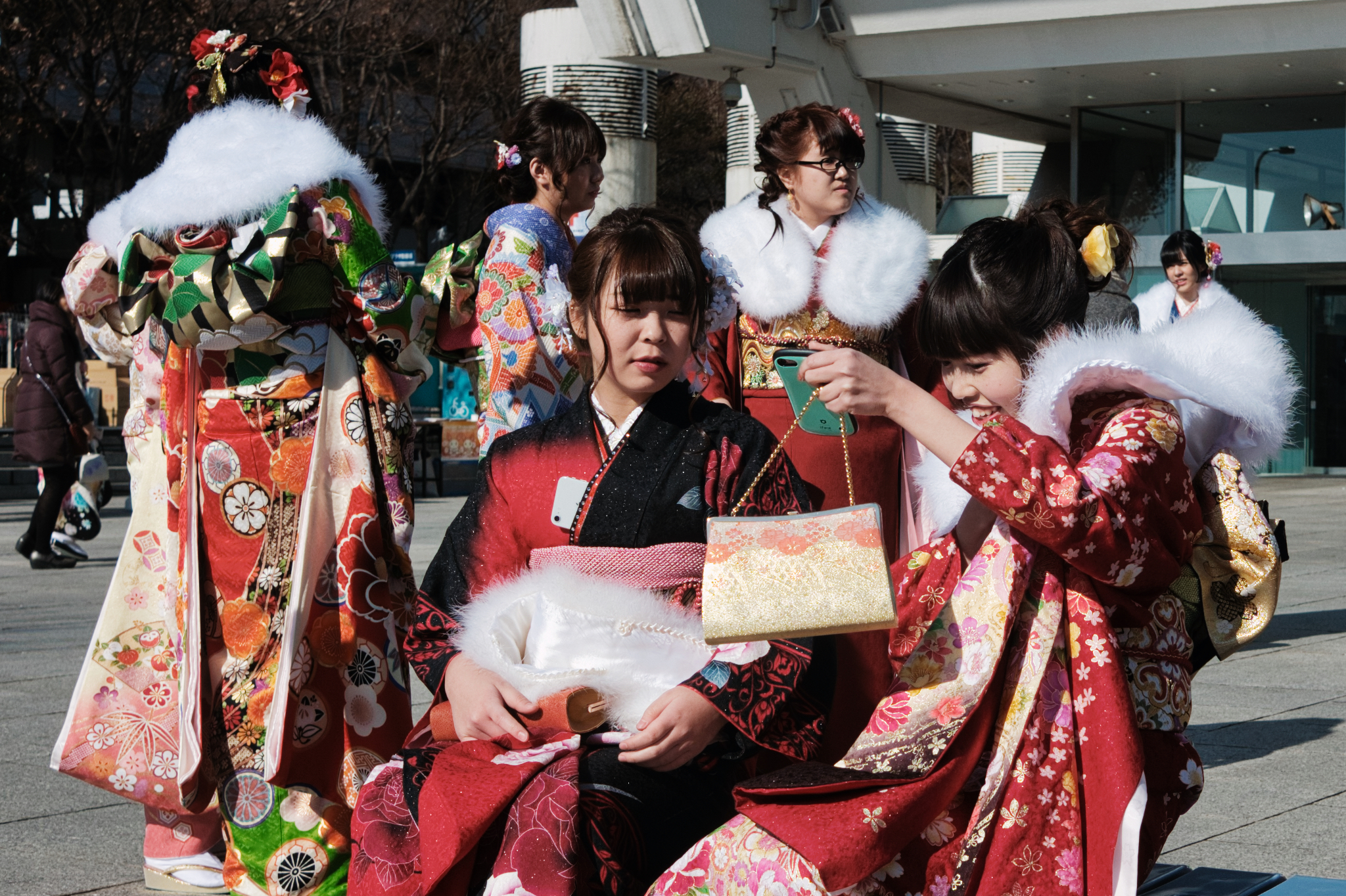
In recent years, traditional kimono are rarely seen on the streets of Japan. Typically, they’re refined uniforms for bar and restaurant hostesses, ceremonial wear for weddings, funerals and the like, and the dress of choice for certain aficionados. But each year things are quite different on the second Monday in January. Seijin no Hi. Coming of age day, when all the twenty year olds in Japan are officially celebrated as adults; when the men don smart suits or the occasional haori and hakama ensemble and the women, their hair elegantly coiffed, join them at the local city halls and after-parties in their gorgeous furisode, parading on the city streets like exotic birds of paradise. The day is a holiday throughout the country, and it’s a perfect day to be out strolling.
Empire
Since 645, Japan’s history has been marked by the various eras which signify the reigns of its emperors and empresses. This year, on April 30, Emperor Akihito, who has reigned since 1989 in what is known as the Heisei era, will abdicate the Chrysanthemum Throne, and a new era will begin with the ensuing enthronement of his son and heir.
The striking lobby gallery of the Tokyo International Forum is currently the site of a small but evocative exhibition that showcases the imperial enthronement ceremony of Emperor Taisho in 1909. It also features artefacts, dioramas and traditional aristocratic ceremonial dress from past Japanese eras.
A small voice
Ben Smith is a British photographer. In September 2015 he started a podcast called A Small Voice, the title taken from W. Eugene Smith’s well-known quote:
Photography is a small voice, at best, but sometimes – just sometimes – one photograph or a group of them can lure our senses into awareness. Much depends upon the viewer; in some, photographs can summon enough emotion to be a catalyst to thought.
Ben Smith would probably consider himself a small voice in photography, but in this podcast series he has exchanged his camera for a microphone and initially every week, then fortnight, he has given voice to a different photographer and has in the process created a unique collection of thoughtful aural photographic portraits.
Unsurprisingly, practitioners of photojournalism and documentary feature widely, but the series – currently at 95 episodes – covers a range of disciplines and Smith has interviewed all kinds of photographers in various stages of their careers.
What I like about these interviews is that they have an honesty and unpretentiousness to them: No doubt Smith puts a lot of work into researching and producing these but his interviewing style is such that it feels like two photographers are sitting around chatting about one’s work and life for an hour or so, and when listening it feels like I’m in the room with them. Kudos to Smith for this project and I wish him nothing but success with his entertaining and though-provoking photographic masterwork.
Some of my favourite interviews are with Matt Black, Christopher Anderson and Laura El Tantawy. The Year in Review 2018 is the latest episode and is a good introduction to the series as it contains snippets of interviews conducted throughout 2018.
A. D. 2019
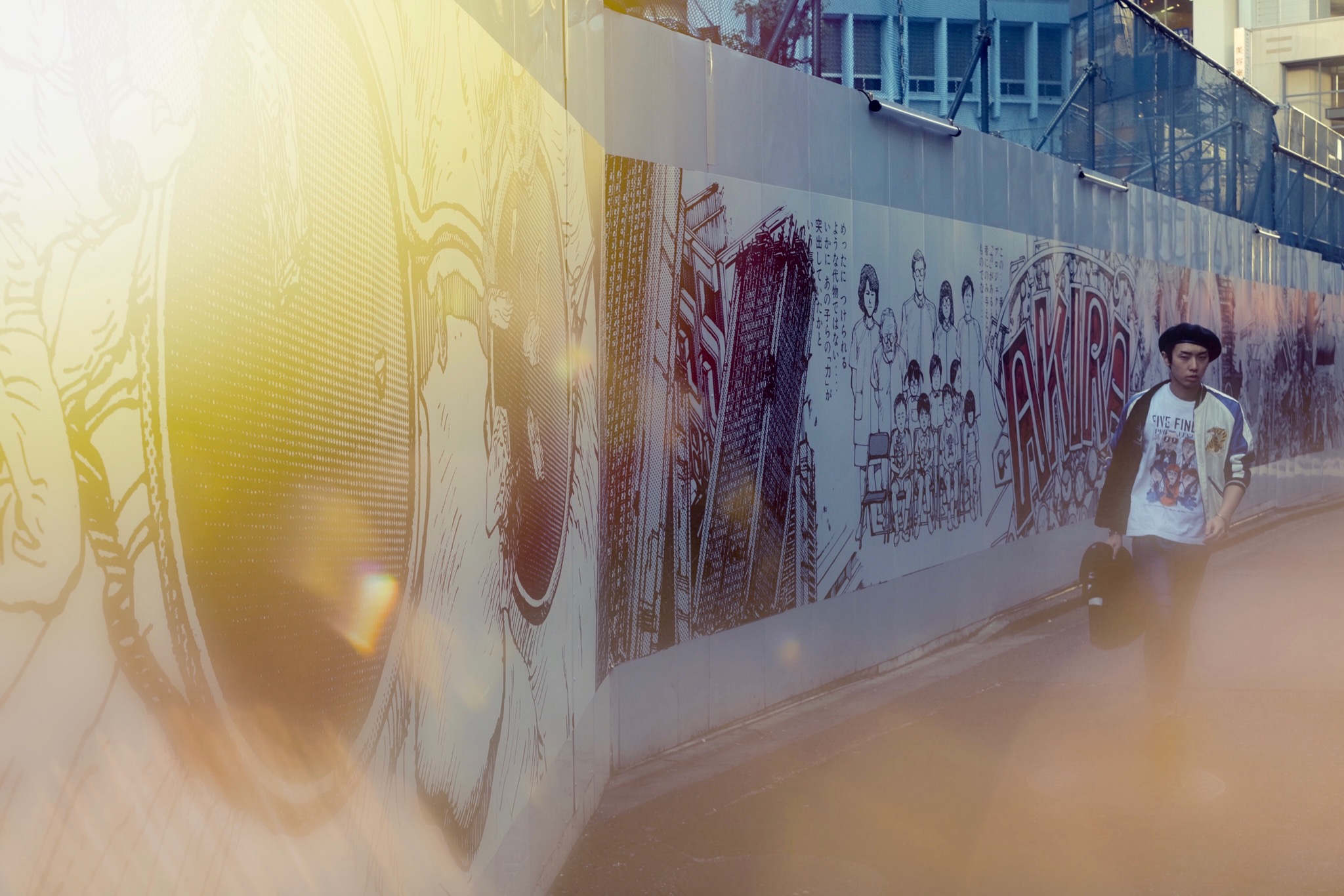
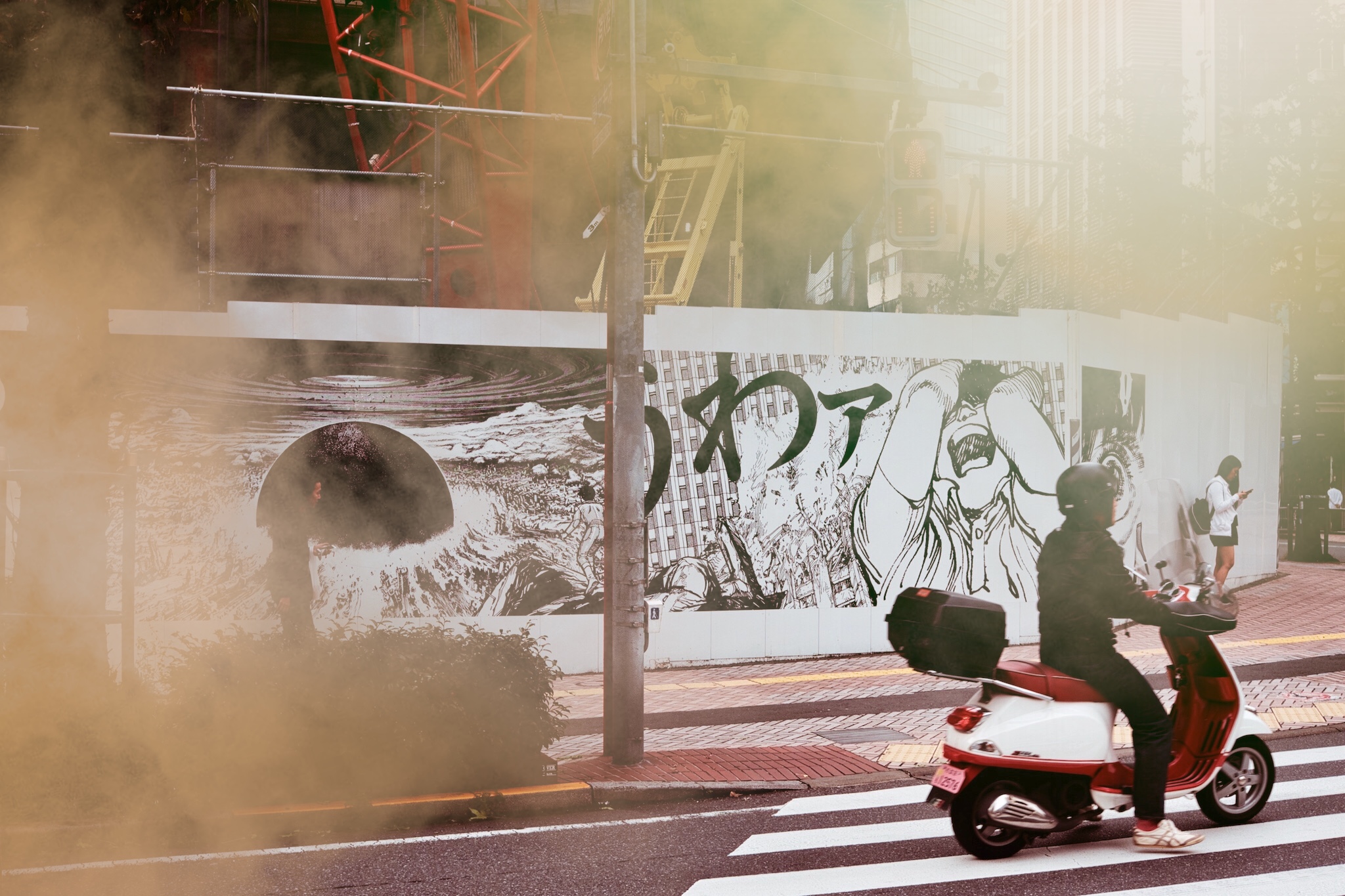
Blade Runner and Akira, two sci-fi classics of the 1980s, are both set in 2019. Despite the way things seem to be heading, our 2019 is fortunately nowhere near as grim as the worlds of those movies.
These pictures, showing imagery from Akira, which is set in Tokyo, were taken in Shibuya at the site of the old Parco building. I thought it would be thematically fitting to give them a sci-fi treatment, and made some minor color adjustments, then added some light flare and fog filter effects.