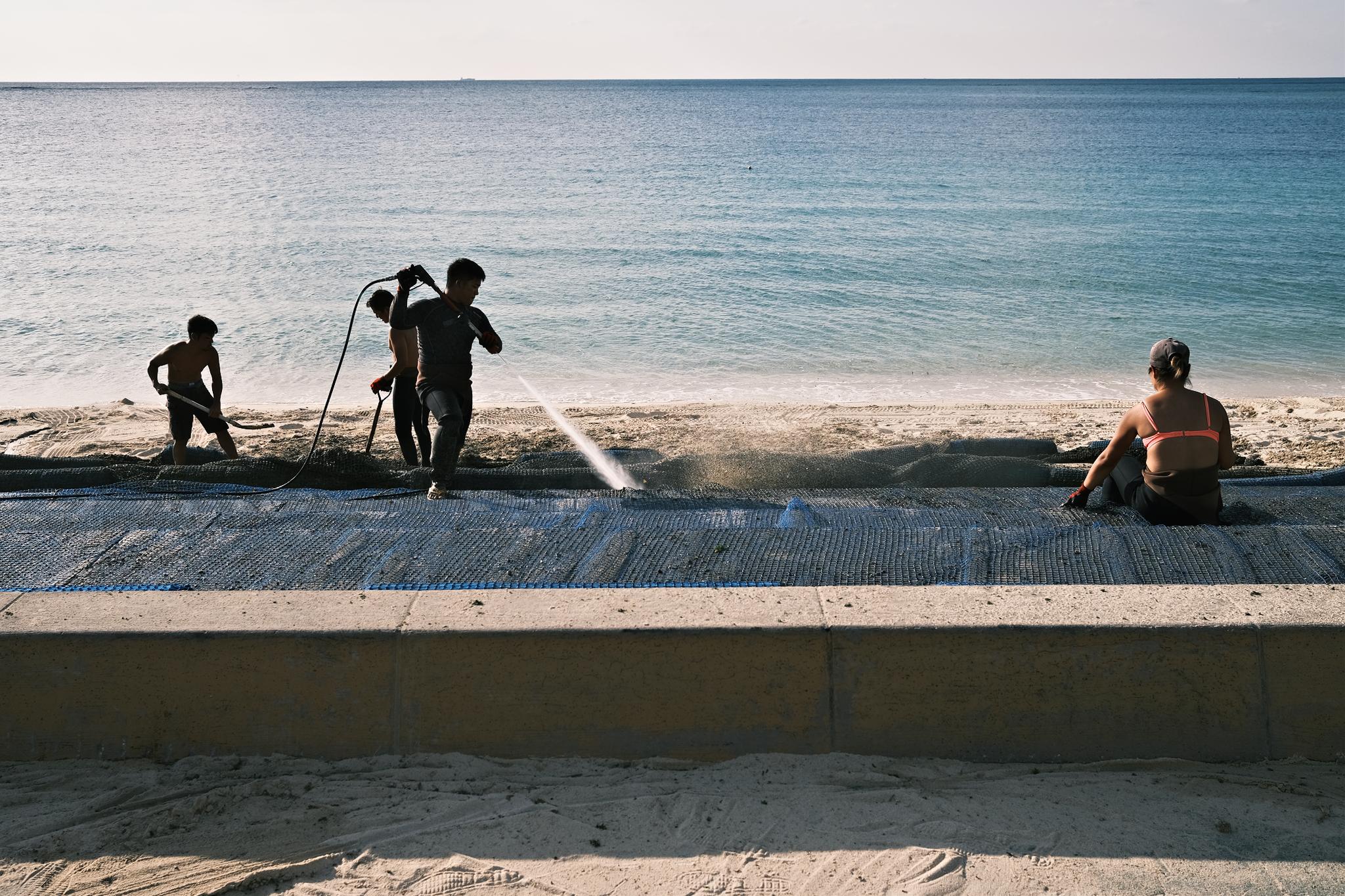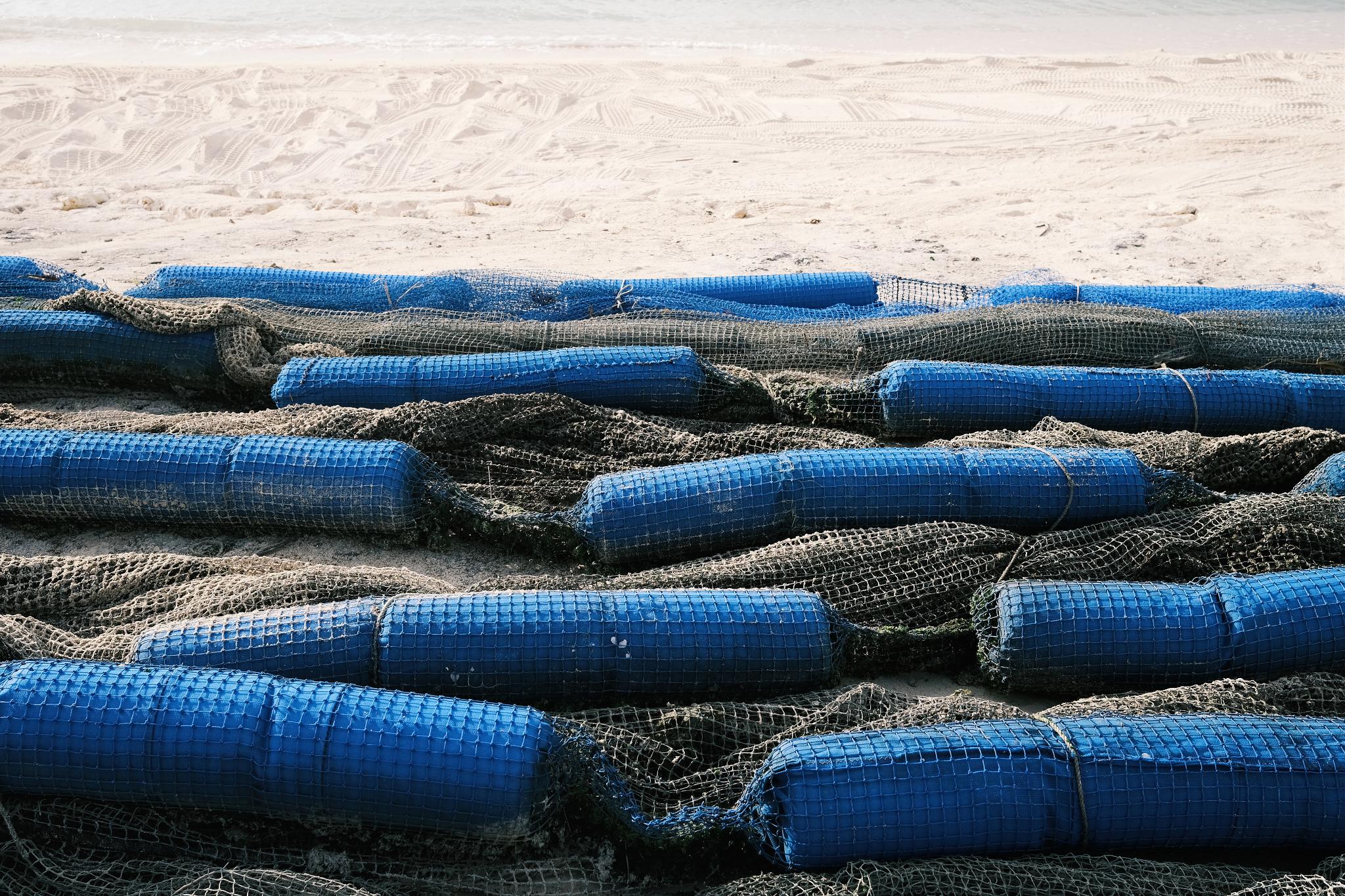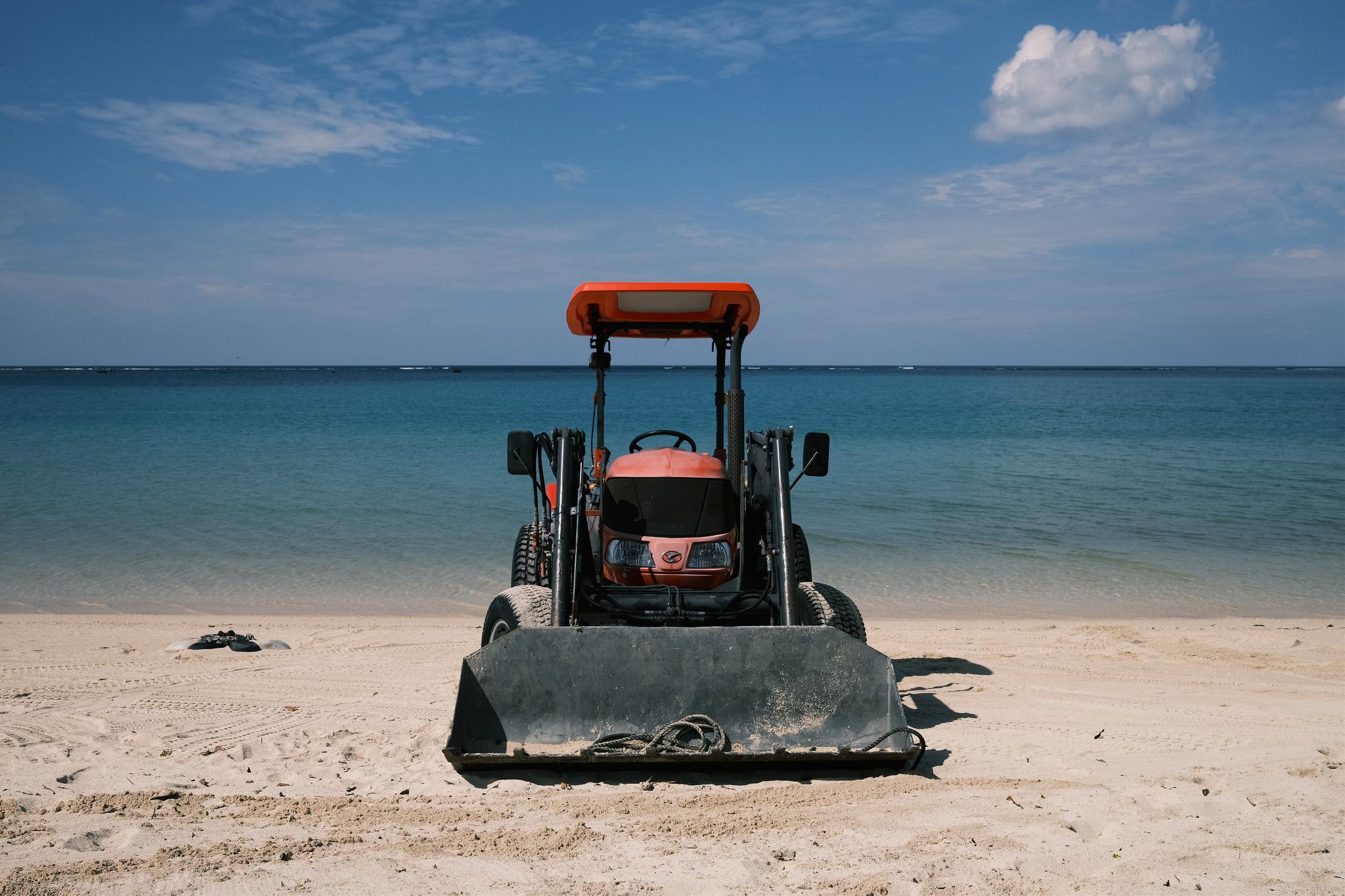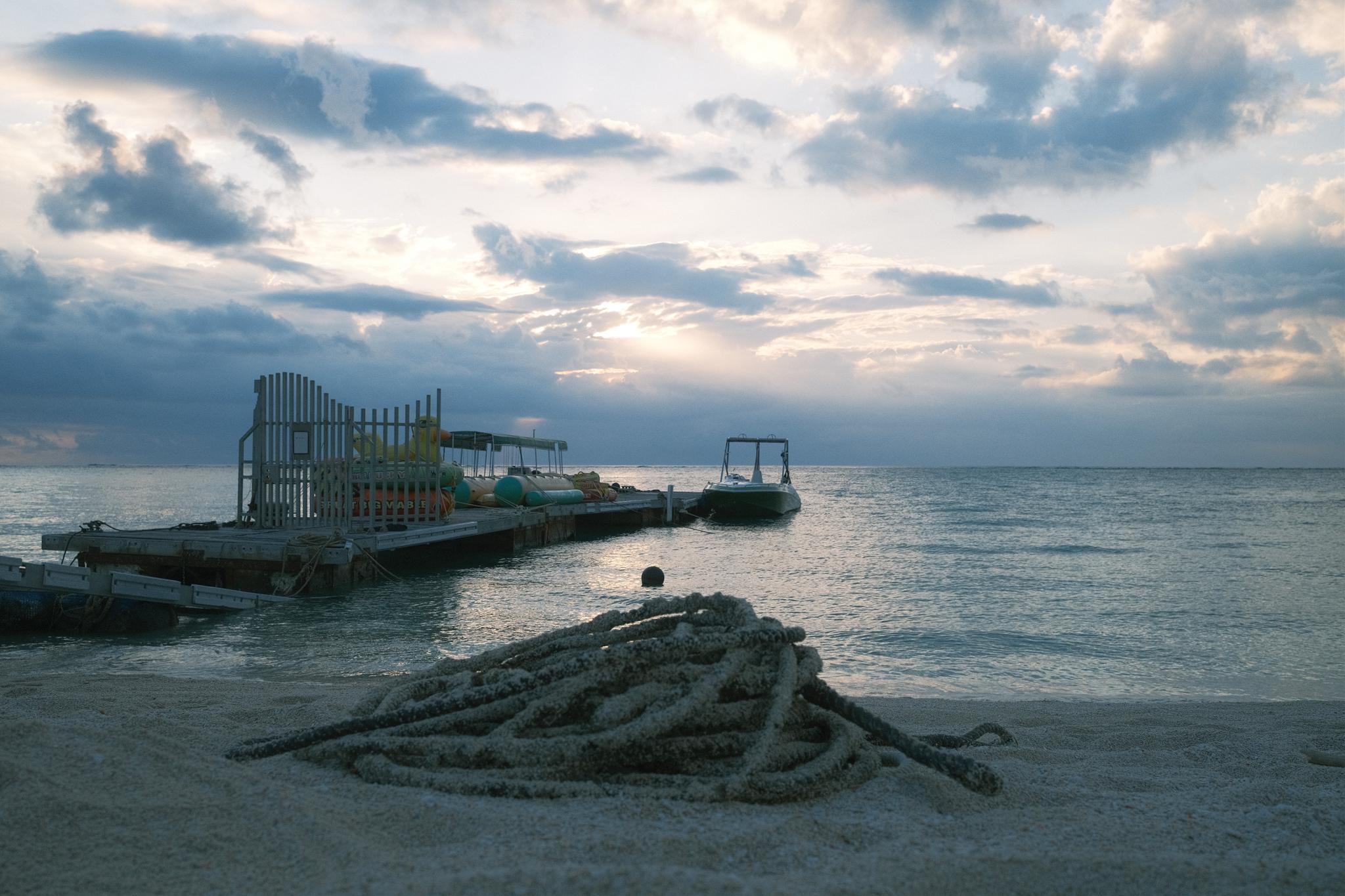
November. The stinger nets have been gathered and stored. The jet skis and inflatable amusements will soon follow. Cleaning operations are underway. The beaches are officially closed. Japanese like to tell visitors that their country has four seasons, and the culture places great emphasis on marking their arrival – think of nation-wide hanami cherry blossom viewing parties in the Spring and late Autumn koyo pilgrimages to witness the kaleidoscopic colors of forests of dying leaves. This is a land of many customs and rules; often the two are interchangeable. There’s a great respect for them, a rigidity and lack of flexibility when it comes to them. And so, though the weather in Okinawa may still beckon beach-goers, it’s November, the time for swimming has passed, and — keeping in mind that exceptions can be found and rules will be broken — the beaches must be closed.
Okinawa Wallpaper
Early this year I began making digital polaroids during my outings around Tokyo — fragments of walls, windows, signage, graffiti, and the like; details that drew my attention. Details that captured the character of the place. These individual images gradually developed into the series Tokyo Wallpaper.
Happy with the results and wanting to develop the idea further, I saw the potential of capturing details of different places using the same tools and aesthetic, expanding the Wallpaper gallery. To that end, I’ve just added a new series — one in which the digital polaroids capture the character of my current surroundings — Okinawa Wallpaper.
6:22
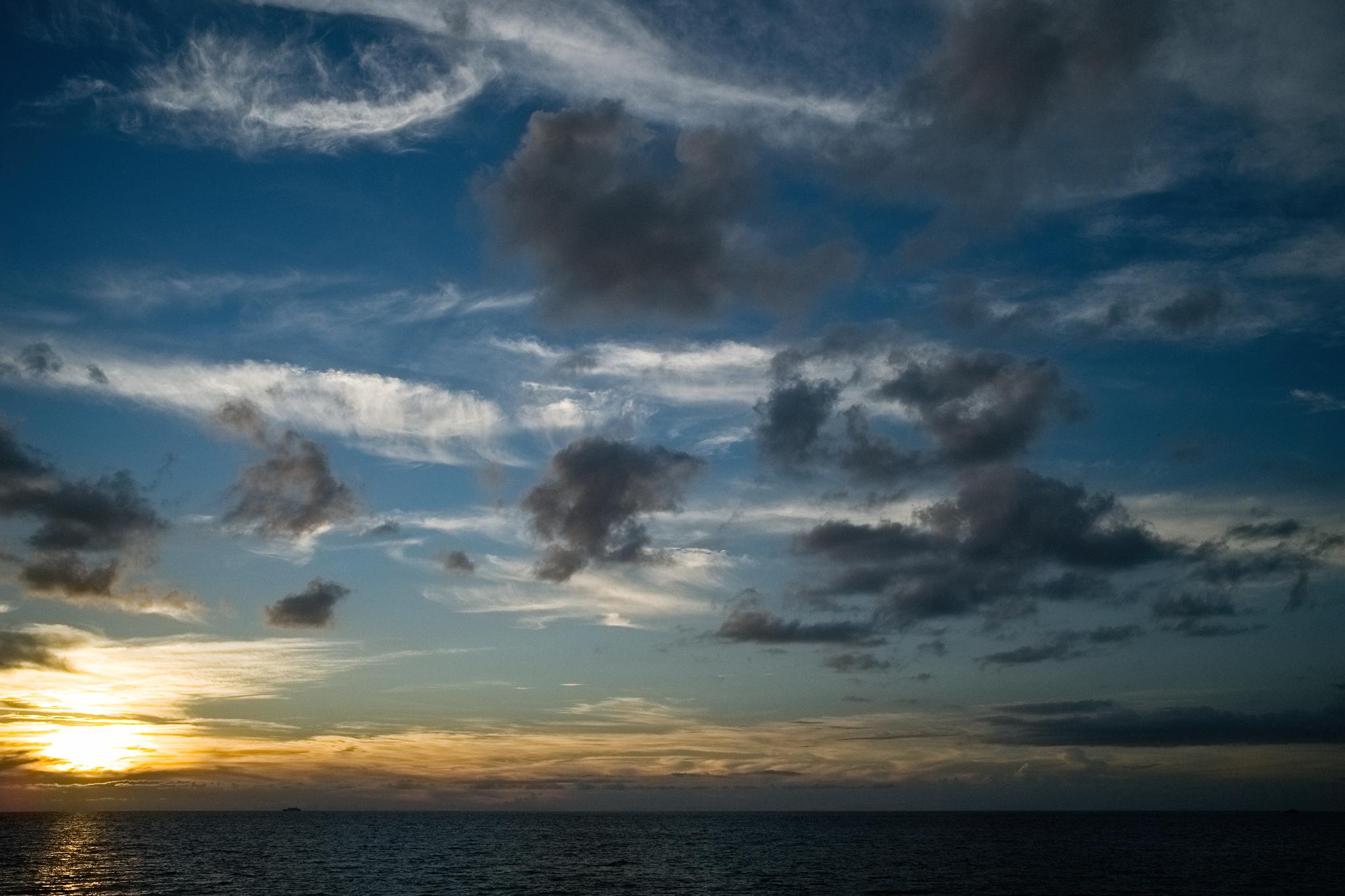
The skies over Okinawa are spectacular: ever-changing canvases painted by wind and cloud and sun. The cloud formations are endlessly fascinating, whether monumental sculpted cumulonimbus masses, smudged impressionistic stratus layers or wispy painterly cirrus streaks. The skies are of course at their most dramatic as the sun is setting, the blue and grey vistas charged with gold. By the shimmering sea is the best place to witness them and the first impulse is to photograph them.
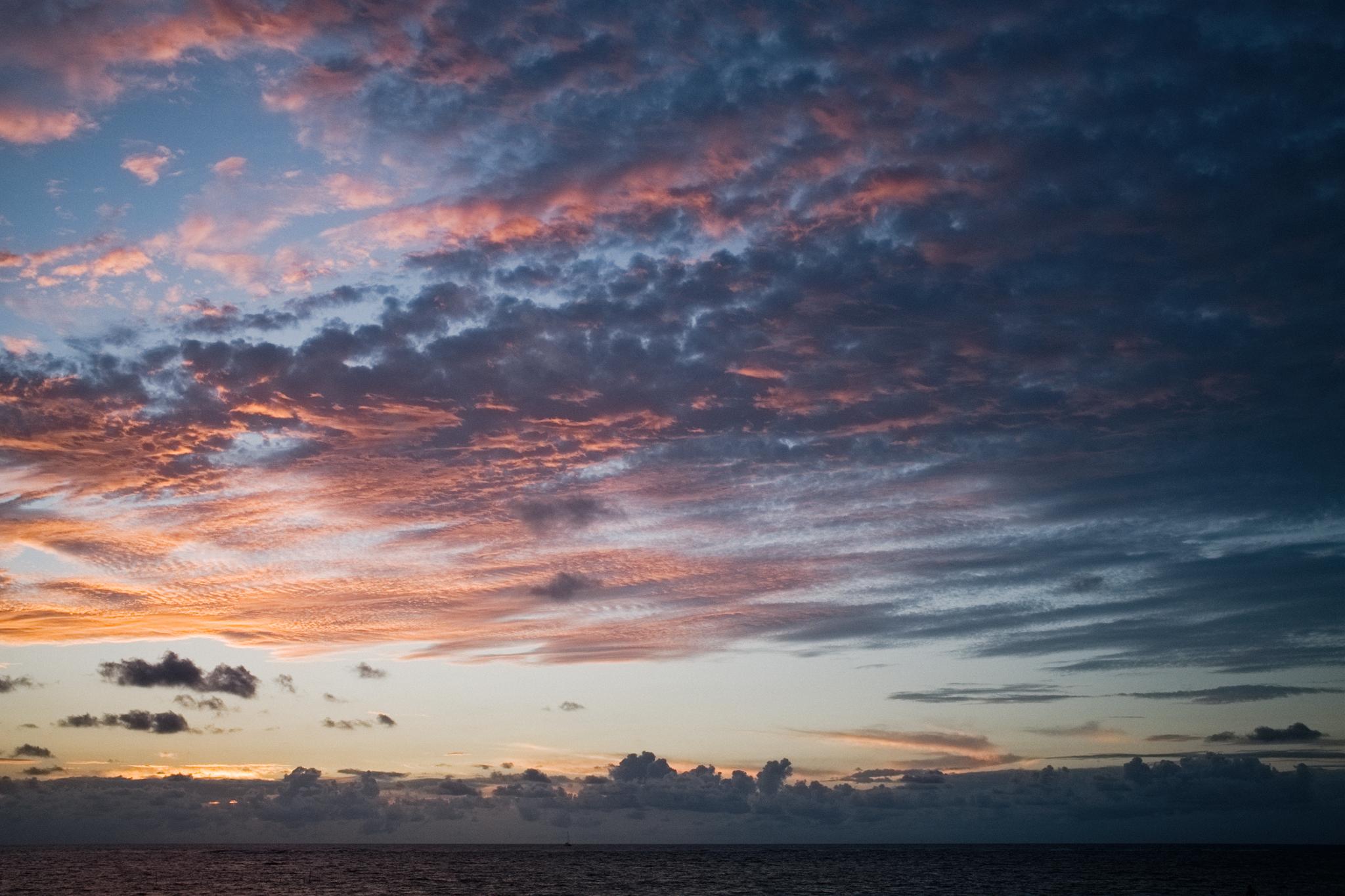
I stood on the beach and did just that, framing a section of the sky over the sea as the sun was low over the horizon. I took a photo — the photo above — and immediately wanted to take more. I decided to make a series of similar photos, to capture and highlight the changing skies. It’s far from an original idea, but I decided to take a photo each day, for a week, framing the sky above the sea from the same spot and at the same time as that first photo: 6:22.
Each day, we’re gifted beautiful variations on a theme, but the best part is the encore that comes after the sun slips below the horizon. On a good day, if the clouds are right, the sky is transformed into a series of breathtaking canvases tinted with a spectrum of crimsons, oranges and pinks that gradually fade to black.
Nowadays
Nowadays I love riding my bike. In the city it wasn’t always so: sidewalks thronged with pedestrians and cyclists going every which way, roads packed with cars but devoid of bike lanes, city air, long riding distances between destinations in such conditions, and parking was difficult. My bike didn’t see much action; I usually took the train.
Nowadays things are different. Living in a small town that is scaled to human proportions, cycling is a joy.
Nowadays parking isn’t a problem. In the backstreets there are few cars or pedestrians or even other cyclists to contend with. Along the seashore the air is clean. The place is easily navigable; I can get most places I need to go within fifteen minutes. The Okinawan climate ensures I always work up a good sweat, but here, where there are no trains, a bicycle still seems the perfect mode of transport.
Divergence
Two roads diverged in a wood, and I —
I took the one less traveled by,
And that has made all the difference.— Robert Frost
Tokyo is home to around 14 million people, while the greater Tokyo area houses some 37 million residents. Space is a rare commodity and horizon lines are even rarer. The world’s most crowded urban agglomeration is dynamic, exhilirating, stimulating, endlessly fascinating … and often exhausting.
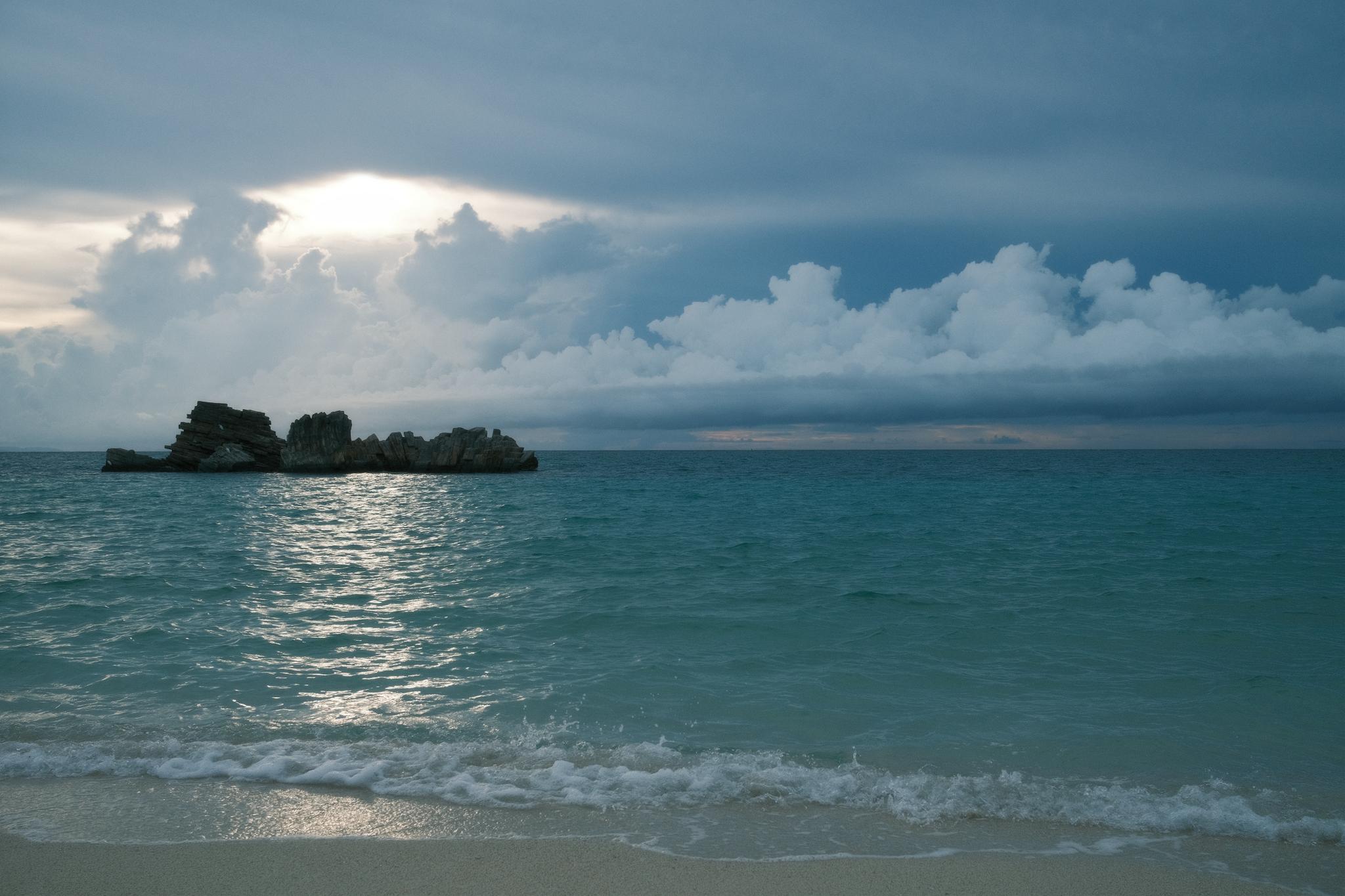
Okinawa has a population of around one and a half million people. The seaside town of Chatan has fewer than 30,000 residents. Half the area is occupied by US military bases, fenced off no man’s lands accessible only to military personnel, their families and local base employees. The rest of us enjoy a collection of compact coastal neighborhoods that lie along a part of the west coast of Okinawa’s main island, facing the South China Sea. It’s almost nothing but endless horizons. These vistas put an honest perspective on our place in the world and are a striking showcase for the forces of nature. Their expansiveness is meditative, soothing and restorative.
No man is an island
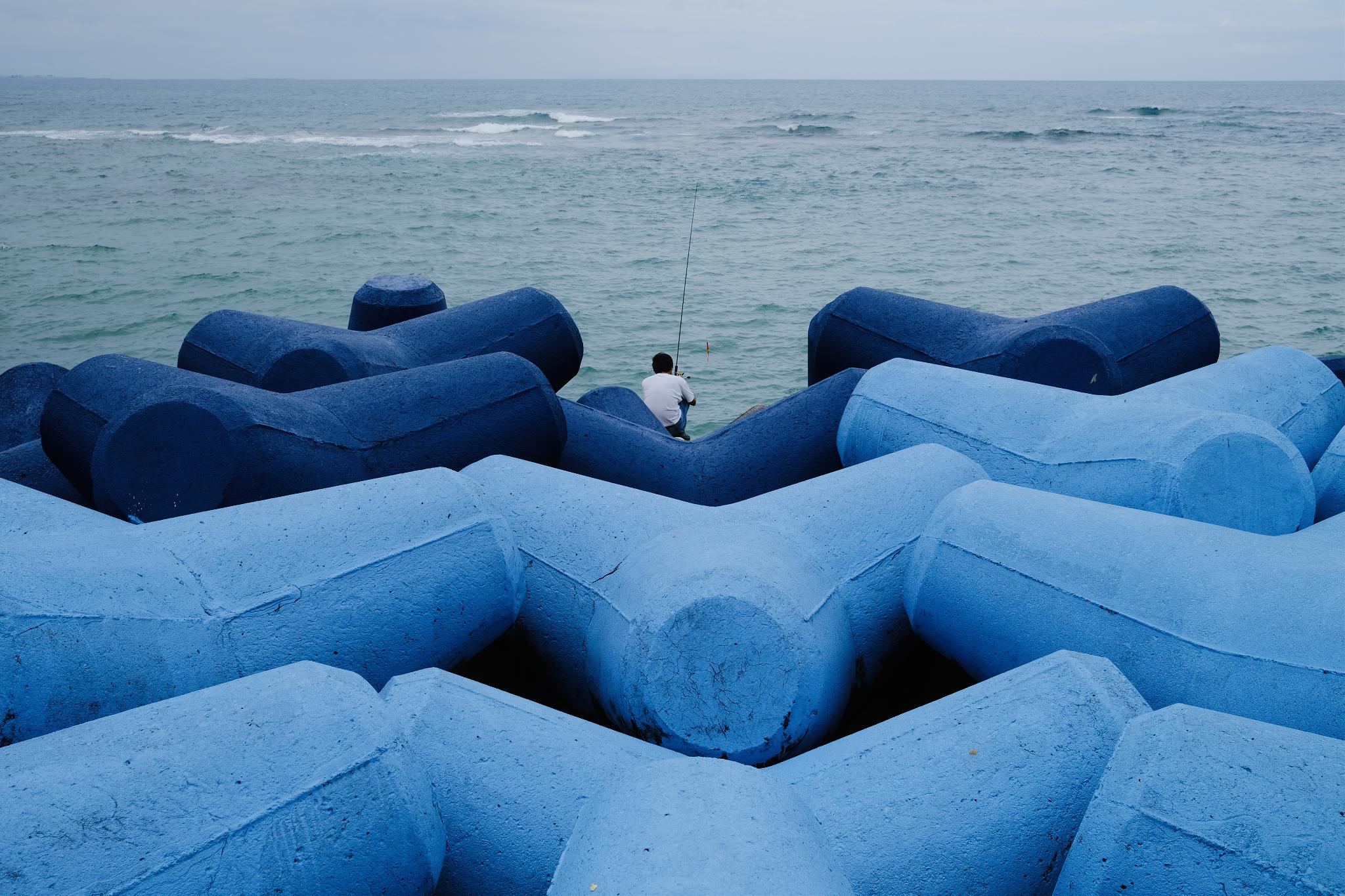
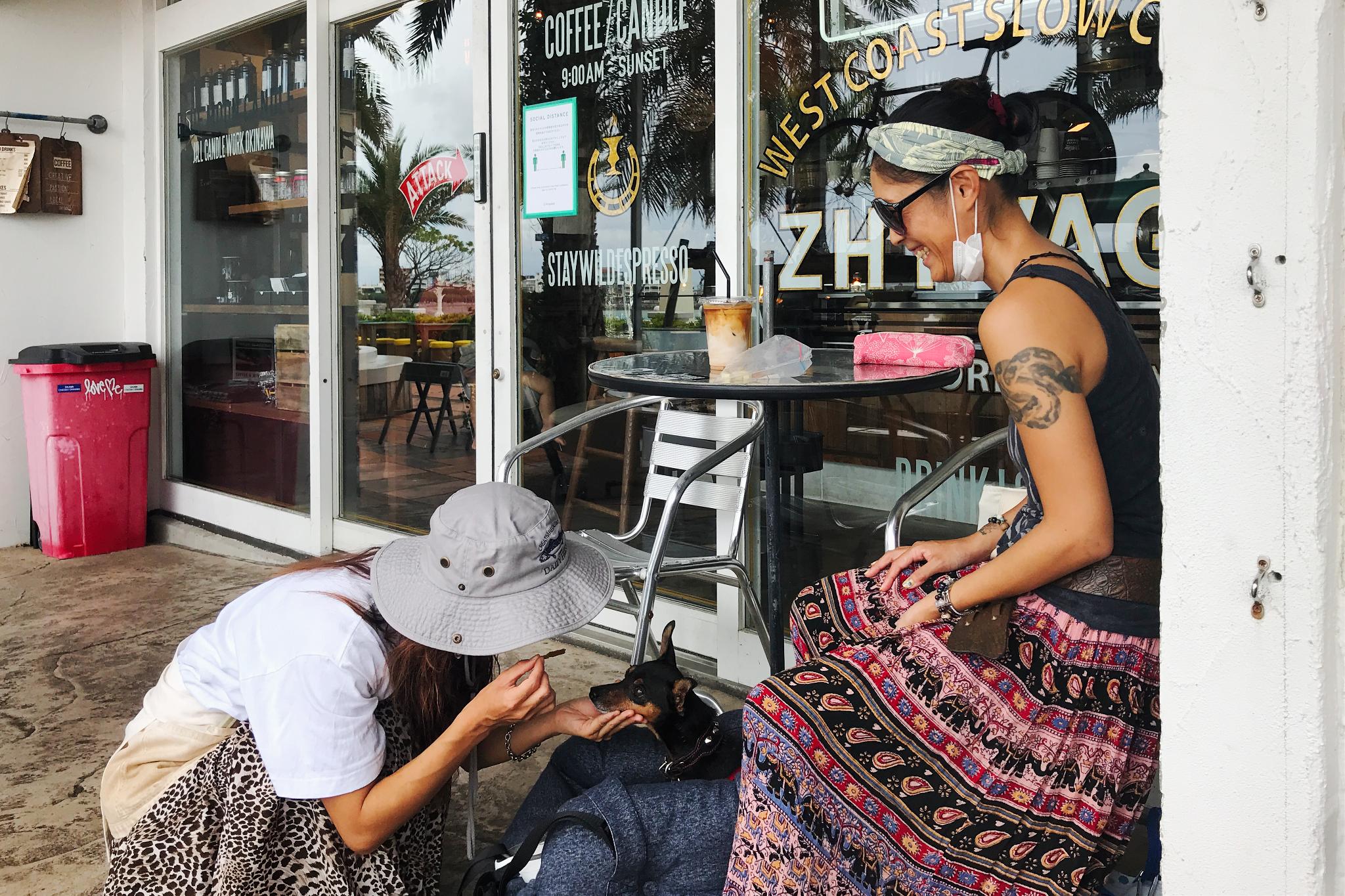
Like the fisherman perched on a tetrapod barrier preparing to cast his line into the sea or the woman on a promenade wall staring into her phone, alone with her thoughts, I find solitude therapeutic. I enjoy walking city streets with just my camera or sitting in a cafe alone with a book or keeping my own company riding my bike by the sea. But this new socially fragmented world of enforced health precautions we find ourselves in — where handshakes, hugs and kisses are now forbidden pleasures — drives home just how much we are social beings; for all the contentment that can be found in solitude, we need to make connections and to share moments with other people. And these days, encounters that would hardly have been noticed a year ago seem so much more precious, and hopeful, whether it’s two friends aimlessly chatting on a sea wall or a cafe waitress doting on a customer’s pet puppy.
Exodus
A journey of a thousand miles, as it’s long been said, begins with a single step. These days long journeys are, for most people, no more than memories, or dreams. The world, for most of us, has become smaller. I’ve been lucky to be able to travel to just about everywhere my desire took me throughout my life without restriction. I would never have imagined that this would change. But here we are. Borders have been shuttered all around the world. Proverbial thousand mile journeys can be undertaken; actual ones, not so readily these days.
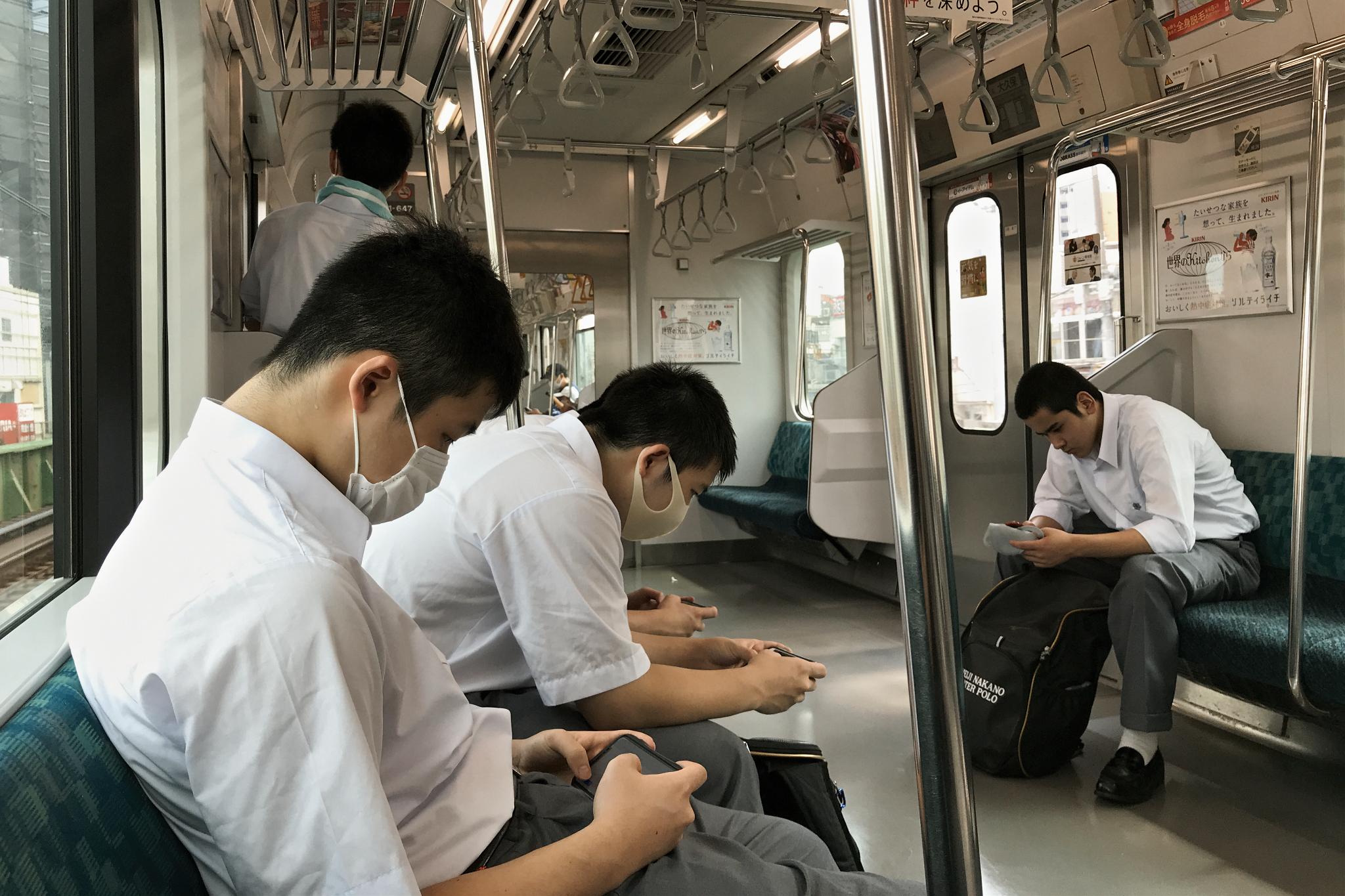
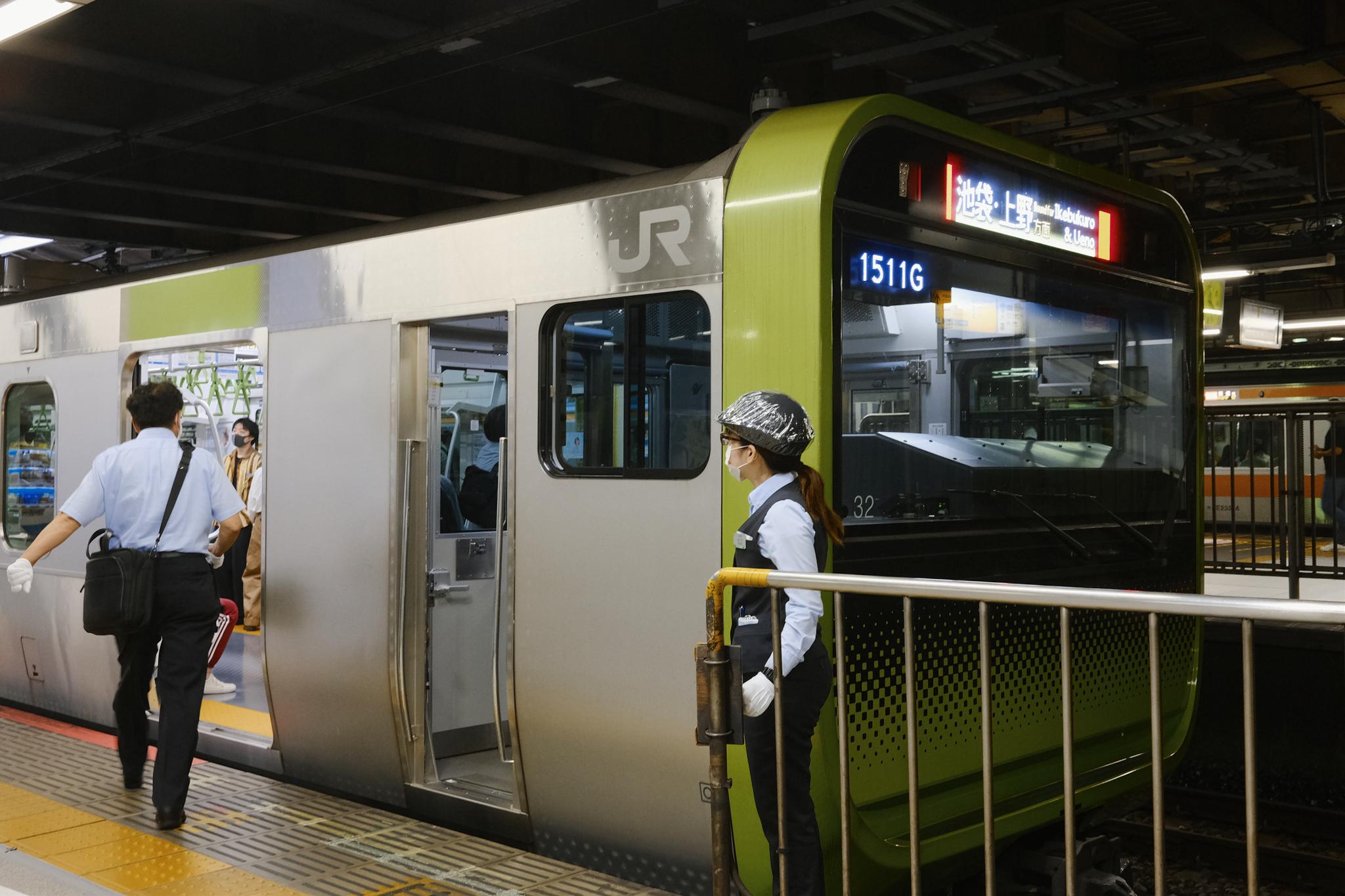
Here in Tokyo, much smaller journeys remain a ritual part of daily life: the never-ending commutes that Tokyoites make on the city’s railway arteries continue. The streams of trains and seemingly countless stations define the dynamism of this city. It can be stimulating; it can be exhausting. The longer you live it, the better you understand the tendency for commuters to doze off on trains. There comes a time when you look forward to escaping it. And so, I’m soon to embark on a journey of almost exactly a thousand miles as I pack up and head to the coastal regions of Okinawa.
Stasis
This is where we are.
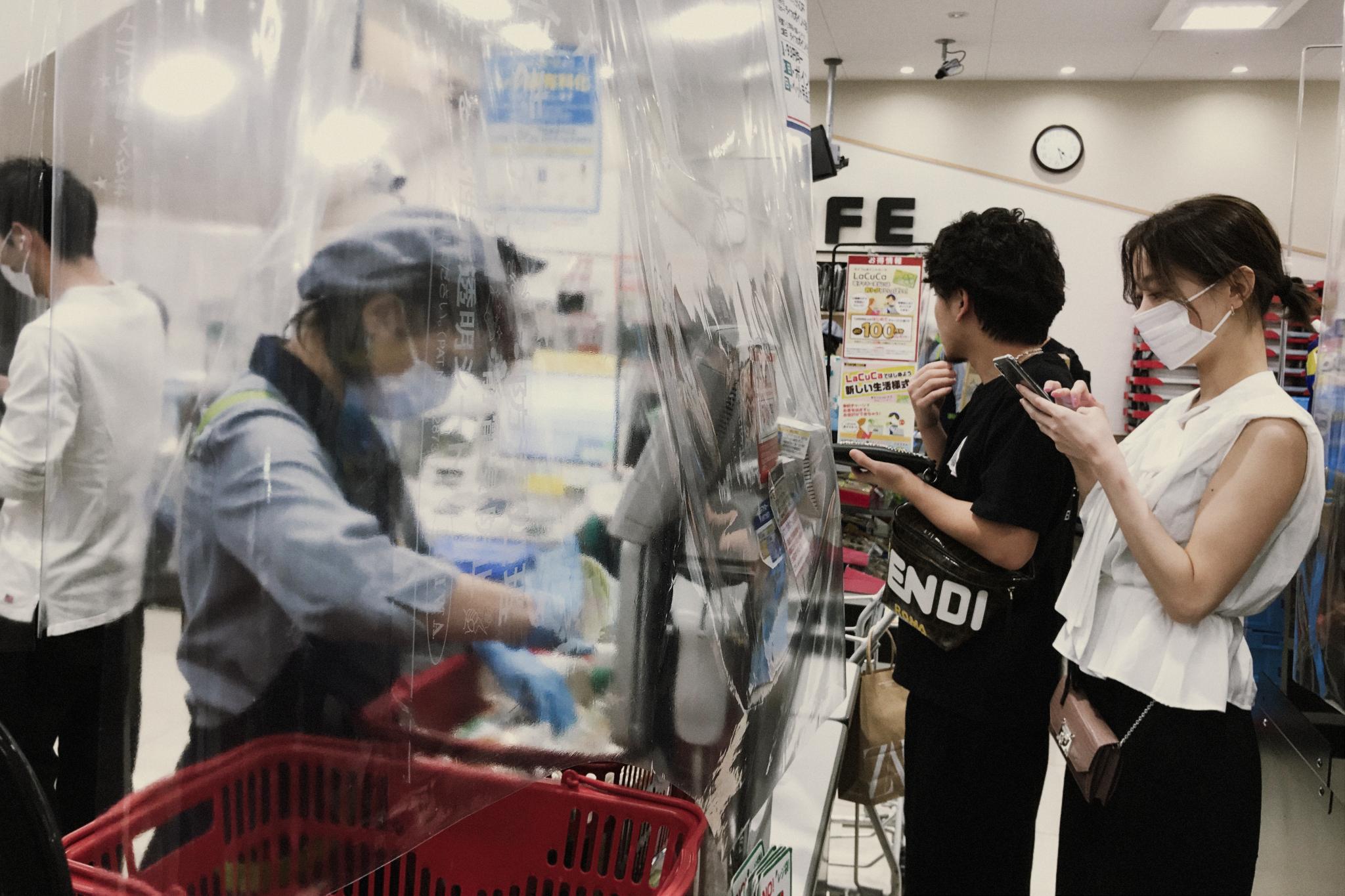
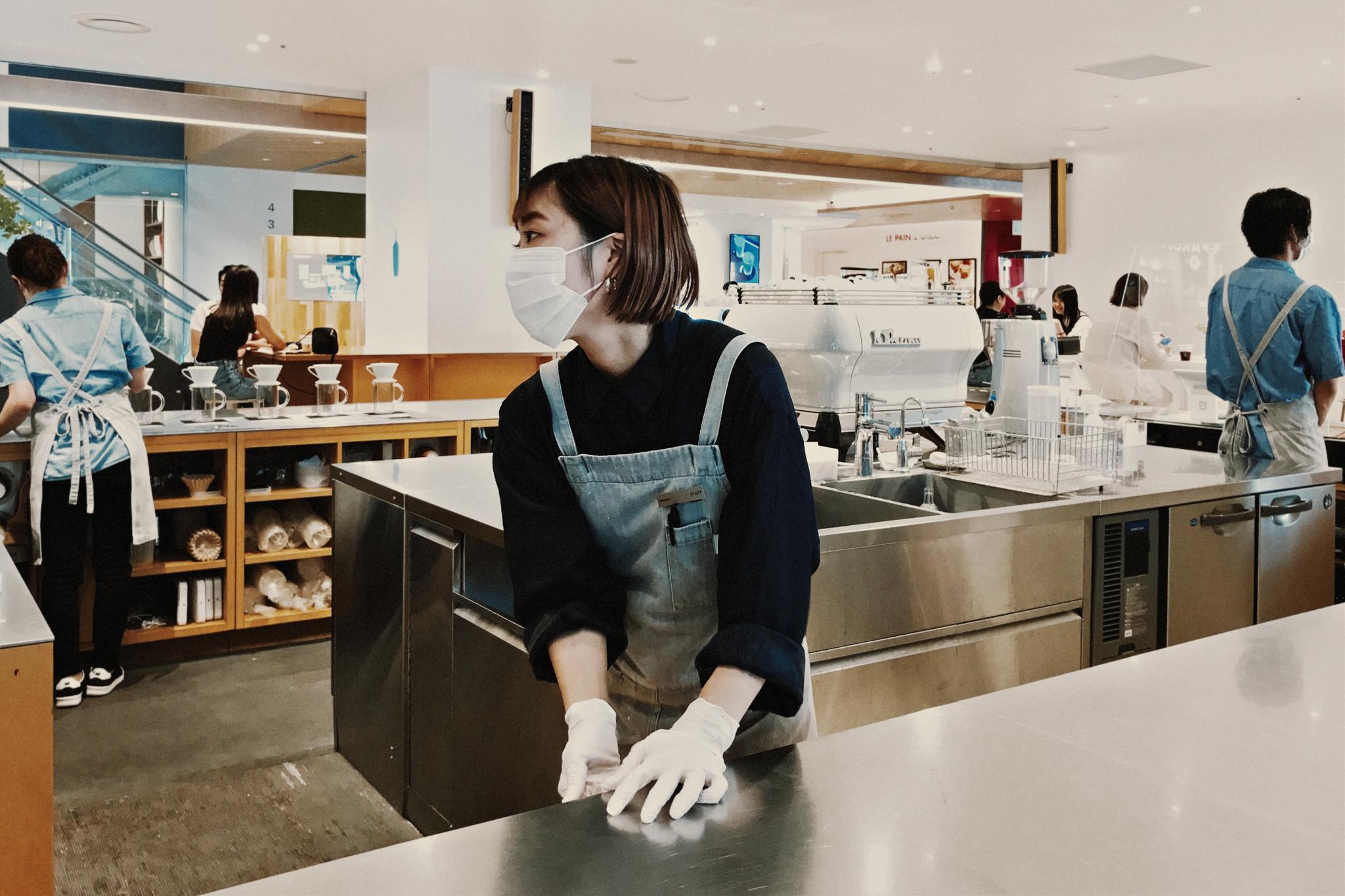
Makeshift job interviews conducted on a balcony; supermarket cashiers wrapped in acrylic curtains; patrons separated by plexiglass screens at bars and restaurants; store clerks taking temperature readings at boutique entrances; closed borders; everywhere face masks and bottles of sanitiser. The new normal. A twisted daily lottery of grim statistics. An underlying, persistent fear of infection and anxiety of an uncertain future. A world simulating bleak sci-fi scenarios.
This is where we are.
It’s easy to get swept up in the gloom, to feel stuck, isolated. We connect to the internet for news, for companionship, for shopping, for entertainment. Mark Zuckerberg and Jeff Bezos add to their already outrageous fortunes. On our digital screens we see the world is in pain, is breaking: the environment, animal species, human populations, national economies around the globe all suffering. Politics is in a dark place with the rise of fascist tendencies, the death of humanitarianism and ethical imperatives.
This is where we are.
Life feels smaller somehow, the outside world seems rendered with a muted color palette. I wonder if this is the kind of feeling experienced by people living through war. You become fatalistic. Push down the fear and anxiety. Adjust to the new ways of doing things. Lose yourself where you can: in work, in activism, in hobbies, in passion projects, in creative pursuits, in destructive pursuits, in mindless pursuits. You grit your teeth and make the best of a bad situation; keep calm and carry on, as it were.
Traces
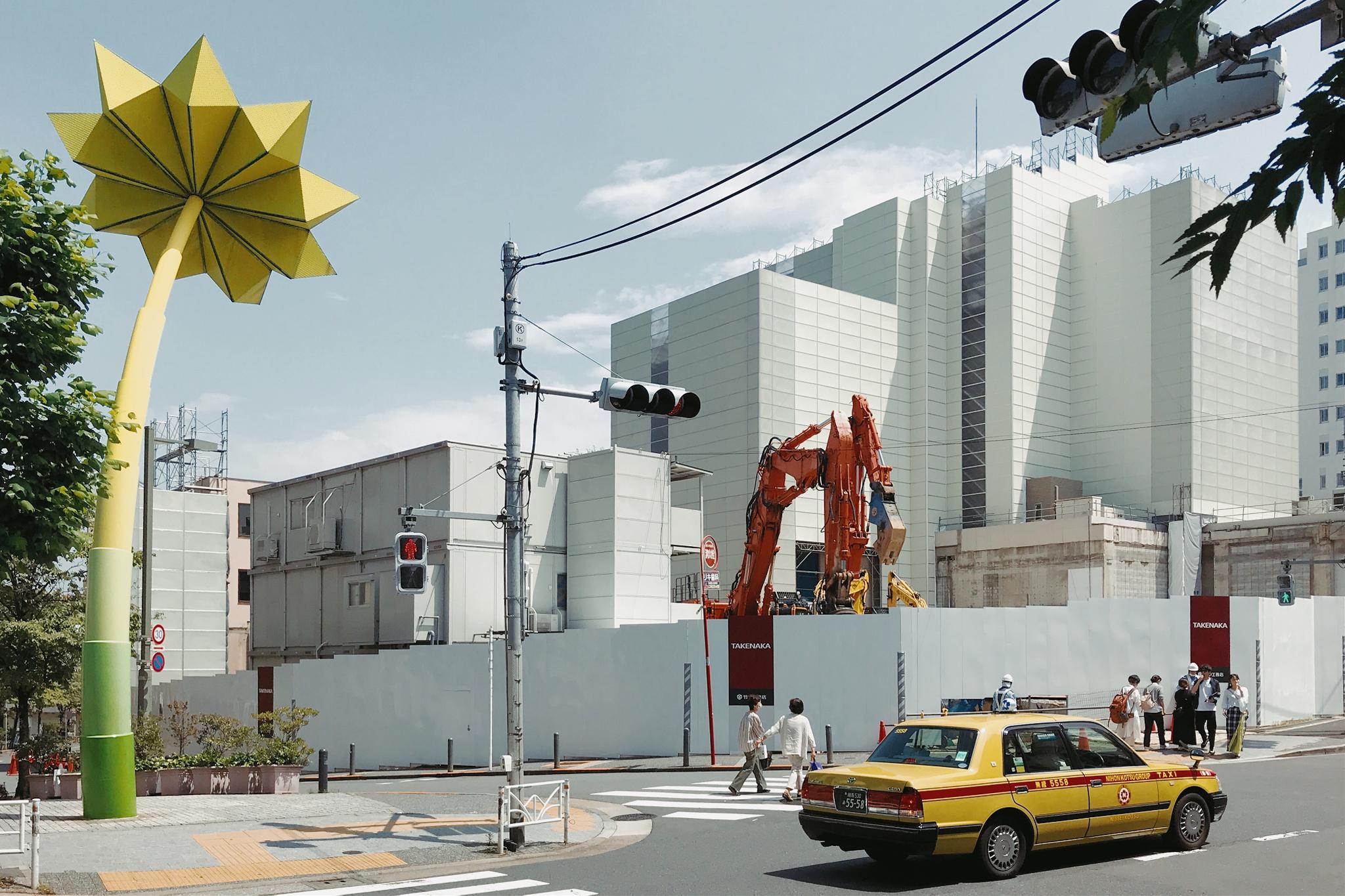
A stroll down Hachiman Dori, past Piotr Kowalski’s vibrant Sunflower sculpture and into the neighboring Tenoha Daikanyama courtyard, to relax with a coffee among leafy trees and shrubs. A good coffee shop is an elusive thing, a perfect blend of well-made coffee and atmosphere.
This corner cafe fit the bill nicely, but just like that, it’s gone — together with the courtyard, restaurant, gift shop and co-working office space that formed the Tenoha complex. The entire site has disappeared, bulldozed to the ground, like so many places in Tokyo, to make way for a newer, bigger, more profitable construction.
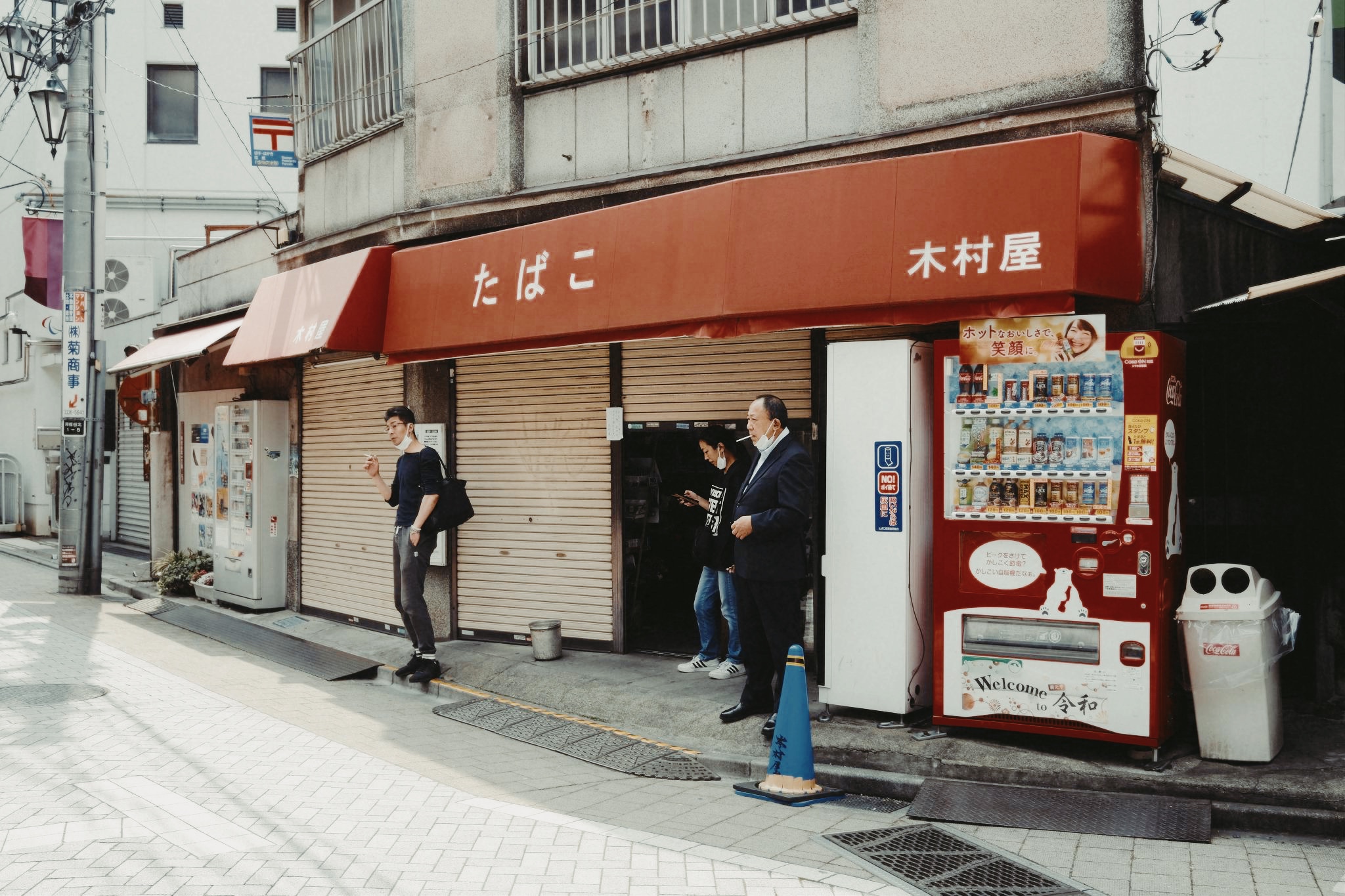
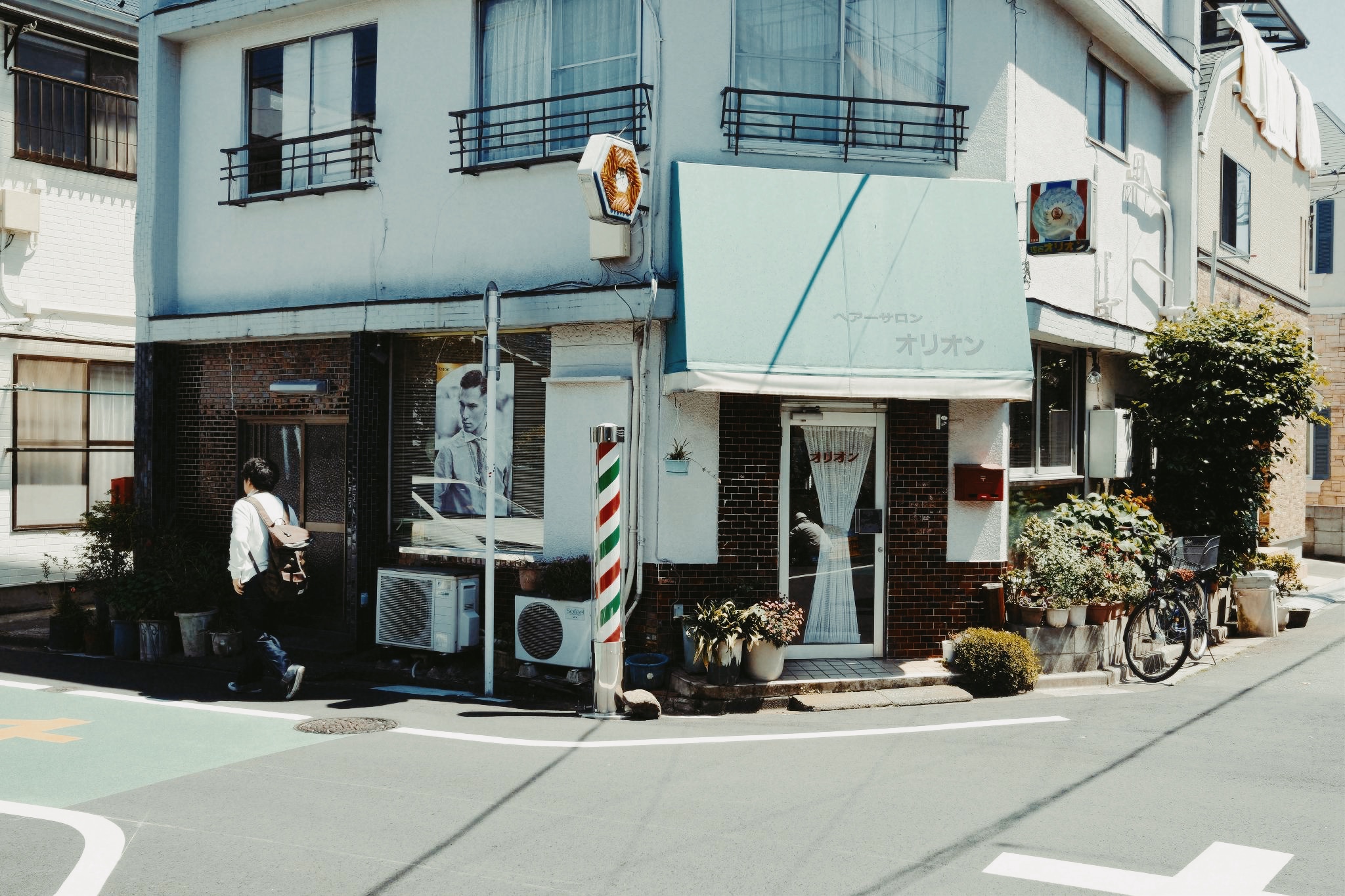
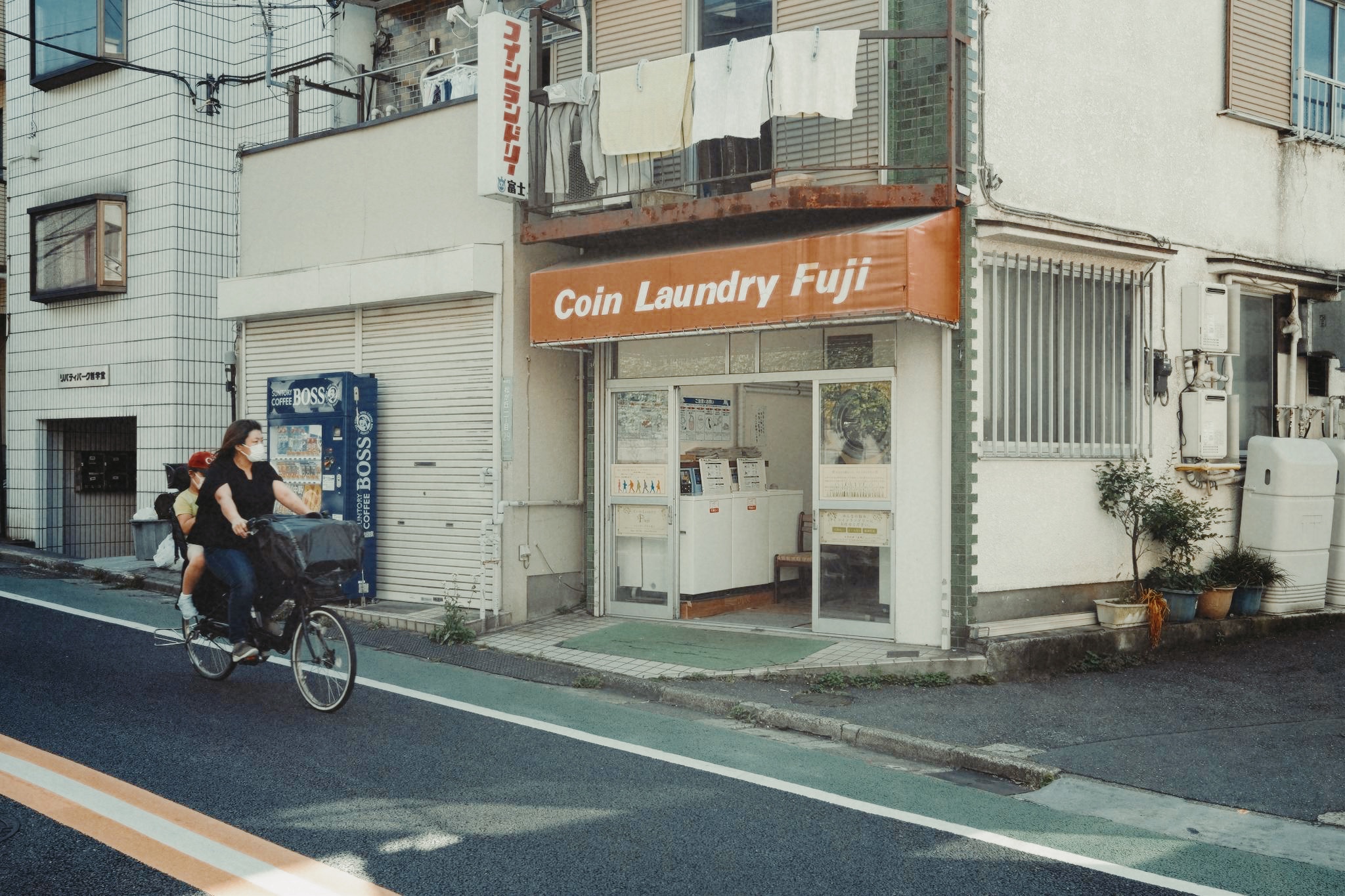
At times when I look back through my archives, look through photos taken in Tokyo over the years, I often see places that I captured, stores and restaurants I frequented, and realize they no longer exist. Of these places there are no traces left. In time even their memories have faded. In the end there are only photographs. The places below that I’ve recently documented do still exist, but I wonder for how long?
Daido ongoing
Daido Moriyama, 森山 大道, is the ultimate street photographer. He’s been walking the streets of Tokyo with one compact camera or another in his hand for going on sixty years, snapping fragments of the city and its inhabitants from his singular perspective, both capturing and helping to shape the city’s distinctive character.
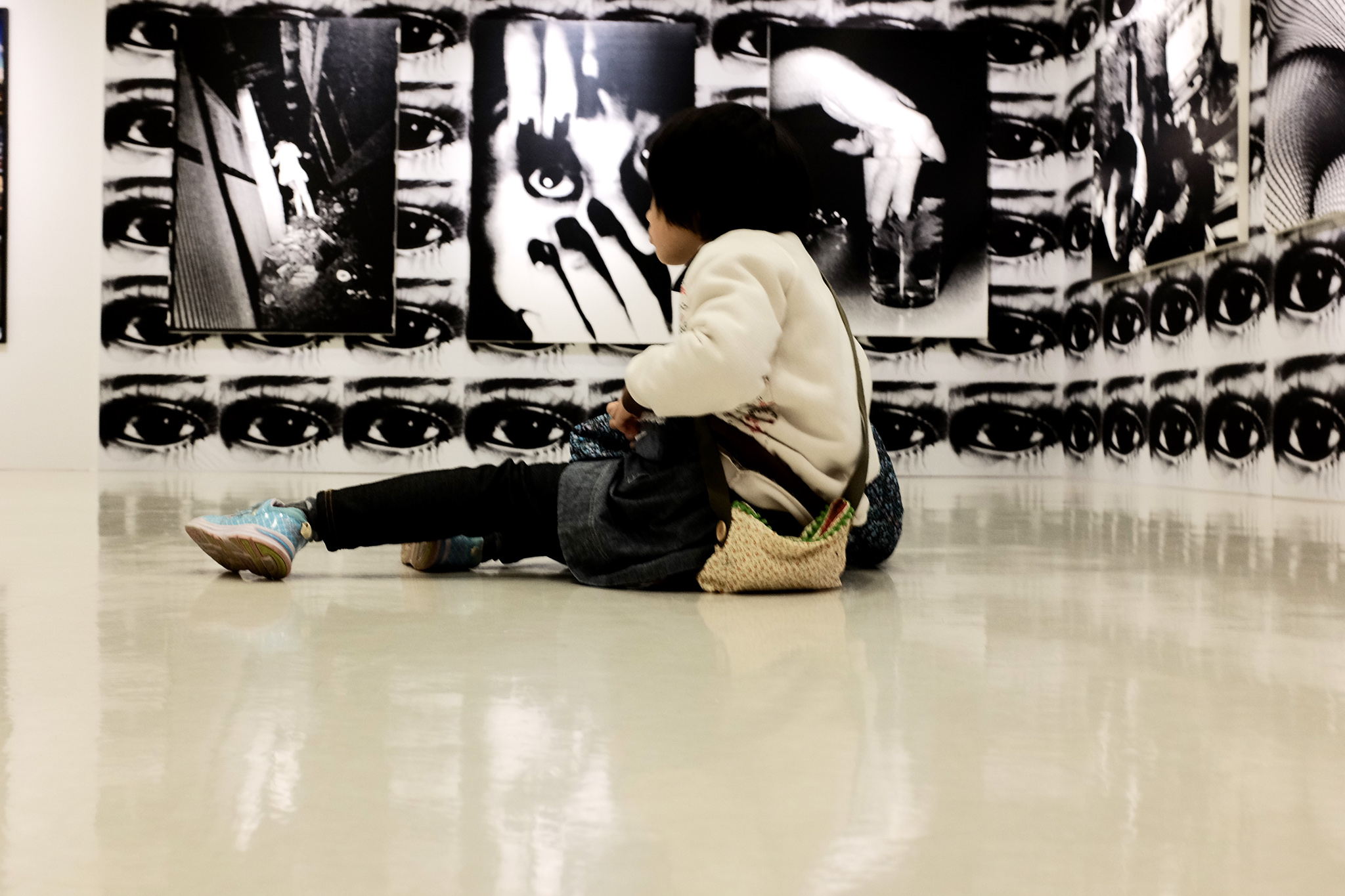
A nicely curated exhibiton of Moriyama’s mostly recent work is currently showing at the TOP Museum in Ebisu. The images in Moriyama Daido’s Tokyo: ongoing are spread over three rooms. Greeting the visitor in the first space is a large gelatin silver print of the photographer’s iconic Stray Dog, Misawa, placed by a Warhol-esque silk-screened mosaic of cloned lips, half monochrome, half in color, covering one wall like pop art wallpaper. Opposite is a series of striking oversized inky black, high contrast silk-screened portraits, grainy, some resembling pointilist artworks. The larger adjoining central space contains the bulk of the works and also groups images into tiled mosaics, three photos high, monochrome on one side of the room, color on the other. Close up images of hair, legs and signs are mixed in with frames of alleys, pedestrian crossings and other streetscapes. Here and there is the occasional portrait or reflected self-portrait. The effect of juxtaposing so many images is to give a sense of the city’s at times overwhelming kinetic energy, especially in the color photos, many of them quite lurid. A pair of square glass-topped tables frame monochrome collages, formed by layering and overlapping prints at seemingly random angles, hiding and revealing elements of each. Given the visual complexity on show in this space, there’s plenty to take in, so a small third space serves as a kind of decompression chamber. It’s cloistered, hidden by heavy curtains, and features a few black and white frames from Moriyama’s abstract mesh tights series, each incandescent with the backlighting of the digital screen it is displayed on. The atmosphere here is intimate, contemplative, personal, and despite the eroticism of the photos, is more church confessional than peep show.
A good exhibition is always invigorating. In photography, as in all creative pursuits, it’s sometimes hard to maintain momentum. Moriyama himself bid farewell to photography in 1972 with his book shashin yo sayonara. His hiatus was fortunately short lived and he has since applied himself to his art: Moriyama has one hundred and fifty or so books to his name, has been exhibited dozens of times around the world and has received a handful of prestigious photography awards — and he’s still out on the streets with his camera almost every day. The 81 year old photographer is an inspiration.
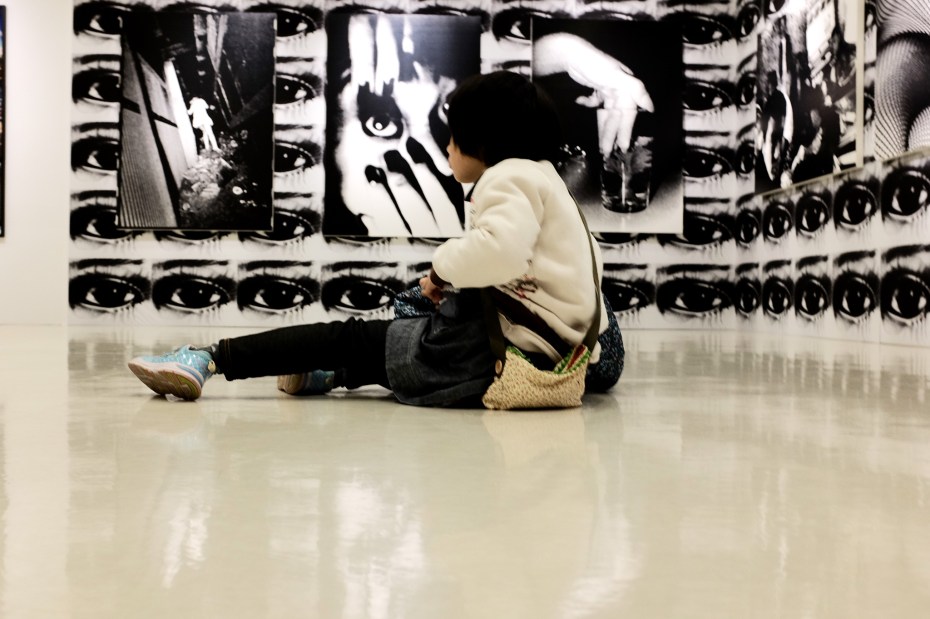
Note: photography is not allowed in this exhibition; the photo above was taken in 2016 at another Moriyama exhibition in Tokyo.